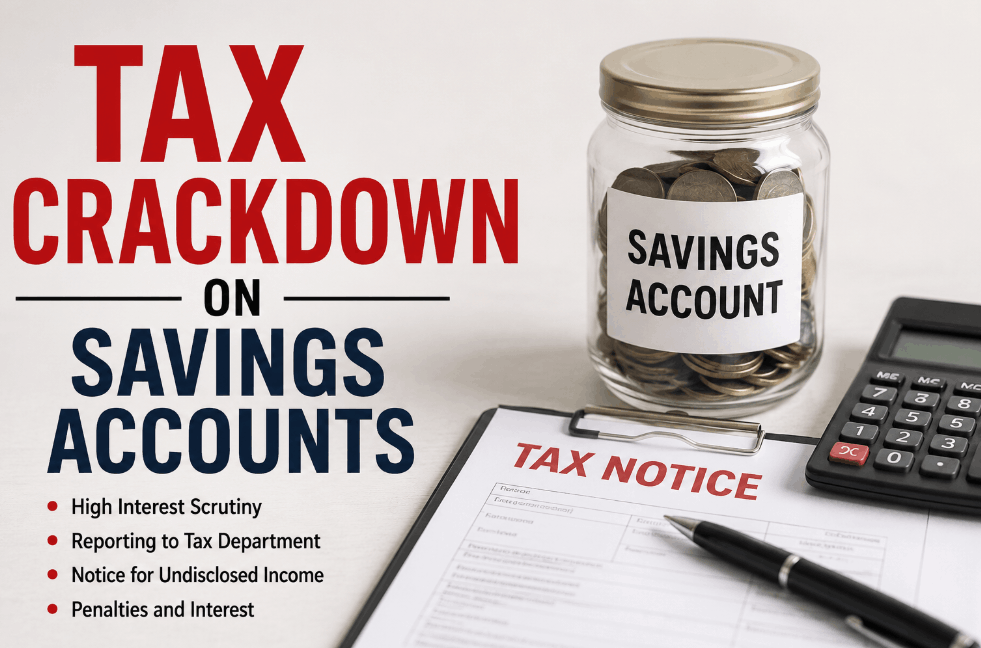
The UK tax crackdown on savings accounts is primarily driven by fiscal drag, where frozen tax-free allowances meet rising interest rates. As the Personal Savings Allowance remains capped at £1,000 for basic-rate taxpayers and £500 for higher-rate taxpayers, millions of savers are now being pulled into the tax net for the first time, requiring proactive management of ISA wrappers and tax-free assets to protect their returns.
HMRC’s Tax Crackdown on Savings Accounts: 2026/27 Survival Guide for UK Savers
The tax crackdown on savings accounts refers to the increasing number of UK taxpayers forced to pay tax on their interest earnings due to the government’s decision to freeze the Personal Savings Allowance (PSA) while interest rates remain relatively high.
This phenomenon, known as fiscal drag, effectively reduces the real-term value of your savings as more of your interest is diverted to HMRC rather than staying in your pocket.
The 2026/27 Savings Landscape
The core reality of the current financial year is that the tax-free nature of standard bank accounts has eroded. Historically, low interest rates meant few basic-rate taxpayers ever breached their £1,000 limit.
However, with many easy-access accounts and fixed bonds still offering rates between 4% and 5%, a basic-rate taxpayer with just £20,000 in a standard account could find themselves owing tax to HMRC. This is not a change in the tax rate itself, but a narrowing of the safe zone for cash.

Is there really a tax crackdown on savings accounts in 2026?
Technically, the crackdown is a passive one. By not increasing the Personal Savings Allowance in line with inflation or interest rate hikes, the Treasury has created a stealth tax.
In practice, when reviewing financial decisions for 2026, many savers discover that even modest emergency funds are now generating taxable income.
The pressure is particularly high because wages have risen, pushing many basic-rate taxpayers into the higher-rate (40%) bracket. Once you cross that threshold, your tax-free savings allowance is instantly cut in half—from £1,000 to just £500.
This cliff edge is where most people are currently feeling the pinch. For example, a project manager who received a cost-of-living pay rise might suddenly find their savings interest is now taxed at 40% instead of 20%, significantly lowering their net yield.
How much interest can you earn before paying tax in 2026/27?
Your liability depends entirely on your total taxable income. HMRC categorises your savings allowance based on your income tax band.
| Income Tax Band | Annual Income | Personal Savings Allowance (PSA) |
| Basic Rate (20%) | £12,571 to £50,270 | £1,000 |
| Higher Rate (40%) | £50,271 to £125,140 | £500 |
| Additional Rate (45%) | Over £125,140 | £0 |
It is a common pattern to overlook the Starting Rate for Savings. If your other income (like wages or pension) is less than £17,570, you may be eligible for up to £5,000 of interest tax-free.
This is an essential buffer for retirees who rely on interest to supplement a small state pension. Understanding these thresholds is vital, as many retirees are surprised to receive HMRC savings notices for UK pensioners when their combined state pension and private savings interest finally tip the scales.
How does HMRC know about your savings interest?
Many savers believe that if they don’t report their interest, HMRC won’t find out. In reality, UK banks and building societies are legally required to report the interest earned by all account holders to HMRC at the end of every tax year.
HMRC then uses this data to adjust your tax code automatically. If you are an employee, you might notice your take-home pay decreases because HMRC has lowered your tax-free personal allowance to recoup the tax owed on your savings interest.
In many cases, these adjustments are preceded by HMRC savings account tax letters which outline exactly how much interest was reported by your financial institutions and the resulting change to your tax code.
If the amount owed is significant, usually over £10,000 in interest, you will be required to report it via a Self-Assessment tax return.
A common scenario involves individuals who sold a property and held the cash in a high-interest account while waiting to buy a new home; the sudden spike in interest often triggers an immediate HMRC enquiry.
What are the best ways to avoid the savings tax crackdown?
To mitigate the impact of the tax crackdown on savings accounts, you must move from passive saving to active tax-wrapper management.
- Maximise your ISA Allowance: You can put £20,000 into ISAs every year. All interest earned inside an ISA is 100% tax-free and does not count towards your PSA.
- Utilise Premium Bonds: While the interest is paid as prizes, these winnings are entirely tax-free. For higher-rate taxpayers who have exhausted their ISA, this is often the next best step.
- Consider Salary Sacrifice: By contributing more to your pension, you may be able to bring your taxable income back down below the £50,270 threshold, thereby reclaiming your £1,000 savings allowance.
- Transfer to a Spouse: if your partner is in a lower tax bracket or isn’t using their PSA, moving savings into their name can legally reduce the household tax bill.
- While transfers between spouses are generally exempt, if you are considering moving funds to children or other relatives, it is wise to ask do I need to declare cash gifts to HMRC to avoid potential Inheritance Tax or Income Tax complications later.
- Look at Low-Coupon Gilts: Short-dated UK Government bonds (Gilts) with low coupons can be tax-efficient because the capital gain upon redemption is currently tax-free for individuals.
- Offset Mortgages: Instead of earning interest (which is taxed), you use your savings to reduce the interest you pay on your debt (which is a tax-free saving).
How to move your money to avoid the 2026 tax trap?
If you have identified that you are likely to breach your allowance, follow these steps to reallocate your funds:
- Calculate your total expected interest across all non-ISA accounts for the 2026/27 year.
- Identify which accounts are currently breaching your £500 or £1,000 threshold.
- Open a Cash ISA or a Stocks and Shares ISA if you haven’t utilised your £20,000 annual limit.
- Use the ISA Transfer process to move funds from old ISAs to higher-paying ones without losing the tax-free status.
- Move excess cash into NS&I Premium Bonds (up to £50,000).
- Distribute remaining cash into a spouse’s account if they have a remaining allowance.
- Set aside a portion of your interest for the tax bill if you cannot move the funds into a tax-free wrapper.
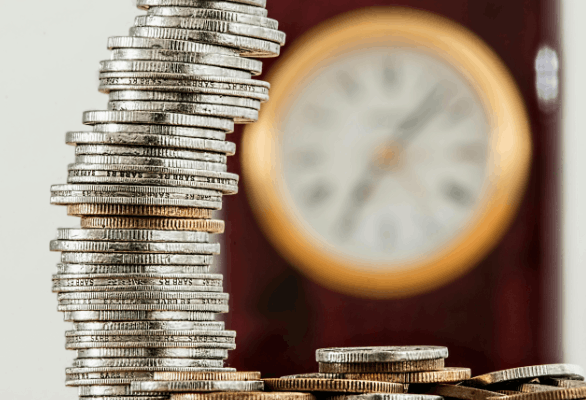
Comparison: Cash ISAs vs. Standard Savings Accounts in 2026
Choosing where to park your cash requires looking at the net return, what you actually keep after HMRC takes its cut.
| Feature | Standard Savings Account | Cash ISA (Tax-Free Wrapper) |
| Tax on Interest | 20%, 40%, or 45% above PSA | Always 0% |
| Annual Limit | No limit | £20,000 per year |
| Reporting | Reported by banks to HMRC | No reporting required |
| Access | Instant and Fixed options | Instant and Fixed options |
| Suitability | Small emergency funds | Long-term cash holdings |
Final Summary
The tax crackdown on savings accounts is a hurdle, but not an insurmountable one. For most UK residents, the priority should be moving liquid cash into ISA wrappers as early in the tax year as possible to maximise tax-free compounding.
If you are a higher-rate taxpayer, be especially vigilant; a £10,000 balance at 5% interest completely exhausts your allowance. Your next steps are to audit your accounts, calculate your projected interest for 2026, and utilise the spouse transfer or ISA shield strategies mentioned above.
FAQ
Do I need to pay tax on interest from a joint account?
Yes, interest is usually split 50/50 between the account holders. Each person applies their half of the interest against their own Personal Savings Allowance.
Does the 2026 crackdown affect children’s savings?
Generally, no. Children have their own tax allowances. However, if a parent gives money to a child that earns more than £100 in interest, that interest is taxed as the parent’s income.
Are fixed-rate bond interests taxed all at once?
HMRC typically taxes interest when it is credited to your account. If a 3-year bond pays all interest at maturity, you could hit a massive tax bill in a single year.
Can I use my Personal Allowance for savings interest?
Yes. If your total income is below £12,570, any unused portion of your Personal Allowance can be used to cover savings interest before the PSA even kicks in.
Is the ISA limit changing in 2027?
As of the current 2026 legislation, the ISA limit is set to remain at £20,000, though there are ongoing discussions regarding the British ISA and simplified categories.
What is the penalty for not reporting savings interest?
If you fail to declare interest via Self-Assessment when required, HMRC can charge penalties and interest on the unpaid tax, often ranging from 30% to 100% of the tax due.
Do Premium Bond prizes count toward the £1,000 allowance?
No. Premium Bond prizes are legally classified as gambling winnings and are completely exempt from UK Income Tax and the PSA.