Working from home offers brilliant flexibility for professionals across the UK. However, many people struggle to separate their personal lives from their professional duties when floor space is at a premium. You might assume that a highly functional workspace requires a dedicated spare bedroom or a large garden studio.
The reality is quite different. A productive environment can fit into surprisingly compact areas of your house or flat. Setting up an effective workstation simply requires careful planning, clever design choices, and a focus on ergonomics.
You can easily turn a cramped corner into a comfortable zone that boosts your daily output. By making strategic decisions about furniture and layout, you will create a professional haven that seamlessly blends with your living space.
Finding the right location
The first step in establishing a small workspace is identifying the best possible location. Walk around your property and look for under-utilised areas.
Repurposing quiet corners
An alcove in your living room, the space under the stairs, or even a wide hallway can serve as an excellent work zone. Look for a spot that receives minimal foot traffic during your working hours.
Keeping your desk away from high-distraction areas, like the kitchen or the main television, will help you maintain concentration throughout the day.
If you must set up in a multi-use room, try to position yourself facing a wall or a window. This visual separation prevents you from staring directly at your household chores, allowing you to focus entirely on your professional tasks.
Choosing space-saving furniture
When square footage is limited, bulky furniture simply will not work. You need pieces that maximise utility without dominating the room.
Smart desk solutions
Large, heavy executive desks look great in corporate buildings, but they quickly overwhelm small residential rooms. Instead, focus on compact alternatives designed specifically for smaller properties.
Wall-mounted folding desks are incredibly practical for tight spaces. You simply fold the surface away at the end of the working day, instantly reclaiming your floor space.
Alternatively, ladder desks utilise vertical space effectively, providing shelves for your files above the main working area.
When browsing through different office desks for home, measure your available space carefully and consider models with built-in cable management to keep your area looking tidy.
Prioritising posture and comfort
You might be tempted to use a spare dining stool or a rigid wooden seat to save room. This is a crucial mistake. Sitting for eight hours a day takes a significant toll on your spine, and improper seating often leads to chronic back pain.
Investing in a quality seat
Your physical health should dictate your furniture budget. An ergonomic seat supports your lower back, promotes healthy blood circulation, and prevents you from slouching over your keyboard.
When searching for the perfect home office chair, look for adjustable features. You want to be able to alter the seat height, armrests, and lumbar support to fit your exact body proportions.
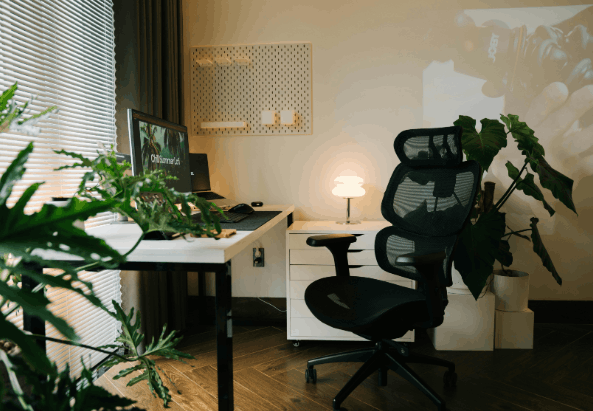
If a traditional ergonomic seat feels too bulky for your small room, consider a high-quality task chair with a breathable mesh back.
These models offer excellent support while maintaining a visually lightweight appearance that will not clutter your room.
Keeping your workspace organised
A messy desk severely hinders your ability to concentrate. In a small space, clutter accumulates rapidly and can quickly make the area feel claustrophobic.
Vertical storage and decluttering
Because you lack horizontal floor space, you must build upwards. Install floating shelves above your monitor to hold important documents, stationery, and reference books. Use wall-mounted pegboards to keep your daily essentials within arm’s reach without sacrificing valuable desk surface.
Commit to a paperless system wherever possible. Scan your physical documents and store them securely in the cloud. For the physical items you simply must keep, use attractive storage boxes that match your room’s decor, ensuring your work materials blend seamlessly into your home environment.
Managing light and atmosphere
The atmosphere of your small workstation directly affects your mood and energy levels. Poor lighting causes eye strain and fatigue, making the workday feel much longer than it is.
Try to position your desk near a window to take advantage of natural daylight. Natural light regulates your circadian rhythm and boosts your overall wellbeing. If your chosen corner lacks natural light, you must compensate with high-quality artificial illumination.
Use a bright, adjustable LED desk lamp to illuminate your keyboard and paperwork, and add a soft floor lamp nearby to prevent harsh shadows.
Making the most of your new workspace
Creating a highly functional workspace in a small property is entirely achievable with a thoughtful approach. By selecting compact furniture, investing in ergonomic support, and utilising clever vertical storage, you can build a professional environment that enhances your productivity.
Take a moment today to evaluate your current setup. Measure your quietest corner, clear away any unnecessary clutter, and begin planning your new streamlined workstation.
FAQ
How do I set up a home office in a small room?
Identify under-utilised areas like alcoves or spaces under stairs. Use vertical storage and compact furniture, such as wall-mounted or ladder desks, to keep the floor clear while creating a dedicated professional zone.
What are the best home office desks for home with limited space?
Compact, solution-driven designs are best. Wall-mounted folding desks allow you to reclaim space after work, while ladder desks provide essential shelving. Always measure your area first and prioritise models with built-in cable management.
Is an ergonomic chair necessary for a small workspace?
Yes. To avoid chronic back pain, skip dining chairs and choose a compact ergonomic task chair. Look for adjustable lumbar support and breathable mesh materials that provide comfort without appearing bulky in a small room.
How do I manage clutter on a small desk?
Switch to a paperless system and use vertical space. Install floating shelves or pegboards above your monitor to keep your desk surface clear, ensuring your workstation remains a focused, stress-free environment.
Where should I position my desk for the best productivity?
Place your desk near a window for natural light to boost your mood. If possible, face away from household distractions like the TV or kitchen to create a mental boundary between your professional and personal life.