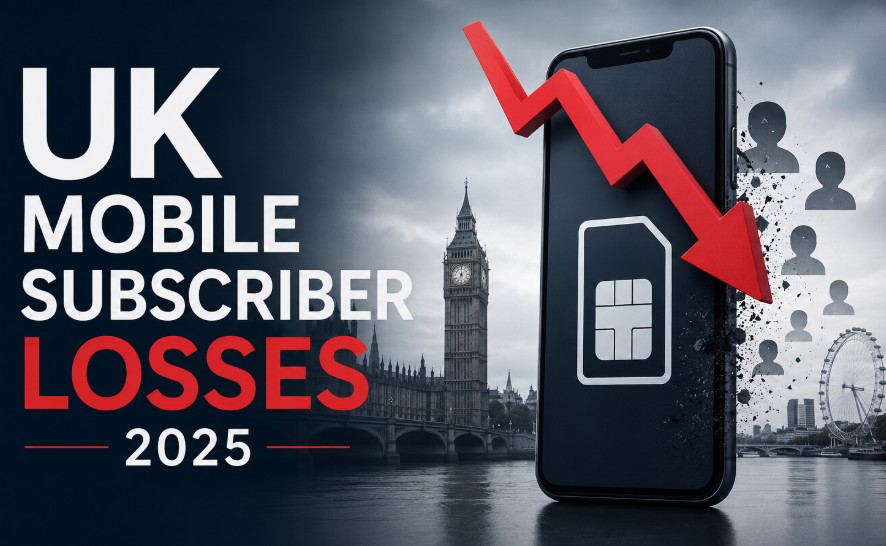
UK mobile subscriber losses 2025 totalled a net deficit of 972,000 direct retail contract lines across the country’s main networks, while value-focused virtual operators gained over 1.5 million subscribers.
The British telecommunications market is undergoing a major structural realignment. Throughout 2025 and mid-2026, premium brand loyalty plummeted as consumers faced intense macroeconomic pressures.
While secondary device connections kept overall network volume high, direct individual retail contracts saw a massive, historic drop. Buyers are explicitly shifting away from costly handset-and-airtime bundles, moving instead to flexible alternatives.
This migration establishes a permanent new consumer paradigm where mobile connectivity is treated as a highly commoditised utility rather than a premium lifestyle choice.
Why Did Major UK mobile networks lose customers in 2025?
Major UK mobile networks lost customers in 2025 due to aggressive mid-contract price rises, cost-of-living budget cuts, and frictionless network switching enabled by digital eSIM technology.
The contraction of direct retail subscriber bases across the largest infrastructure networks did not occur in a vacuum. A combination of strict financial choices, regulatory shifts, and technological advancements created the ideal environment for consumer attrition.
The Impact of Mid-Contract Price Rises
The primary driver behind the historic wave of customer departures was the implementation of aggressive mid-contract price adjustments.
Under traditional UK telecom billing frameworks, providers applied annual price increases tied to the Consumer Prices Index (CPI) or the Retail Prices Index (RPI), frequently adding an arbitrary operational premium of 3.9%.
When UK inflation peaked, these compounding percentages translated into noticeable monthly price spikes for everyday users.
Consumers locked into 24-month commitments suddenly found their bills rising mid-term without a straightforward, penalty-free path to cancellation.
This specific pricing mechanism broke consumer patience, transforming standard contractual renewals into flashpoints for customer churn.
The Cost-of-Living Crisis
Squeezed by soaring food, housing, and energy bills, British households spent 2025 ruthlessly auditing their monthly outgoings.
Top-tier mobile contracts bundled with flagship handsets suddenly looked like an unjustifiable luxury at £45 to £60 a month.
This triggered a massive behavioral shift: consumers began decoupling their hardware from their airtime. Rather than upgrading their tech every two years, people simply kept their current handsets.
By switching to flexible, SIM-only deals, users slashed their monthly outlays by over half without changing phones.
The Role of eSIM Disruption
Switching mobile networks in the UK used to require ordering a physical plastic SIM card, waiting for postal delivery, and manually swapping cards.
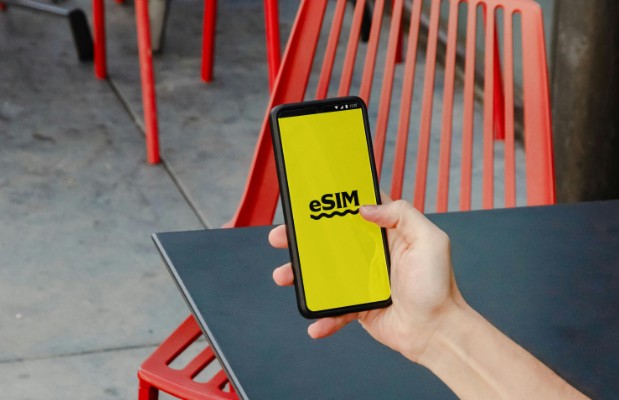
The widespread adoption of embedded SIM (eSIM) technology throughout 2025 fundamentally altered this process by removing physical distribution barriers.
With eSIM-enabled smartphones, a consumer can scan a digital QR code or use a provider’s mobile app to download a new network profile instantly.
This software-driven provisioning allows users to switch networks in minutes from their living rooms.
By eliminating the friction of physical delivery, eSIMs have turned network switching into an instant digital transaction, making it easier than ever for dissatisfied customers to walk away from their current providers.
The Ofcom Regulatory Shift
Ofcom regulatory updates in late 2024 and 2025 banned unpredictable inflation-linked price rises, encouraging consumers to search the market for transparent, fixed-price deals.
A major background catalyst for this shift was the tightening of regulatory guidelines by Ofcom, the UK telecom regulator. Ofcom’s crackdown on complex inflation-plus-percentage billing models forced networks to state exact financial increases in pounds and pence up front.
This regulatory spotlight made consumers highly aware of exactly how much money they were losing over time, acting as a massive prompt for users to compare the market and switch to simpler virtual providers.
Which Operators Suffered the Worst Deficits?
The operators that suffered the worst deficits in 2025 were the big four traditional networks, which lost a combined 972,000 direct retail contract lines, led by Virgin Media O2.
The true scale of this transition is laid bare in the specific losses sustained by the UK’s core network owners. The domestic mobile landscape relies on four primary infrastructure owners, commonly referred to as the Tier-1 Mobile Network Operators (MNOs).
What are the big 4 mobile networks in the UK?
The backbone of the nation’s cellular infrastructure is controlled by four distinct entities:
- BT/EE: Historically commanding the largest market share and leveraging a reputation for extensive geographic 4G and 5G coverage.
- Virgin Media O2 (VMO2): A combined entertainment and telecom giant with a massive retail mobile footprint under the O2 brand.
- Vodafone UK: A primary corporate and consumer network provider currently executing long-term structural changes.
- Three UK (CK Hutchison): The structurally smallest MNO of the group, which spent 2025 and early 2026 advancing a major merger with Vodafone to consolidate infrastructure capital.
Who has the most mobile customers in the UK?
The operators that suffered the worst deficits in 2025 were the big four traditional networks, which lost a combined 972,000 direct retail contract lines, led by Virgin Media O2.
According to consolidated market data compiled by Enders Analysis, the traditional MNO sector faced its worst collective wave of customer attrition in history during 2025.
Together, BT/EE, Virgin Media O2, and Vodafone-Three saw a net loss of approximately 972,000 direct retail mobile subscribers over the course of the twelve-month period.
This represents a significant acceleration in losses compared to the 724,000 subscriber deficit recorded across the same tier in 2024.
Virgin Media O2’s Deep Deficit
Virgin Media O2’s deep deficit reached a net loss of 397,500 direct contract users in 2025, forcing a projected 3% to 5% drop in service revenues for 2026.
Virgin Media O2 bore the brunt of the market defection, dropping a net 397,500 direct contract lines in 2025.
This steep drop was accelerated by high mid-contract price adjustments and resulting negative consumer press.
The scale of this loss forced management to warn investors of a 3% to 5% drop in service revenue, cementing the structural shift.
This stark divergence in market fortunes defined the UK mobile sector throughout 2025.
| Provider Tier & Names | 2025 Subscriber Performance Metric | Primary Structural Driver |
|
Traditional MNO Tier: (BT/EE, Virgin Media O2, Vodafone, Three) |
Net Loss of ~972,000 Subscribers | Mid-contract price hikes, high overheads, rigid 24-month commitments. |
|
Value-Focused MVNO Tier: (Lebara, iD Mobile, Sky Mobile, SMARTY) |
Net Gain of 1,500,000+ Subscribers | Low-cost SIM-only plans, rolling 30-day flexibility, and aggressive promotions. |
Who Won the Market?
Alternative virtual providers (MVNOs) won the UK market by absorbing over 1.5 million new users through low-cost, fixed-price contracts with zero inflation-linked price hikes.
What is the most popular phone carrier in the UK for value seekers?
For cost-conscious consumers, the answer shifted decisively toward flexible virtual networks.
Rather than funding their own physical masts, towers, and spectrum licenses, MVNOs purchase bulk network capacity at wholesale rates from the major infrastructure networks, repackaging the capacity into lean, low-cost consumer offerings.
Throughout 2025, virtual providers like Lebara Mobile, iD Mobile (owned by Currys), and Sky Mobile collectively captured more than 1.5 million new subscribers.
By avoiding the multi-billion-pound capital expenditures required to deploy physical 5G infrastructure, these agile players maintained highly competitive pricing structures.
They offered flexible, rolling 30-day contracts and fixed-price guarantees that explicitly promised no mid-contract inflation increases.
What mobile network is available in the UK for alternative access?
Every virtual provider operates by leasing wholesale capacity from one of the major physical infrastructure backbones.
The current ecosystem illustrates exactly how these alternative providers distribute across the primary networks:
- EE Network: Rents its signal to Lyca Mobile and Plusnet Mobile.
- O2 Network: Rents its signal to Sky Mobile, Tesco Mobile, and Giffgaff.
- Vodafone Network: Rents its signal to Lebara Mobile and VOXI.
- Three Network: Rents its signal to iD Mobile and SMARTY.
Essentially, if you are a customer with Giffgaff, your phone is actually using O2’s signal towers. If you are with SMARTY, you are using Three’s towers.
This creates a structural paradox. The big networks are competing for retail buyers against the same MVNO brands they supply with wholesale capacity.
This challenge will intensify through late 2026 as non-traditional giants like retail leader Lidl and digital bank Monzo actively prepare their own low-cost, app-bundled mobile service rollouts.

Hardware Trends Shaping Subscriber Choices
The financial realities of the handset market are directly intertwined with shifting subscriber migration patterns. The way consumers buy and value hardware dictates how they choose their underlying network provisions.
How big is the UK smartphone market?
The UK smartphone market is a saturated environment of over 55 million active users where growth is driven almost entirely by device replacements rather than new buyers.
The UK is a mature tech ecosystem with over 55 million active smartphone users. Because the market is fully saturated, expansion relies entirely on replacement purchases.
As manufacturers shift toward smaller, incremental technology upgrades, the average consumer lifespan of a phone has lengthened to 3–4 years.
This slower upgrade cycle dilutes the classic consumer motivation to sign up for expensive 24-month carrier bundles.
Is Android or iPhone more popular in the UK?
The UK operating system ecosystem is split down the middle, with Apple’s iOS holding a slight majority of roughly 52% to 54% of the active market, while Google’s Android ecosystem accounts for the remainder.
UK Operating System Market Share
- Apple iOS: 53%
- Android: 47%
This split influences subscriber behavior. Apple users tend to demonstrate high brand retention but face significant upfront hardware costs. This makes them prime targets for flexible, unbundled SIM plans once their initial hardware financing clears.
Conversely, the Android ecosystem provides a much broader spectrum of lower-cost options from brands like Samsung, Google, and Xiaomi. This variety makes it easier for Android users to opt out of carrier financing entirely.
Who sells the most phones in the UK?
Apple and Samsung continue to dominate retail supply channels, commanding a combined market share of over 75% of all physical devices sold across the country. Historically, Mobile Network Operators served as the primary gatekeepers for these devices.
Today, that retail dominance has shifted significantly. Consumers are increasingly bypass-buying their devices through direct manufacturer financing, major independent electronics retailers like Currys, or online storefronts.
When hardware is purchased independently, the consumer enters the subscription market entirely unattached, free to select whichever low-cost MVNO offers the best transactional value.
What is the best affordable phone strategy?
The shift toward independent purchasing has popularized the mid-range smartphone tier. Devices like the Samsung Galaxy A-series or the Apple iPhone SE offer modern performance standards at a fraction of flagship prices.
By pairing an unbundled mid-range device with a low-cost virtual network SIM, consumers can build a comprehensive service profile for under £20 per month.
This cost-effective strategy has dismantled the financial justification for expensive premium carrier contracts, accelerating the structural subscriber losses observed across the wider industry.
What Are the Long-Term Implications for UK Businesses and Infrastructure?
The migration of nearly a million subscribers away from high-tariff traditional networks has direct consequences for the broader digital economy and long-term infrastructure investment.
Capital Expenditure and the 5G Rollout
Building, maintaining, and upgrading physical network architecture requires immense capital.
Between 2020 and 2024, the major MNOs invested an average of £2 billion annually into the UK’s wireless infrastructure.
Moving deeper into 2026, falling retail profit margins threaten to restrict that investment pipeline.
When direct consumer revenues drop, infrastructure owners face pressure to adjust their long-term plans.
This capital challenge drove the proposed £11 billion post-merger investment commitment from Vodafone and Three, who argued that consolidation was necessary to fund a nationwide standalone 5G rollout.
If MNOs cannot stabilize their direct retail margins, the speed and geographic reach of high-speed connectivity upgrades across rural and industrial zones could slow down.
Network Capacity vs. Data Rationing
While subscriber numbers at major networks fell, overall data consumption surged, growing nearly 500% between 2018 and late 2025, according to government data.
The rise of rich video formats, remote corporate work, and cloud-connected business apps means the physical demands on network towers are higher than ever.
This convergence of declining direct retail revenues and surging data demands creates intense operational friction.
In early 2026, industry analysts noted that if wholesale pricing models do not adapt to support underlying infrastructure costs, operators could face long-term capacity constraints.
While sensational headlines suggested extreme data-rationing scenarios, the practical risk is a shift toward tiered corporate data limits and stricter management of peak-time network usage to protect core stability.
How the Vodafone-Three Merger Alters the Market?
The Vodafone-Three merger directly responds to subscriber deficits by creating a consolidated infrastructure powerhouse capable of funding standalone 5G networks.
As a direct consequence of structural subscriber losses and compressed financial margins, Vodafone and Three accelerated plans to merge their UK operations into a single shared entity.
This consolidation completely shifts the balance of power across the network landscape, turning a four-player infrastructure market into a dominant three-player grid.
For the consumer and enterprise markets, this merger could potentially stabilize infrastructure investments but may structurally reduce wholesale bargaining alternatives for independent MVNO brands in the long run.
Strategic Guidance for Corporate Procurement Teams
For business leaders and corporate procurement managers, the current telecom reshuffle presents a valuable opportunity to optimize operational overheads.
Company mobile fleets and remote connectivity provisions do not need to stay locked into premium legacy contracts.
- Audit Internal Usage: Transition low-demand staff or purely transactional field devices over to flexible, wholesale-backed virtual networks to immediately cut baseline costs.
- Leverage MNO Desperation: Use the current wave of retail subscriber losses as leverage during enterprise contract renewals. Demand that infrastructure owners match virtual pricing or waive annual inflation adjustment clauses before signing long-term deals.
- Adopt eSIM Deployments: Switch corporate devices to eSIM profiles to simplify fleet management, letting IT managers re-route company connections without physical deployment costs.
Lessons from the 2025 Telecom Reshuffle
Ultimately, the subscriber exodus of 2025 stands as a clear case study in market democratisation.
When forced to balance rising costs against flat household and corporate budgets, UK consumers decisively rejected rigid, premium-priced long-term contracts.
The resulting migration toward virtual providers proves that reliable cellular access is now viewed as a standard utility rather than a premium lifestyle brand.
For traditional network operators, the path forward requires a structural reassessment of how they balance multi-billion-pound infrastructure costs against a retail consumer base that prioritizes flexibility and clear, predictable pricing above all else.
FAQ about UK mobile subscriber losses 2025
Why did UK mobile networks lose nearly a million subscribers in 2025?
Major networks lost approximately 972,000 users due to compounding mid-contract price rises, cost-of-living budget cuts, and a consumer shift toward flexible, low-cost virtual network alternatives that do not apply mid-term inflation price hikes.
Who has the most mobile customers in the UK, and did they lose ground?
Virgin Media O2 and BT/EE lead total active UK mobile connections. However, Virgin Media O2 lost considerable ground in the consumer sector in 2025, recording a net loss of 397,500 direct mobile contract subscribers.
What are the big 4 mobile networks in the UK, and how are they reacting?
The big four infrastructure owners are BT/EE, Virgin Media O2, Vodafone, and Three. They are reacting by expanding wholesale access agreements, exploring corporate mergers to consolidate capital, and launching secondary value-focused brand lines.
Is Android or iPhone more popular in the UK for SIM-only switchers?
Apple’s iOS holds a slight majority over Android in the UK. However, both platforms are seeing an increase in SIM-only switchers as users hold onto functional handsets longer and buy hardware unbundled from network contracts.
Will mobile phone contract bills continue to rise into late 2026?
Yes, legacy contracts tied to traditional operators will likely see further inflation-linked increases. However, the market is shifting toward fixed-price guarantees and flexible rolling terms popularized by low-cost alternative operators.