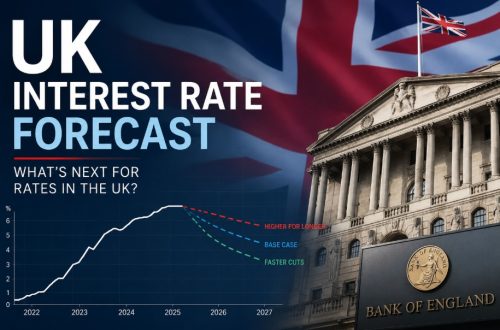
Barclays NatWest mortgage rate cuts are primarily driven by wholesale swap market fluctuations rather than immediate shifts in the Bank of England base rate at 3.75%. Borrowers should expect competitive pricing for low-LTV products, though long-term fixed rates will remain sensitive to ongoing inflationary trends throughout May 2026.
Understanding the current UK Mortgage Landscape
The UK mortgage market is navigating a complex period of adjustment, with major lenders like Barclays and NatWest recalibrating product offerings to maintain market share amidst ongoing economic uncertainty.
While some fixed-rate deals have seen tactical reductions to attract high-equity borrowers, the overall environment remains sensitive to swap rate volatility and shifts in inflationary expectations.

Are mainstream lenders changing their market positioning strategy?
Mainstream institutions are balancing their risk allocations by offering heavily discounted products to low-risk applicants while raising entry requirements for lower-equity tiers.
This divergence means that while headlines broadcast rate reductions, the actual savings are unevenly distributed across the consumer spectrum.
Why do lenders move independently of the base rate?
UK lenders cut fixed mortgage rates independently of the Bank of England base rate because fixed deals are priced using forward-looking wholesale swap markets rather than current central bank cash rates.
Internal volume balance goals and retail market competition also influence independent high-street rate adjustments.
| Mortgage Type | Typical Strategy | Best For |
| 2-Year Fixed | Lower initial rate, higher risk of renewal volatility | Short-term certainty |
| 5-Year Fixed | Higher initial rate, protection against medium-term hikes | Long-term budget stability |
| Tracker | Follows base rate, immediate savings if rates drop | Risk-tolerant borrowers |
What triggered the recent Barclays NatWest mortgage rate cuts?
The recent Barclays NatWest mortgage rate cuts were triggered by cooling wholesale swap yields and intensifying high-street competition for low loan-to-value products.
Banks adjusted their rates down to secure low-risk loan applications and fulfil corporate lending pipelines during a period of market stabilisation.
- Market Competition: Banks compete aggressively for low-risk business, specifically for borrowers with Loan-to-Value (LTV) ratios of 60% or lower.
- Funding Costs: Banks borrow in the money markets to fund mortgage lending; lower swap rates reduce the cost of this capital.
- Operational Targets: Lenders adjust rates to manage their pipeline of new applications, effectively turning the tap up or down to ensure they can service demand.
How do the Barclays and NatWest rate cuts affect your finances?
The Barclays NatWest mortgage rate cuts lower monthly repayments specifically for high-equity homeowners remortgaging or buying properties with a 40% deposit.
However, existing borrowers on older fixed rates see no immediate change, while low-deposit buyers face minimal budget relief due to rigid stress testing.
The financial ripple effect of these selective pricing drops depends entirely on your current mortgage product and equity position.
- For High-Equity Homeowners (60% LTV or lower): You stand to save hundreds of pounds annually. Moving from an older 5% fixed rate to a new sub-4.4% product directly lowers your monthly interest portion.
- For First-Time Buyers and Low-Deposit Holders: The financial relief is limited. Because Barclays and NatWest are keeping 90% and 95% LTV rates relatively high, your monthly affordability calculations won’t shift significantly.
- For Borrowers Locked into Existing Fixed Rates: These cuts do not alter your current monthly payments. Breaking your contract early to chase these lower rates will trigger an Early Repayment Charge (ERC), which frequently outweighs the monthly savings.
What is the best way to capitalise on these mortgage rate cuts?
The ideal solution to maximise savings from these rate cuts is to secure a lower rate up to six months before your current deal expires.
Homeowners should overpay their principal loan where possible to hit lower LTV brackets and engage a whole-of-market broker to access unadvertised rates.
To unlock the maximum benefit from the changing rate sheets, you need a proactive, structured strategy rather than a passive wait-and-see approach.
Should you fix your mortgage rate now or wait for deeper cuts?
Choosing between securing a fixed mortgage rate now or waiting depends entirely on your near-term cash flow flexibility and risk appetite.
Locking a rate guarantees long-term payment safety, whereas waiting exposes your household budget to potential financial changes and swap market volatility.
- Assess your current deal: Do not look only at the headline rate; look at the product fee.
- Calculate your LTV: Lower LTV brackets (60%, 75%) unlock significantly better deals; use our tools to determine how much mortgage you can borrow before locking in your next product.
- Evaluate exit fees: If your current deal ends in six months, consider whether early remortgaging is cost-effective.
- Check your risk appetite: If a 0.5% rate hike would break your budget, opt for long-term security.
- Speak to a whole-of-market broker: Access to exclusive lender products often beats public rate sheets.
- Review your long-term plan: Are you planning to move or renovate in the next three years?
What should older borrowers consider when applying for later-life mortgages?
Older borrowers should focus on verifying stable, long-term post-retirement income sources like private pensions or investment portfolios when applying for later-life mortgages.
Mainstream lenders evaluate affordability based on the applicant’s age at the end of the term rather than at application.
- Retirement Interest-Only (RIO) Mortgages: These allow you to pay only the interest, with the capital repaid when you die, move into care, or sell your home.
- Standard Repayment Mortgages: Available if you have a robust pension or investment income to cover the monthly capital and interest payments.
- Lender Variations: Some building societies have no upper age limit, while high-street banks like NatWest and Barclays have specific internal criteria that require manual underwriting for older applicants.

What factors can disqualify you from getting a UK mortgage?
Mainstream UK mortgage disqualifications are primarily driven by high debt-to-income ratios, recent credit file impairments, unverified self-employed income, and failing automated lender affordability stress tests.
Main high-street institutions automatically decline files displaying irregular earnings or severe historical defaults.
- Employment Stability: Self-employed borrowers must provide at least two years of accounts or tax returns.
- Credit History: Missed payments or CCJs can significantly limit your pool of available lenders.
- Income Verification: Retirement accounts, dividends, and rental income are accepted, but lenders will apply stress tests to ensure you can afford the loan even if rates rise.
How can you successfully navigate mortgage rate shifts?
Navigating mortgage rate changes requires moving beyond headlines to understand your personal loan-to-value position. The current market trajectory points toward a period of stabilisation rather than a cycle of rapid, aggressive rate reductions
If you are approaching retirement or nearing the end of a fixed term, prioritise speaking with a professional broker who can navigate specific lender policies for older borrowers and self-employed applicants.
Monitor your credit file, ensure your income documentation is up to date, and consider the total cost of any new product, including fees, before making a final decision.
FAQ about Barclays NatWest mortgage rate cuts
Will NatWest reduce mortgage rates further in 2026?
Further reductions depend on sustained declines in inflation and swap market stability. If economic data shows inflation is under control, lenders may find room for more competitive pricing as the year progresses.
Is 4.5% a good mortgage rate?
With the base rate holding steady at 3.75%, a 4.5% deal represents a competitive fixed-term product for many applicants. Borrowers holding significant equity and lower loan-to-value ratios may, however, unlock even more attractive options.
Who is the most lenient mortgage lender in the UK?
There is no single most lenient lender. Building societies are often more flexible than high-street banks because they use manual underwriting to assess individual circumstances rather than relying solely on automated scoring.
Can a 70-year-old woman get a 30-year mortgage?
Yes, provided the lender’s specific age-at-end-of-term criteria are met. However, you will likely need to prove significant retirement income, and many lenders will cap the term shorter than 30 years.
What is the monthly payment on a £300,000 mortgage for 30 years?
Based on a 4.5% interest rate, monthly repayments on a £300,000 mortgage over 30 years would be approximately £1,520. It is advisable to use an official lender calculator to account for your specific product fees and personal circumstances.
What can disqualify you from a mortgage?
Common disqualifiers include high levels of unsecured debt, recent bankruptcy, or an inability to prove sufficient income to meet the lender’s stress test criteria at higher interest rates.
Do lenders look at retirement accounts?
Yes. Lenders view pensions, ISAs, and investment portfolios as valid sources of income, but they will assess the stability and drawdown capability of these assets to ensure they cover monthly repayments.
What is the rejection rate for mortgage refinance?
Rejection rates for refinancing are generally lower than for new purchases, but they rise during periods of economic volatility if your home’s valuation has dropped or your income stability has changed.