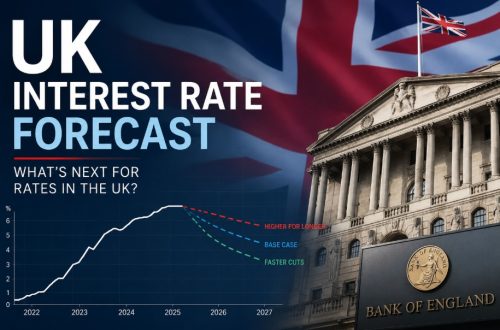
As of June 2026, the best mortgage rates in the UK are currently averaging between 4.1% and 4.7% for fixed-term products, with the Bank of England base rate holding steady at 3.75%.
To secure the market’s lowest rates, borrowers must prioritise Loan-to-Value (LTV) ratios under 75% and optimise their credit files at least 90 days before application.
Who are the Best Mortgage Rate Givers in the UK?
As of June 2026, the UK mortgage market remains highly competitive, with rates fluctuating based on deposit size, loan terms, and individual lender criteria. The table below provides a snapshot of current market leaders based on available data as of June 11, 2026.
UK Mortgage Market Overview
| Lender | Typical Initial Rate Range | Primary Strengths / Deal Type | Standard Product Fee | Best Suited For |
| Halifax | 3.96% – 4.53% | Tracker & 2-Year Fixed deals | £999 – £1,599 | Volume buyers wanting market-minimum initial tracker payments. |
| HSBC | 4.35% – 4.57% | High-Equity Fixed Rates (60% LTV) | £999 | Homeowners with large deposits or substantial existing equity. |
| Barclays | 3.96% – 4.75% | Strong Mid-Term Fixed & 2-Year Trackers | £1,014 – £1,114 | Buyers looking for steady, competitive rates and smooth digital apps. |
| Nationwide BS | 4.40% – 4.83% | Green Mortgages & Member Switchers | £999 – £1,014 | Existing customers and buyers purchasing energy-efficient (EPC A/B) properties. |
| NatWest | 4.10% – 4.78% | Flexible Tracker Options | £995 – £1,025 | Borrowers hoping to profit from upcoming Bank of England rate drops. |
| Santander | 4.49% – 5.17% | Long-Term 5 & 10-Year Fixed products | £1,224 | Families prioritizing multi-year budget security over short-term savings. |
| TSB | 4.59% – 4.84% | No-Fee Fixed rate options | £0 – £995 | Borrowers with mid-to-lower loan sizes looking to avoid hefty upfront fees. |
| Virgin Money | 4.65% – 5.24% | High LTV (90% – 95%) incentives | £995 | First-time buyers needing smaller deposits paired with cashback perks. |
| Skipton BS | 4.99% – 5.42% | Alternative & 100% LTV lending structures | £0 – £999 | Renters transitioning to ownership without a large cash deposit. |
| Coventry BS | 4.14% – 4.61% | Niche Regional & Buy-to-Let (BTL) | £1,132 | Property investors and buyers looking for strong building society flexibility. |
1. Halifax
The best mortgage lender for fast approvals and low-interest 2-year tracker rates in the UK is Halifax, currently leading the market with initial variable rates starting from 3.96%.
Uses highly automated underwriting systems to deliver lightning-fast mortgage offers, significantly reducing property chain delays.
Leverages the massive financial backing of Lloyds Banking Group to consistently undercut standard high-street bank tracker rates.
Ideal For: Home movers and buyers prioritising sheer processing speed paired with low initial variable outgoings.

2. HSBC
For borrowers looking for the lowest fixed mortgage rates with a large deposit, HSBC offers the most competitive 60% LTV fixed rates starting at 4.35% with added first-time buyer cashback incentives.
Focuses aggressively on low-risk lending profiles, reserving its deepest percentage discounts for applicants with 30% to 40% equity or cash down.
Bundles practical fee structures and standard incentives like £250 cashback specifically to target affluent first-time property purchasers.
Ideal For: Remortgagers with significant built-up home equity or buyers moving with substantial capital cash pots.
3. Barclays
Barclays stands out as a premier UK lender for mid-term fixed mortgages, offering competitive 3-year and 5-year fixed terms managed entirely through an integrated smartphone application ecosystem.
Maintains a highly balanced product catalogue that aggressively benchmarks its mid-term 5-year fixed rates against standard market averages.
Pioneers digital application workflows, letting borrowers directly upload verification documents, track sign-offs, and receive updates inside the main Barclays app.
Ideal For: Mainstream buyers seeking consistent, middle-of-the-road rates alongside a modern, completely paperless application experience.
4. Nationwide Building Society
Nationwide is the leading UK building society for green mortgages and customer retention, offering exclusive product-switching discounts down to 4.56% and financial incentives for eco-friendly homes.
Enforces a strict pricing pledge ensuring existing member switcher rates always remain equal to or cheaper than new-business remortgage equivalents.
Provides specialised interest discounts and distinct cash rewards for properties holding high-tier Energy Performance Certificate (EPC) ratings of A or B.
Ideal For: Existing Nationwide account holders or green-focused buyers acquiring highly energy-efficient modern new-builds.
5. NatWest
NatWest is a top choice for tracker mortgages in a shifting market, offering flexible base-rate tracking deals starting from 4.10% alongside capped upfront arrangement fees.
Provides transparent, tightly structured tracker products that move perfectly in tandem with the Bank of England’s base rate adjustments.
Caps upfront setup fees at a standard £995 across major variable tiers, maximising transparency for borrowers calculating immediate setup costs.
Ideal For: Market-tactical borrowers aiming to lower their monthly outgoings automatically as inflation cools and the central bank trims base rates.

6. Santander
The best UK mortgage lender for long-term budget security is Santander, known for competitive 5-year and 10-year fixed packages designed to guard against unexpected interest rate volatility.
Structures robust, predictable multi-year fixed portfolios that trade short-term ultra-low entry pricing for decade-long payment safety.
Applies highly dependable underwriting standards on sweeping product lines to ensure long-term stability for growing families.
Ideal For: Dedicated long-term homeowners who prioritise predictable monthly household expenses over volatile short-term market changes.
7. TSB
TSB ranks among the top UK lenders for small mortgage loans by providing zero-product-fee fixed rate options that remove expensive upfront configuration costs entirely.
Deploys targeted, short-notice rate drops across selected tiers to aggressively siphon business away from larger high-street clearing banks.
Features a dedicated Fee-Free mortgage menu that shields the borrower from writing four-figure arrangement checks on day one.
Ideal For: Borrowers looking at modest loan sizes where paying a heavy upfront arrangement fee would entirely cancel out any minor interest rate savings.
8. Virgin Money
Virgin Money is a top-tier lender for high-LTV mortgages, offering extensive first-time buyer support with 90% and 95% loans packed with free property valuations and cash incentives.
Actively courts the small-deposit segment by underwriting higher Loan-to-Value ratios that traditional banks frequently avoid or restrict.
Offsets the financial sting of moving house by throwing in free basic property valuations and large upfront cashback allowances.
Ideal For: First-time buyers with minor 5% to 10% cash savings who need extra financial padding to cover post-purchase moving expenses.
9. Skipton Building Society
Skipton Building Society is the top alternative underwriting lender in the UK, famous for its 100% LTV Track Record mortgage that turns historical rental payments into homeownership qualification.
Replaces rigid algorithmic credit checks with highly adaptable, human assessment criteria tailored for modern employment structures.
Solves the deposit bottleneck completely by allowing long-term, zero-fault renters to purchase a home with literally zero down payment.
Ideal For: Reliable tenants trapped renting due to deposit limits, alongside self-employed individuals with variable annual income paths.
10. Coventry Building Society
Coventry Building Society is highly rated by independent brokers as a premium specialist provider, offering market-leading buy-to-let initial rates and highly rated manual underwriting.
Stands as a persistent favourite among independent whole-of-market brokers due to clear criteria and an accessible customer service desk.
Dominates specialised niches, routinely topping competitive charts for domestic property investors and Buy-to-Let (BTL) initial fixed pricing.
Ideal For: Property landlords, buy-to-let investors, and standard buyers who prefer a collaborative, human approach to mortgage lending over automated computers.
What are the Current Best Mortgage Rates in the UK?
The best mortgage rates in the UK for June 2026 currently range from 4.1% to 4.7% for fixed-rate products. These rates are dictated by the Bank of England’s 3.75% base rate and are most accessible to borrowers with a deposit of at least 25% (75% LTV).
The table below represents typical market ranges for June 2026, though specific rates will vary significantly based on your LTV and credit score.
| Mortgage Type | Typical Rate Range (June 2026) | Best For |
| 2-Year Fixed | 4.3% – 4.7% | Short-term flexibility |
| 5-Year Fixed | 4.1% – 4.5% | Long-term budget certainty |
| Tracker | 4.4% – 5.0% | Risk-tolerant borrowers |
| Standard Variable (SVR) | 6.5% – 7.5%+ | Generally avoid (temporary only) |
Note: Rates are indicative and depend on LTV (Loan-to-Value) ratios. Borrowers with deposits of 25% or more typically access the most competitive best-buy rates.

How to Find the Best Mortgage Rates in the UK?
To find the best mortgage rates, you must tailor your application to your specific borrower category, such as First-Time Buyer or Buy-to-Let, and prioritise products that match your specific LTV needs.
Matching your profile to the right lending niche is the fastest way to lower your interest rate.
- First-Time Buyers: Focus on 90% or 95% LTV products. Look for lenders offering government-backed schemes or cashback incentives to help with initial moving costs.
- Buy-to-Let: These mortgages require a higher deposit (typically 25%–40%). Lenders assess these based on the rental yield of the property rather than just your personal income.
- Offset Mortgage: Ideal if you have significant savings. By offsetting your savings against your mortgage balance, you pay interest only on the difference, which can significantly reduce your total interest cost.
- Green Mortgage: If your property has an Energy Performance Certificate (EPC) rating of A or B, many lenders offer Green mortgages with preferential interest rates or cashback rewards.

Essential Steps to Secure Favourable Lending Terms
Securing the lowest interest rate is all about demonstrating minimal risk to the lender. Before you submit a formal application, it is essential to get your financial paperwork in order.
A vital part of this process is calculating your borrowing capacity; knowing how much mortgage you can get is the first step in aligning your property search with your actual affordability.
- Gather three months of payslips and proof of bonus income.
- Clear any outstanding short-term debts to improve debt-to-income ratios.
- Check credit reports with all three major agencies for errors.
- Calculate the exact Loan-to-Value percentage of the property.
- Obtain a formal Mortgage in Principle from a reputable provider.
- Consult an independent broker to access exclusive product ranges.
- Verify all application data against official identity documents.
What to Look For Before Choosing the Best Mortgage Rates?
It is easy to be swayed by a headline interest rate, but you should never look at this in isolation. To truly understand the value of a deal, you must always evaluate the Total Cost of Credit, which includes all upfront arrangement fees and associated exit costs.
- Product Fees: Some deals offer lower rates but come with high arrangement fees (e.g., £999–£2,000). Calculate if the lower rate actually saves you money over the term.
- Early Repayment Charges (ERCs): Understand what it costs to leave the deal early if you plan to sell or remortgage before the fixed term ends.
- Valuation & Legal Costs: Check if the lender covers these, or if they are additional expenses you must budget for.
- Flexibility: Does the mortgage allow for unlimited overpayments? This can help you reduce the loan principal and interest over time.
How to Choose the Best Mortgage Rates?
The best rate is the one that aligns with your specific financial timeline. If you need budget certainty, choose a 5-year fixed; if you expect rates to fall soon, choose a 2-year fixed or a tracker mortgage.
- Prioritise Stability: If you need to know exactly what your monthly outgoings will be for the next half-decade, a 5-year fixed is the gold standard.
- Betting on Lower Rates: If you believe the economy will improve and interest rates will fall, a 2-year fixed or a tracker mortgage allows you to refinance sooner to take advantage of lower future rates.
- Seek Expert Counsel: Use a whole-of-market independent broker. They act as a filter, removing products you won’t qualify for and highlighting exclusive deals that aren’t advertised on comparison sites.
- Check Your Credit: Before applying, download your reports from all three major agencies. Disputing minor errors can boost your score enough to qualify for a lower interest-rate tier.
What are the Upcoming Mortgage Rate Changes?
Market sentiment suggests a gradual decline in interest rates through late 2026. For those tracking lender competition, recent news regarding Barclays NatWest mortgage rate cuts highlights how major high-street banks are adjusting their pricing to maintain market share as the base rate environment evolves.
- 2026: Further gradual base rate reductions are anticipated, potentially bringing the base rate toward 3.0%–3.25% by year-end.
- 2027–2028: Economists forecast a period of relative stability, with mortgage lending volumes expected to rebound as affordability improves and economic confidence builds.
Verified against June 2026 Bank of England monetary policy reports and current UK market lending criteria.
Final Summary
To secure the best deal, evaluate your total Loan-to-Value ratio, review your credit file, and compare fixed-term options against your personal timeline.
Prioritise a Mortgage in Principle early to strengthen your position. Always consult an independent financial advisor to ensure your choice aligns with your long-term fiscal health.
FAQ
Will mortgage rates drop to 3% again?
While market projections suggest a slow decline in interest rates throughout 2026, a return to 3% remains unlikely in the near term. Current swap markets suggest rates will likely plateau higher than the historic lows witnessed during the previous decade.
Is 4.5% a good mortgage rate?
In the current economic environment, 4.5% is widely considered a strong, competitive rate. It represents a balanced middle ground between lender margins and borrower affordability, particularly for those with a deposit of 25% or more.
Should I fix for 2 or 5 years now?
Fixing for 5 years is generally recommended for those prioritising long-term financial security. Conversely, a 2-year fix is suitable for borrowers who believe interest rates will fall significantly and want the opportunity to remortgage sooner to a cheaper deal.
Can a 70-year-old woman get a 30-year mortgage?
Yes, provided the lender’s criteria regarding retirement income and maximum age at the end of the term are met. Many lenders now offer Retirement Interest Only mortgages or standard products with extended age limits to accommodate older borrowers.
Will interest rates go back to 4%?
Interest rates are influenced by the Bank of England’s monetary policy. Most analysts predict a gradual reduction towards 4% base rates by late 2027, though this depends entirely on domestic inflation control and global market stability.
What does Martin Lewis say about mortgages?
Guidance from experts like Martin Lewis emphasises the importance of using independent mortgage brokers to compare whole-of-market deals. He suggests checking all fees and total costs, rather than focusing solely on the headline interest rate.
Can I negotiate a mortgage rate?
While standard high-street mortgage rates are typically fixed for the product, independent brokers may negotiate on your behalf if you have a complex financial situation or a high-net-worth profile.
What is the 2% rule for refinancing?
The 2% rule suggests that refinancing is mathematically beneficial only if the new interest rate is at least 2% lower than your current rate, accounting for the costs of switching, including product fees and conveyancing.
Disclaimer: This article is for informational purposes only and does not constitute financial advice. Mortgage rates are subject to change and depend on individual circumstances. Always consult with an FCA-regulated mortgage broker before making financial decisions.