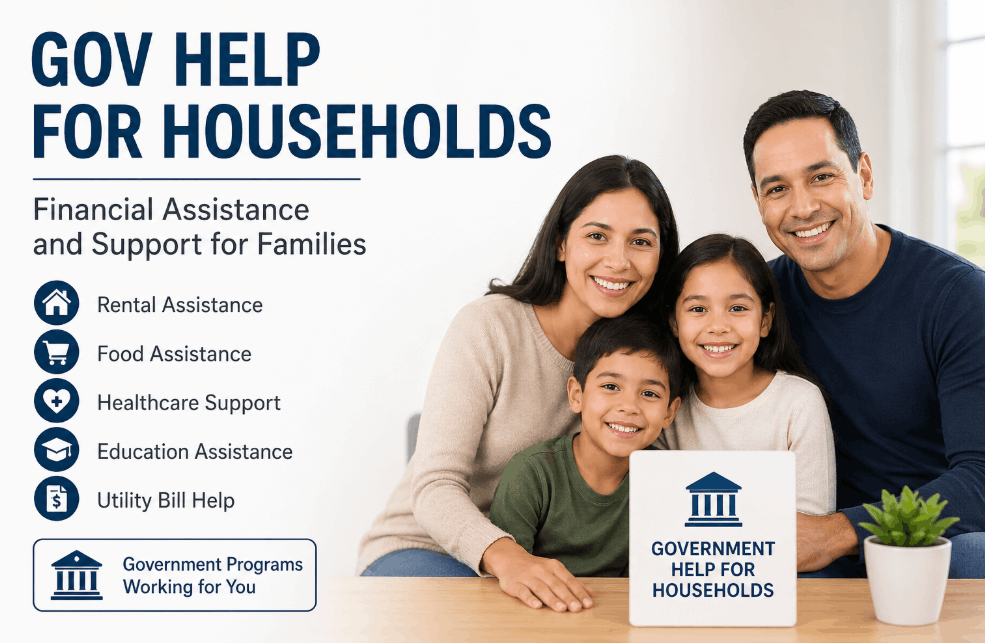
Gov help for households in 2026 primarily consists of the new Crisis and Resilience Fund (CRF) managed by local councils, statutory energy bill reductions of £150, and expanded childcare subsidies.
These measures replace previous one-off cost of living payments, shifting toward targeted local authority grants and permanent benefit adjustments to support low-income families and pensioners.
What is the current gov help for households in 2026?
As of April 2026, the landscape for financial support has moved away from automatic Cost of Living payments toward a more targeted and resilience-based framework.
While you can still access emergency grants through the new Crisis and Resilience Fund, the government has also introduced several baseline measures to reduce monthly household overheads:
- Crisis and Resilience Fund (CRF): A £1 billion local authority grant scheme replacing the Household Support Fund. You can apply through your council for cash assistance with food, heating oil, and emergency essentials.
- Energy Bill Reductions: A statutory cut to the energy price cap resulting in an average £117 annual saving for millions of households, effective until June 2026.
- Dual Energy Credits: A combined £300 support package for eligible low-income homes, consisting of the permanent £150 Energy Levy Reduction and the £150 Warm Home Discount.
- Universal Credit Family Boost: The removal of the two-child limit, allowing families to claim the child element for all children, potentially worth thousands of pounds extra per year for larger households.
- Primary School Breakfast Clubs: A universal scheme saving parents approximately £450 annually by providing free morning meals for all primary-aged children in England.
- Prescription Charge Freeze: Statutory health costs have been capped at under £10 per item to prevent rising medical expenses for those with chronic conditions.
- Wages & Pension Increases: A 4.1% rise in the National Living Wage to £12.71 per hour and a 4.8% uplift in the State Pension to help income stay ahead of inflation.

The 2026 Transition from Emergency to Resilience
The landscape of financial support has shifted significantly this year. While the previous administration relied on sporadic Cost of Living Payments sent automatically to bank accounts, the current framework requires more active engagement.
The emphasis is now on Resilience, meaning the government provides higher baseline support, such as the increased National Living Wage, while reserving emergency cash for the Crisis and Resilience Fund (CRF).
In practice, this means you will likely not see an automatic bonus payment in your account. While many residents still wonder, will you receive a cost of living payment tomorrow, the current focus has moved toward application-based relief.
Instead of broad distributions, you must now demonstrate a specific financial need to your council to access the CRF.
A common pattern is for councils to prioritise households that have not received other forms of discretionary support in the previous six months.
How do you apply for the Crisis and Resilience Fund?
To access the Crisis and Resilience Fund, you must contact your local council’s benefits or revenues department.
Each council sets its own eligibility criteria, but most require proof of low income, such as a Universal Credit statement or evidence of a sudden financial shock like redundancy or an unexpected repair bill.
Steps to Secure Local Authority Support
- Identify your local council using the official government postcode finder.
- Search the council’s website for Crisis and Resilience Fund or Local Welfare Provision.
- Gather your National Insurance number and latest three months of bank statements.
- Complete the online application form detailing your current monthly expenditure.
- Provide evidence of the specific crisis (e.g., an eviction notice or a final energy demand).
- State clearly if you have dependents or a disability, as these applications are often fast-tracked.
- Submit the form and request a referral for advice to prevent future financial hardship.

What energy support is available for households this year?
Energy assistance in 2026 is delivered through a combination of bill credits and efficiency grants. The government has introduced a permanent £150 Energy Levy Reduction for all qualifying low-income households, which is applied directly to electricity accounts between October and March.
| Support Type | Benefit Amount | Eligibility Criteria |
| Energy Levy Reduction | £150 Credit | Households on Pension Credit or low-income benefits. |
| Warm Home Discount | £150 Credit | Automatically applied for Core Group recipients. |
| Great British Insulation Scheme | Varies (Up to £2,000) | Homes in lower Council Tax bands (A-D) with low EPC. |
| Social Tariffs | 20–40% Discount | Available via individual water and broadband providers. |
For example, a family in a Victorian terrace might find that while they don’t qualify for the CRF cash grant, they are eligible for the Great British Insulation Scheme, which provides free cavity wall insulation to reduce long-term heating costs by an estimated £280 per year.
How does gov help for households change for families in 2026?
A major pillar of gov help for households in 2026 is the abolition of the two-child limit on Universal Credit. This change allows larger families to claim the child element for every child in the household, significantly increasing the monthly payment for those who were previously capped.
For many, this adjustment complements the broader Universal Credit £420 boost seen in recent rate revisions, providing a more robust safety net for parents.
New Childcare and School Support Measures
In addition to benefit increases, the Free Breakfast Club initiative is now fully operational across all English primary schools. This universal benefit is estimated to save working parents approximately £450 per year in childcare and food costs.
Furthermore, the 30-hour free childcare entitlement has been streamlined to include all children from the age of nine months for eligible working parents.
When reviewing decisions regarding childcare, it is vital to check if you are better off on Tax-Free Childcare or the Childcare Element of Universal Credit, as you cannot claim both simultaneously.
What help is available for pensioners and disabled residents?
Pensioners continue to receive the Winter Fuel Payment, though it remains means-tested for those receiving Pension Credit.
Disabled residents can access the Disability Living Allowance (DLA) or Personal Independence Payment (PIP), which saw a significant inflationary uplift in the April 2026 budget.
- Attendance Allowance: For those over state pension age with a disability.
- Disabled Facilities Grant: Up to £30,000 for home adaptations in England.
- Blue Badge Scheme: For parking concessions, managed by local authorities.
A retired couple living on the Basic State Pension recently found that by successfully claiming Guarantee Credit (a part of Pension Credit), they became automatically eligible for the £300 combined energy support package and a free TV licence, illustrating how one passport benefit unlocks multiple layers of government help for households.

How can you choose the best support for your situation?
Choosing the right support requires a top-down approach to your finances. Start with national benefits to ensure your baseline income is correct, then move to local grants for one-off emergencies, and finally look at social tariffs to reduce recurring monthly bills.
Financial Support Priority Checklist
- Check if you are eligible for the National Living Wage increase if you are working.
- Verify your Universal Credit statement to ensure the new 2026 rates are applied.
- Apply for the Council Tax Reduction scheme if your income has dropped.
- Contact your broadband and water providers to ask for their Social Tariff.
- Review your home’s energy efficiency via the GBIS portal.
- Consult a local Citizens Advice bureau if a grant application is unfairly rejected.
Summary of Next Steps
To maximize the gov help for households available to you, start by checking your eligibility for the Crisis and Resilience Fund via your local council’s website.
Ensure you are claiming all passport benefits like Pension Credit or Universal Credit, as these unlock energy discounts and school support automatically.
Finally, contact your utility providers to switch to social tariffs, which can reduce your monthly overheads by up to 30%.
FAQ about gov help for households
What replaced the Household Support Fund in 2026?
The Crisis and Resilience Fund (CRF) replaced it. It is a permanent, local-authority-managed fund designed to provide emergency grants for food, energy, and essential household items to residents in immediate financial distress.
Is there a £900 Cost of Living payment in 2026?
No. The automatic, large-scale cost of living payments ended in 2025. In 2026, the government shifted funding into the National Living Wage increase and the localized Crisis and Resilience Fund.
While some specific legacy groups may still be eligible for the DWP £500 cost of living payment if they meet strict backdated criteria, most support is now delivered through local council grants.
How do I get help with my water bills?
Most UK water companies offer Social Tariffs for low-income households. You can also apply for the WaterSure scheme if you have a water meter and a medical condition that requires high water usage.
Can I get gov help for households if I am working?
Yes. Many schemes, including the Great British Insulation Scheme, 30-hour free childcare, and the Crisis and Resilience Fund, are available to working households provided they meet specific income thresholds or in-work benefit criteria.
What is the energy levy reduction?
This is a £150 annual credit introduced in April 2026. It is designed to offset green levies on energy bills for households receiving means-tested benefits, applied automatically to the electricity bill.
How do I apply for free school breakfast clubs?
There is usually no application process. The 2026 universal rollout means all pupils in state-funded primary schools in England can access free breakfast clubs directly through their school at the start of the day.
Are prescription charges frozen in 2026?
Yes, the government has maintained a freeze on prescription charges at their 2024 levels to assist with healthcare costs. Many people on low-income benefits remain eligible for entirely free prescriptions via an HC2 certificate.