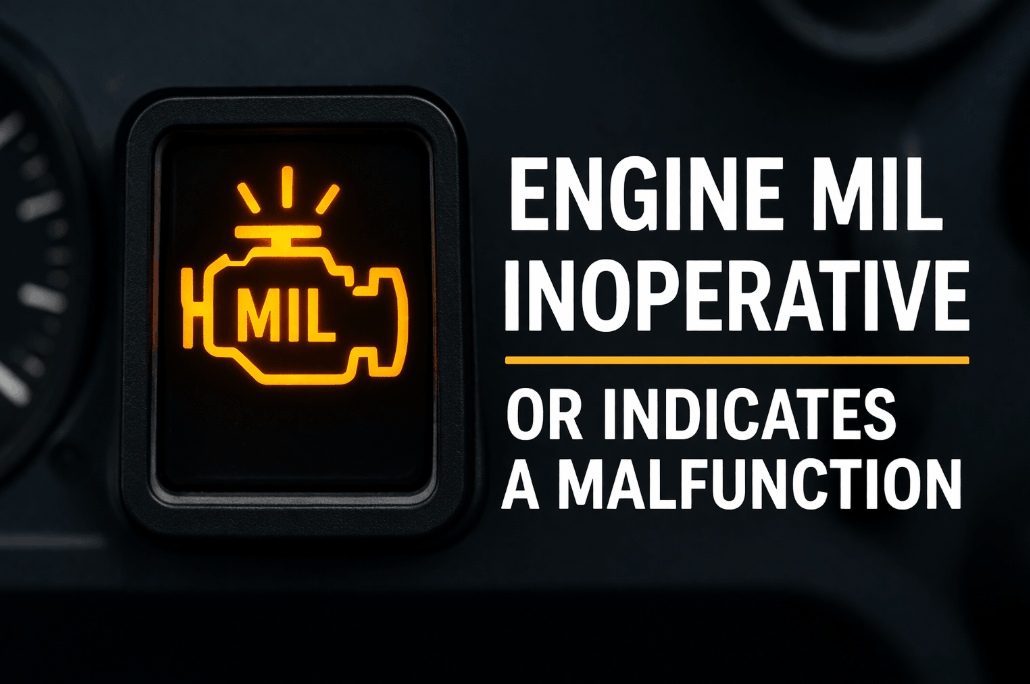
If your dashboard displays a status like engine mil inoperative or indicates a malfunction, your car’s internal computer has flagged a critical health issue or a failure within the warning system itself.
This isn’t just a suggestion to book a service; in the UK, it is a formal notification that your vehicle may be breaching emissions or safety standards.
In the UK, this condition typically results in a Major defect during an MOT test, requiring immediate repair to maintain road legality and engine health.
The Engine Management Light (EML), technically known as the Malfunction Indicator Light (MIL), is a critical communication tool between your car’s Electronic Control Unit (ECU) and the dashboard.
When this system is compromised, it either stays illuminated to signal a component failure or fails to light up during the initial ignition check, indicating a circuit or bulb issue.
What does engine MIL inoperative or indicates a malfunction mean?
An engine MIL inoperative or indicates a malfunction status means the vehicle’s primary emissions and engine monitoring system is compromised.
Inoperative refers to a light that fails to illuminate during the dashboard self-test, while indicates a malfunction means the light remains lit or flashes while the engine is running, signalling a detected mechanical or electrical fault.
The Critical Distinction Between Light Statuses
Understanding the specific behaviour of your dashboard is the first step in troubleshooting. In my experience assisting UK motorists with MOT preparation, I have found that drivers often confuse a steady amber light with an inoperative status.
If the light does not appear for 2–3 seconds when you first turn the key to position two (the self-test phase), it is officially inoperative. If it stays on after the engine starts, it indicates a malfunction.
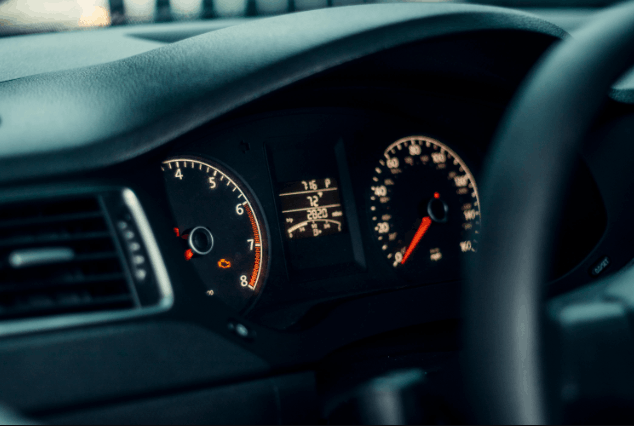
Why is your engine MIL inoperative or showing a fault?
The causes for a MIL failure range from minor sensor glitches to serious hardware defects.
Based on DVSA inspection standards and common UK garage findings, the causes generally split into two categories: sensor failures or electrical circuit breaks.
- The light fails the ignition check: This is often caused by a blown LED/bulb on the instrument cluster, a blown fuse in the engine bay, or, in some cases, deliberate tampering by a previous seller to hide a deeper engine fault.
- The light remains illuminated after start-up: The ECU has logged a Diagnostic Trouble Code (DTC). Common culprits include a blocked Diesel Particulate Filter (DPF), a faulty Oxygen (O2) sensor, or a defective Mass Air Flow (MAF) sensor.
Step-by-Step Diagnostic Process
Before spending money at a garage, you can narrow down the culprit by following these practical diagnostic steps at home.
- Turn the ignition to the ON position without starting the engine to verify if the MIL illuminates.
- Check the vehicle’s fuse box for any blown fuses related to the Engine Management or Instrument Cluster circuits.
- Plug a 16-pin OBD-II scanner into the port (usually located under the steering column or behind the centre console).
- Run a Read Codes command to extract any stored alphanumeric DTCs (e.g., P0420).
- Cross-reference the code with your vehicle’s specific manufacturer manual.
- Inspect the engine bay for obvious visual signs like loose vacuum hoses or frayed wiring.
- Check the fuel filler cap; a loose cap can actually trigger an EVAP system malfunction.
- Clear the codes only after the physical repair is completed to see if the MIL resets.
Does an engine MIL inoperative mean an automatic MOT fail?
Yes. According to the DVSA MOT Inspection Manual, any vehicle first used on or after 1 July 2003 will fail its MOT if the MIL is inoperative or indicates a malfunction.
This is classified as a Major defect. Current DVSA standards are unforgiving when it comes to emissions electronics to meet environmental targets.
While the MIL is a primary focus during the test, it is only one piece of the compliance puzzle. It is worth understanding what part of the car does the law require you to keep in good condition to avoid other common Major defects that catch drivers off guard.
MOT Defect Categories for MIL
| Defect Severity | Description | MOT Result |
| Major | MIL indicates a malfunction (stays on after engine start). | Fail |
| Major | MIL inoperative (fails to light up during ignition check). | Fail |
| Advisory | MIL intermittently flickering but functional during test. | Pass |
A common pattern I’ve noticed at testing centres is vehicles failing because the owner cleared the code just before the test. However, if the readiness monitors haven’t reset, the tester may still fail the vehicle or the light may reappear during the emissions test.

How to fix common engine MIL malfunctions
Addressing the fault depends entirely on the code retrieved. In the UK, environmental factors like damp weather and short city trips often lead to specific sensor issues that trigger the MIL.
- Oxygen (O2) Sensors: These monitor exhaust gases. A failure here can increase fuel consumption by up to 40%.
- DPF Issues: Very common in UK diesel cars used for short school runs; the filter becomes clogged and requires a forced regeneration.
- Spark Plugs/Coil Packs: If the light is flashing, this usually indicates a misfire, which can destroy your catalytic converter quickly.
Comparison of Estimated UK Repair Costs
| Component | Estimated Part Cost | Labour Time | Total Estimated Cost |
| Oxygen Sensor | £60 – £120 | 1 Hour | £110 – £200 |
| MAF Sensor | £50 – £150 | 0.5 Hours | £80 – £200 |
| DPF Cleaning | N/A | 2-3 Hours | £150 – £350 |
| Catalytic Converter | £200 – £600 | 2 Hours | £350 – £800 |
For those managing chronic vehicle faults alongside long-term health conditions, the financial strain of constant repairs often outweighs the car’s value.
In these cases, it is often more sustainable to see if can i get a mobility car on standard rate PIP rather than sinking further costs into an ageing engine.
Is it safe to drive with an engine MIL inoperative?
While the car may feel normal to drive, an inoperative MIL is dangerous because you will have no warning if a critical failure occurs later, such as a loss of oil pressure or overheating.
When the light indicates a malfunction, the car may enter Limp Home Mode, significantly reducing power to protect the engine.
In practice, I once dealt with a Vauxhall Corsa where the MIL had been disabled by a previous owner. The driver was unaware that the engine was severely over-fuelling, which eventually melted the catalytic converter, turning a £100 sensor fix into a £700 exhaust replacement.
- Avoid high speeds if the light is illuminated.
- Do not tow heavy loads while the malfunction is active.
- Seek diagnostics within 50 miles of the light appearing.

Summary and Next Steps
Dealing with an engine MIL inoperative or indicates a malfunction status requires a logical approach. Start by verifying the light’s function during the ignition cycle. If the light remains on, use an OBD-II scanner to identify the specific fault code.
In the UK, ignoring this warning not only risks a Major MOT failure but can also lead to significantly higher repair bills if engine components like the catalytic converter become damaged.
Your next step should be a professional diagnostic scan to ensure your vehicle remains roadworthy and efficient.
If your diagnostic report confirms a terminal fault or a repair bill exceeding several hundred pounds, switching to a more reliable lease might be the smartest move. You can browse the current PIP mobility car list to compare newer, compliant models that remove the stress of MOT failures entirely.
FAQ about engine MIL inoperative or indicates a malfunction
Can I pass an MOT if I turn the engine light off?
No. If you clear the code without fixing the fault, the MIL will usually reappear during the MOT’s emissions test, or the ECU’s internal readiness check will show as incomplete, leading to a failure.
How much does a diagnostic scan cost in the UK?
Most UK independent garages charge between £40 and £90 for a professional diagnostic plug-in. Main dealers may charge upwards of £120. This usually includes a full fault report and an estimate for repairs.
Why does my engine light come on and then go off?
This indicates an intermittent fault. The ECU has detected a reading outside of normal parameters that eventually corrected itself. However, the code is usually stored in the Permanent or Pending memory for a technician to find.
Can a low battery cause the MIL to stay on?
Yes. Modern UK cars are highly sensitive to voltage drops. If your battery is failing, the ECU may trigger various phantom malfunctions, including the MIL, due to an unstable power supply to the sensors.
What is the difference between a red and amber engine light?
Most UK cars use amber for the MIL. If the light is red, or if the Check Engine text is accompanied by an oil or temperature symbol, you must stop the vehicle immediately and call for recovery.
Is engine MIL inoperative the same as Service Engine Soon?
Not exactly. A Service light is typically a maintenance reminder based on mileage. The MIL is strictly for engine performance, safety, and emissions-related electronic faults.
Can I fix an inoperative MIL bulb myself?
On older cars, you could simply replace a bulb. On most modern vehicles, the MIL is an integrated LED on a circuit board. If it is inoperative, the entire instrument cluster may need professional repair or replacement.