Driving on public highways in the UK generally requires a valid MOT to prove roadworthiness. It is only legal to drive without an MOT if you are travelling to a pre-booked testing appointment or if the vehicle is over 40 years old and registered as a historic vehicle.
However, When is it legal to drive without an MOT certificate depends entirely on the purpose of the journey and the specific age of the vehicle.
Under the Road Traffic Act 1988, exemptions exist strictly for travelling to pre-booked testing appointments or for vehicles specifically classified as exempt due to their age or technical type.
When is it legal to drive without an MOT Certificate, according to the DVSA?
The Driver and Vehicle Standards Agency (DVSA) maintains a strict Zero Tolerance policy on expired certificates, with narrow exceptions under the Road Traffic Act 1988. Driving a vehicle without an MOT is permitted only for the purpose of obtaining that certificate.
This exemption is legally narrow. It does not allow for incidental stops at shops, petrol stations, or secondary locations. The journey must be as direct as possible. To remain compliant, you must have proof of booking (such as a confirmation text or email) ready to present to roadside officers.
In the UK, it is legal to drive without a valid MOT certificate in only two specific circumstances:
- To a pre-booked MOT test: You must be driving directly to a scheduled appointment at an authorised testing station.
- To or from a place of repair: Following an MOT failure, provided the fault was not classified as Dangerous, and the appointment is pre-booked.
- Exempt Vehicles: The vehicle is less than three years old or is a Historic Vehicle (40+ years old) registered with the DVLA.
How MOT Exemptions Actually Work?
While the UK’s road safety framework is notoriously strict, the DVSA acknowledges the practical reality that a car cannot always have a valid certificate, especially when it is in transit to a repair centre.
Under the Road Traffic Act 1988, the law provides a narrow window of transit that allows you to move an uncertified vehicle without facing immediate prosecution, provided your intent is purely for maintenance or testing.
The Specific Journey Rules
In practice, traffic officers and the DVSA look for reasonable intent when assessing a journey without an MOT. While the law doesn’t set a rigid mileage limit, if you’re pulled over 50 miles from home or your garage, the burden of proof shifts to you.
To stay on the right side of the law, the best course is to book a local testing station. This avoids any suspicion that you’re using the pre-booked rule as a cheeky loophole for general travel.
| Exemption Category | Legal Condition | Documentation Required |
| Pre-booked Test | Must be a direct route to the station. | Booking confirmation (Digital/Print). |
| Repair Journey | Valid for Major fails, NOT Dangerous fails. | Proof of repair appointment. |
| New Vehicles | Under 3 years from the first registration date. | V5C logbook registration date. |
When is it illegal to drive without an MOT certificate in the UK?
It is illegal to drive without an MOT if your certificate has expired and you are using the car for daily commuting, social, domestic use, or any journey not related to a pre-booked test. Furthermore, if your vehicle fails its MOT with a Dangerous defect, it becomes immediately illegal to drive on a public road, even to reach a repair shop.
Identifying Dangerous vs Major Failures
Many UK motorists mistakenly believe they have a grace period to fix failures. However, the distinction between failure types is critical for your legal safety:
- Major Fault: You may drive the vehicle to a pre-booked repair appointment if the MOT has expired, or drive it away if the old MOT is still valid.
- Dangerous Fault: This acts as an immediate Road Prohibition. The car is legally grounded and must be removed by a professional towing service.
Many motorists ask, When is it legal to drive without an MOT certificate after a failure? The answer hinges on the failure type. If you are navigating a vehicle with a Major fault to a garage, understanding road markings is vital.
For example, knowing where amber reflective studs are found on a motorway (the right-hand edge) can help guide you safely in low visibility while in transit.
Steps to Take Following an MOT Failure:
- Review the MOT refusal certificate (VT30) for Dangerous markers.
- Arrange for a recovery truck if the vehicle is classified as Dangerous.
- Book a repair appointment immediately if the fault is Major.
- Ensure the mechanic uses a direct route if moving the vehicle between sites.
- Keep a digital copy of all communications with the garage on your phone.
- Verify that your insurance remains valid for the specific journey to the garage.
- Confirm the re-test time to avoid overstaying the repair window.
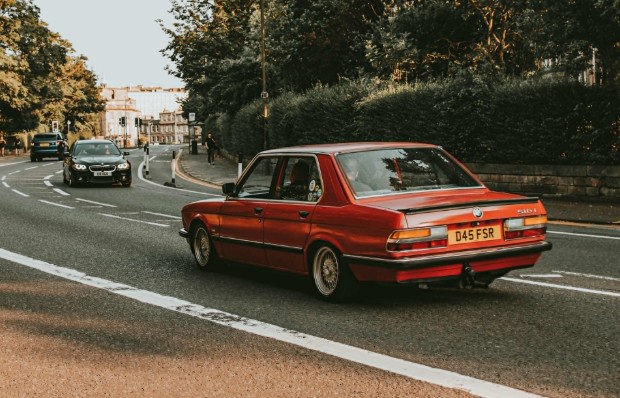
When Is It Legal to Drive Without an MOT Certificate for Vehicles Over 40 Years Old?
Owners of vehicles over 40 years old can often drive without an MOT, provided the vehicle is registered as a Historic Vehicle with the DVLA.
This is known as the 40-year exemption rule. For this to apply, the car must not have undergone substantial changes to its engine, chassis, or steering in the last 30 years.

Understanding the 40-Year Rule
This exemption exists because classic car owners typically maintain their vehicles to a high standard, often exceeding the basic MOT requirements.
However, the responsibility for roadworthiness remains entirely with the owner. If a classic car is found with a bald tyre or faulty lights, the owner is still liable for prosecution under the Road Vehicles (Construction and Use) Regulations.
When does your car require an MOT certificate?
As of 2026, the DVSA has implemented stricter digital monitoring, but the fundamental exemptions for pre-booked tests remain. One significant update in 2026 involves the reclassification of heavy electric vans.
Zero-emission goods vehicles weighing between 3.5t and 4.25t, which previously had different testing cycles, are now more strictly integrated into standard Class 4 or Class 7 MOT schedules.
How ANPR Enforcement Works in 2026?
Modern Automatic Number Plate Recognition (ANPR) systems are now integrated with the DVSA’s digital database in real-time. This digital shift coincides with updated accessibility rules; many drivers now ask, Can I get a mobility car on standard rate PIP in 2026, as vehicle compliance and financial aid often overlap.
- Midnight Expiry: The system flags an expired MOT the second it passes midnight on the expiry date.
- Parked Vehicles: You can now be fined via ANPR for having an uncertified vehicle parked on a public highway, even if it is not being driven.
| Vehicle Type | MOT Requirement (2026) | First Test Due |
| Private Cars | Annual after 3 years. | 3rd Anniversary of Registration. |
| Electric Vans (<4.25t) | Annual Class 7. | 3rd Anniversary of Registration. |
| Ambulances/Taxis | Annual. | 1st Anniversary of Registration. |
Avoiding ANPR Detection Legally
To legally keep a car without an MOT, it must be off the public road (e.g., on a private driveway) and declared SORN (Statutory Off Road Notification).
Technically, you cannot avoid detection as the system is automated; however, you can avoid prosecution by remaining within the law. If your car is parked on a public road with an expired MOT, you can be fined even if you aren’t driving it.
To legally keep a car without an MOT, it must be off the public road (on a driveway or in a garage) and declared SORN (Statutory Off Road Notification).
MOT Requirements During the UK Driving Test
For those asking When is it legal to drive without an MOT certificate, theory test enthusiasts often find this a tricky question.
Learners preparing for their UK theory test often struggle with this specific legal nuance, along with other motorway-specific questions, such as finding green reflective studs or what to expect at a contraflow system while navigating complex roadworks.
The official DVSA question bank highlights that even during the practical exam, a vehicle’s legal status is the responsibility of the driver. If you are taking your test in your own car, it must have a valid MOT; if it’s missing, the examiner is legally required to cancel the session on the spot.

Driving Test and Compliance Facts
Beyond the MOT, learners often focus on superstitions like eating a banana for nerves or perfecting a parallel park. While these affect your performance, they don’t change your legal obligations.
For instance, a common mistake is assuming a minor fault like rolling back on a hill is as serious as an MOT lapse. In reality, while rolling back might fail your test, driving an uncertified car is a criminal offence that stays on your record far longer than a failed driving exam.
| Factor | Major MOT Failure | Dangerous MOT Failure |
| Can you drive away? | Only if the old MOT is still valid. | No, never. |
| Drive to a garage? | Yes, if pre-booked. | No, must be towed. |
| Penalty | £1,000 fine. | £2,500 fine + 3 points. |
Common MOT Myths and Legal Realities
Many UK motorists rely on hearsay regarding MOT extensions and grace periods, which can lead to heavy fines. The following table clarifies the most frequent misconceptions against the actual Road Traffic Act requirements.
| MOT Myth | Legal Reality |
| There is a 14-day grace period. | False. There is zero grace period. The moment your certificate expires, the car is illegal for general road use. |
| I’m taxed and insured, so I can drive. | False. Most insurance policies are technically void without a valid MOT, unless you are on a direct route to a pre-booked test. |
| I can stop for petrol on the way. | False. The law only protects a direct journey. Stopping at shops or stations can lead to a fine and points. |
Final Summary
To remain legal in 2026, follow this Golden Rule: Never drive without an MOT unless you have a confirmed, time-stamped appointment at a garage.
- Major Fail: Drive only to the repair shop.
- Dangerous Fail: Recover by trailer only.
- No MOT + Public Road: Instant ANPR fine risk.
FAQ about When is it legal to drive without an MOT certificate?
Can I drive without an MOT if it’s booked?
Yes, but only for the direct journey to the testing station. You must have proof of the appointment ready to show the police.
Can cameras catch you with no MOT?
Yes. ANPR cameras at the roadside and on police vehicles scan number plates and instantly check them against the DVSA national database.
What happens if you forget to get an MOT?
Your insurance becomes invalid, and you risk a £1,000 fine. If stopped, the police may seize the vehicle if it is deemed unroadworthy.
Is there a grace period for MOTs?
No. There is no grace period whatsoever. Your vehicle must have a fresh, valid certificate by the expiry date listed on your previous one to remain legal.
How long can you go without having an MOT?
You can keep a car without an MOT indefinitely, provided it is kept on private land and has been declared SORN via the DVLA.
Can I get insured without an MOT?
Most insurers require a valid MOT as a condition of the policy. Without one, your cover is likely reduced to the bare minimum Third Party legal requirement or cancelled entirely.
Can I drive my car home if I failed my MOT?
No, unless your previous MOT certificate is still valid and no Dangerous faults were recorded. If the old MOT has already expired, you can only drive directly to a place of repair.
My car is 3 years old. When do I need an MOT?
The MOT is due exactly three years from the date of its first registration. You can find this date in your V5C logbook.