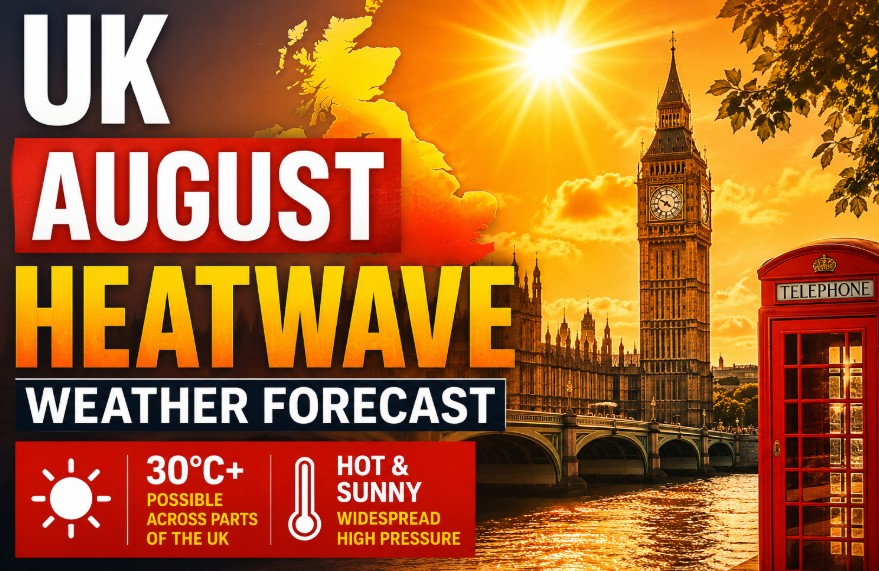
The UK August Heatwave Weather Forecast suggests a continuation of the warming trends observed earlier this summer. While specific daily temperatures remain subject to change, current long-range models indicate a higher probability of above-average temperatures compared to the 1991–2020 baseline.
Residents should prioritize monitoring official Met Office updates, practice proactive home cooling, and stay hydrated to ensure safety during potential late-summer heatwaves.
What is the UK August Heatwave Weather Forecast?
An official UK heatwave is defined as a period of at least three consecutive days where daily maximum temperatures reach or exceed specific regional thresholds.
A heatwave in the UK is officially declared when a location records a period of at least three consecutive days with daily maximum temperatures meeting or exceeding the heatwave temperature threshold.
These thresholds vary by county, reflecting the diverse climate patterns across the United Kingdom.
The Science of Heat Thresholds
Heat thresholds are calculated based on historical climate data for specific regions, allowing meteorologists to issue tailored heat-health alerts to coordinate NHS and emergency responses.
Heatwave thresholds are not uniform; they are region-specific benchmarks. For example, London and the South East have higher thresholds than parts of Scotland or Northern Ireland.
These benchmarks are vital for the UK Health Security Agency (UKHSA) and the Met Office to trigger coordinated responses during extreme temperature events.
Truths Regarding Late-Summer Weather
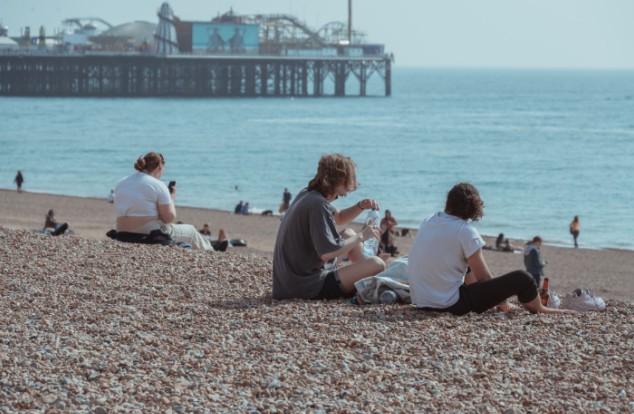
August is increasingly experiencing significant heat events due to North Atlantic sea surface temperatures and blocking jet stream patterns that trap warm continental air over the UK.
While July is historically the warmest month, August has increasingly delivered significant heat events. The UK climate is influenced by shifting jet stream patterns.
When these patterns block cooler Atlantic-driven weather from moving eastward, they trap warmer continental air masses over the UK for extended periods, leading to sustained high temperatures.
Is there a heatwave coming to the UK in August 2026?
As of late June 2026, long-range forecasts suggest August temperatures will likely be 1–2°C above the 30-year average, with an increased likelihood of short-lived hot spells.
Long-range seasonal forecasts for 2026 indicate a warmer-than-average summer. While the weather in August remains changeable, the frequency of extreme heat days is trending upward.
Official forecasts from the Met Office and the BBC remain the primary sources for tracking the probability of heatwave conditions as the month approaches.
Tracking Forecasts via Official Channels
Residents should monitor the Met Office Weather Warnings, BBC Weather, and the UK Health Security Agency (UKHSA) Heat-Health Alert service for real-time safety information.
- Met Office Weather Warnings: Real-time alerts for extreme heat across specific regions.
- BBC Weather: Detailed, location-specific forecasts that update multiple times daily.
- Heat-Health Alert Service: A joint initiative between the UK Health Security Agency and the Met Office.
- Met Office Maps: Visual aids showing temperature distributions and forecast intensity.
Essential Steps for Monitoring Heatwaves
- Bookmark the official Met Office regional forecast page.
- Enable push notifications for weather alerts on your mobile device.
- Check the UK Health Security Agency heat-health alert level daily.
- Monitor local travel updates for rail and transport disruptions.
- Cross-reference long-range projections with short-term (5-day) outlooks.
- Look for regional heat-health warnings specifically tailored to your county.
- Verify data via the BBC Weather app or the official Met Office portal.
What will the UK be like in August?
August in the UK is statistically a transitional month, often balancing warm, settled spells with periods of instability. The intensity of heat can vary dramatically between the southern counties and the northern regions, which summarizes typical search inquiries regarding these variations.
Regional Variations and Climate Context
Southern England and London frequently record the highest temperatures due to their proximity to continental Europe. Conversely, Scotland and Northern Ireland often see more temperate conditions.
However, when a plume of hot air moves up from the continent, these northern areas can also experience unusually high temperatures, sometimes catching communities off guard.
| Region | Typical August Max (°C) | Heatwave Vulnerability |
| South East England | 22°C – 25°C | High |
| Midlands | 20°C – 23°C | Moderate |
| Northern England | 19°C – 22°C | Moderate |
| Scotland/N. Ireland | 17°C – 20°C | Low |
Why is heat considered the number one weather killer?
Extreme heat is a silent killer because its effects are cumulative, placing severe, invisible strain on the human cardiovascular and respiratory systems.
Unlike storms or flooding, which present immediate physical hazards, extreme heat is a silent danger. Its effects build up over time, especially during tropical nights (where temperatures do not drop below 20°C), preventing the body from recovering from daytime heat stress.
The Health Impact of Heat
When ambient temperatures remain high, especially during the night, the body struggles to cool down. If the temperature does not drop below 20°C (a tropical night), the human body cannot recover from the stress of the day.
This leads to heat exhaustion and, in extreme cases, heatstroke, which is a life-threatening emergency.
How to keep an elderly person cool?
Protecting vulnerable individuals requires proactive management. As noted, specific strategies are effective in maintaining safe indoor environments and personal comfort for the elderly during high-temperature events.
Aside from financial planning, specific strategies are effective in maintaining safe indoor environments and personal comfort for the elderly during high-temperature events.
Cooling Strategies for Vulnerable Residents
- Hydration Focus: Encourage regular intake of water or diluted fruit juice, even if they do not feel thirsty.
- Cool Zones: Use a basement room or the ground floor, which stays cooler than upper levels.
- Managing Ventilation: Keep windows and curtains closed during the hottest part of the day, opening them only when the outside air is cooler than the indoor air.
- Cooling Aids: Use damp cloths or footbaths to lower body temperature.
- Medication Review: Consult a GP if you are concerned that medications might interfere with the body’s ability to regulate heat.
Preparing your home for rising temperatures
Effective home cooling focuses on preventing solar gain by using external shutters, blackout blinds, and strategic cross-ventilation.
Low-Cost Ways to ‘Cool-Proof’ Your Home
- Master the Shut and Open Cycle: Keep windows, doors, and curtains closed during the hottest parts of the day (10:00 AM to 6:00 PM).
- Create Thermal Barriers: Use light-colored or reflective curtains. If unavailable, placing cardboard or reflective foil in windows receiving direct afternoon sun can significantly reduce room temperature.
- The Cross-Ventilation Strategy: Once the temperature drops outside, open windows on opposite sides of the house to create a draft. Placing a fan facing out of an open window can help extract hot air.
- Minimize Heat Sources: Avoid using ovens, hobs, or tumble dryers during the day. Switch to cold meals and use small appliances like microwaves or air fryers.
Low-Cost Ways to ‘Cool-Proof’ Your Home
Effective indoor climate management is about preventing solar gain before it enters your living space. You do not need expensive air conditioning to keep your home comfortable; you just need to manage your home’s thermal environment:
- Master the Shut and Open Cycle: Keep windows, doors, and curtains closed during the hottest parts of the day (10:00 AM to 6:00 PM) to trap cooler air inside. Only open them in the evening once the external air temperature drops below your indoor temperature.
- Create Thermal Barriers: Use light-colored or reflective curtains. If you do not have blackout blinds, placing cardboard or reflective foil in windows that receive direct afternoon sun can significantly reduce room temperature.
- The Cross-Ventilation Strategy: Once the temperature drops outside, open windows on opposite sides of the house to create a draft. Placing a fan facing out of an open window in the evening can help suck the hot air out of your room, replacing it with the cooler evening breeze.
- Minimize Heat Sources: Avoid using ovens, hobs, or tumble dryers during the day. Switch to cold meals and use small kitchen appliances like microwaves or air fryers, which generate less ambient heat.
Stay Hydrated to Avoid Heatwave Effects
Dehydration is the primary catalyst for heat-related illnesses, including heat cramps, heat exhaustion, and heatstroke. When the body loses more fluid than it takes in, it cannot produce enough sweat to cool itself down.
- Drink Before You’re Thirsty: By the time you feel thirsty, you are already mildly dehydrated. Sip water consistently throughout the day.
- Watch the Color: Aim for pale-colored urine. Dark yellow urine is a clear indicator that you need to increase your fluid intake immediately.
- Electrolyte Balance: During extreme heat, you lose salts through sweat. If you are active, consider water with electrolyte tabs or diluted fruit juice to help your body retain fluids more effectively.
- Avoid Dehydrating Drinks: Limit intake of caffeine (tea, coffee, energy drinks) and alcohol, as both act as diuretics and can accelerate fluid loss.
How to Plan a Day Effectively in the Heatwave?
The key to surviving a heatwave is to shift your activity patterns to avoid the peak intensity of the day.
- Shift to Sun-Smart Scheduling: Front-load your chores and errands to the early morning (before 9:00 AM) or late evening (after 7:00 PM). Avoid being outside during the sun’s peak intensity, typically between 11:00 AM and 4:00 PM.
- Monitor the Heat Map: Before leaving the house, check the Met Office Heat-Health Alert levels. If an alert is in place, reconsider non-essential travel.
- Identify Your Cool Refuge: If you must go out, map out public air-conditioned spaces such as libraries, shopping centers, or museums where you can retreat if you feel the onset of heat exhaustion.
- Travel Prepared: If you must use public transport, always carry a heat kit: a bottle of water, a damp cloth in a sealed bag, and a hat. If you start to feel dizzy or lightheaded, do not wait for your destination; get off at the next stop, find shade, and cool down immediately.

Summary
Staying safe during an August heatwave relies on constant vigilance. As the climate evolves, the new normal for UK summers involves more frequent high-heat episodes.
Stay informed via official Met Office alerts, prepare your home early, and prioritize the needs of vulnerable family members. Bookmark the official weather sources now to ensure you have quick access when the mercury rises.
FAQ
How is a heatwave officially defined?
It is defined as three consecutive days where daily maximum temperatures reach or exceed the regional threshold set by the Met Office.
Is August hotter than July in the UK?
Historically, July is often the warmest month, but August frequently experiences significant, record-breaking heatwaves due to shifting atmospheric blocking patterns.
How hot is London in August?
Average daily highs in London typically range between 22°C and 25°C, though heatwaves can push temperatures significantly higher.
What was the 1976 heatwave?
The 1976 heatwave was a period of extreme, prolonged drought and high temperatures, with peaks reaching 35.9°C, setting a benchmark for UK extreme weather.
Is summer 2026 going to be hot?
Long-range seasonal forecasts suggest that the UK is experiencing a general trend toward warmer summers, though individual weeks remain unpredictable.
Where is the warmest place in the UK in August?
Generally, London and the South East of England record the highest average temperatures due to their geographical position.
What should I wear in August?
Opt for loose-fitting, natural fibers like cotton or linen, and always use sun protection, including hats and SPF, even on cloudy days.
Will there be travel disruptions?
Extreme heat can cause rail lines to buckle and road surfaces to soften, often leading to reduced speeds and potential cancellations on public transport.