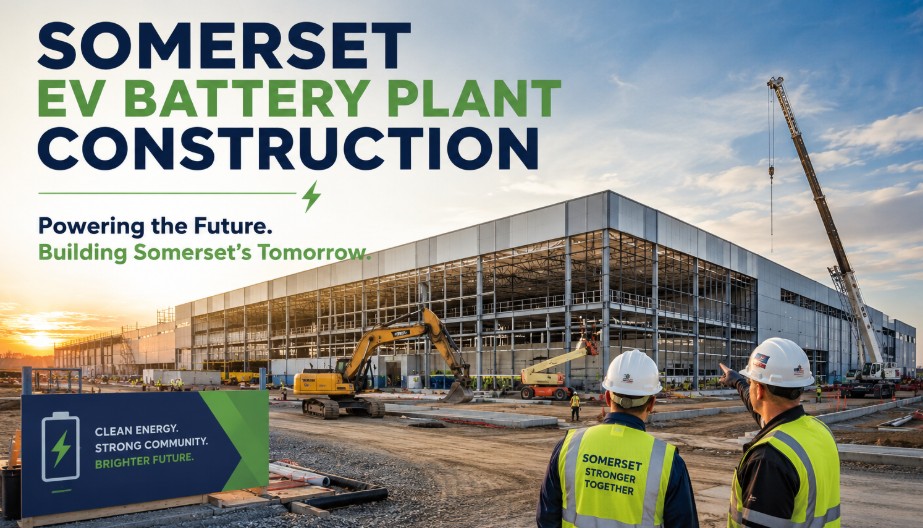
The Somerset EV Battery Plant Construction is a £4 billion gigafactory being developed by Agratas (a Tata Group company) at the Gravity Smart Campus in Bridgwater. Designed to produce 40GWh of battery capacity annually by 2027, the project is a cornerstone of the UK’s transition to domestic electric vehicle manufacturing.
As of June 2026, the project has completed its structural steel phase and is transitioning to a new construction delivery model, with TSL appointed to oversee the complex internal fit-out and final commissioning stages.
Somerset EV Battery Plant Construction Progress and Timeline
Somerset EV Battery Plant Construction is currently entering its most technically demanding phase. After completing the primary steel frame for the initial production facility, Agratas is shifting its focus to internal fit-outs, cladding, and process-equipment integration to ensure the site meets its 2027 production launch target.
The development follows an intensive, phased schedule designed to transform the 635-acre site into a world-class manufacturing facility.
The recent completion of the structural steel frame for Building One represents a major milestone, providing the necessary foundation for high-volume automated battery cell assembly.
Current Status (June 2026)
- Structural Completion: The primary steel frame for Building One, utilizing 23,000 tonnes of British steel, is now fully erected.
- Contractor Transition: Following the successful delivery of the structural phase, Agratas has mutually parted ways with Sir Robert McAlpine. Buckinghamshire-based TSL has been appointed as the new construction partner to manage the complex internal fit-out, clean-room installation, and process-utility integration.
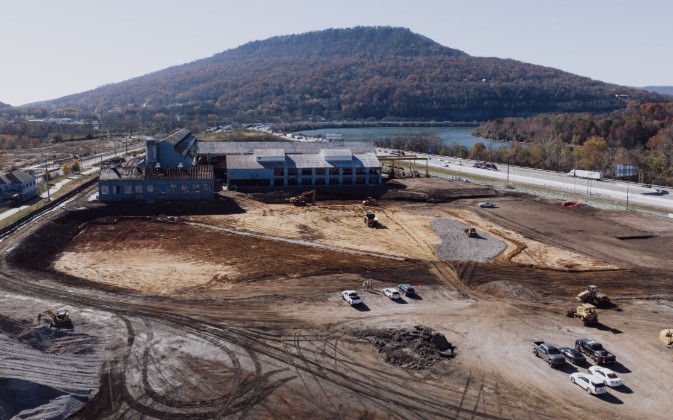
- Site Activity: The project has moved into the cladding and weatherproofing stages, with ongoing work on site-wide infrastructure, including power grid connections and internal road networks.
Project Timeline Overview
| Phase | Status/Target |
| Site Prep & Piling | Completed (2024–2025) |
| Steel Frame Erection | Completed (February 2026) |
| Cladding & Roofing | In Progress (Mid-2026) |
| Internal Fit-Out | Commencing (Late 2026) |
| Commissioning | Scheduled (2027) |
| Initial Production | Targeted (Late 2027) |
Requirements for Gigafactory Development
Unlike standard industrial builds, a gigafactory requires extreme environmental precision, including massive clean-room technology, robust electrical/mechanical integration, and significant site-wide infrastructure like dedicated motorway junctions and high-speed data connectivity to support automated robotics.
The facility’s construction is dictated by the extreme requirements of lithium-ion battery assembly.
Every element of the build is engineered to support the specific needs of the manufacturing lines that will populate the site.
What Infrastructure and Manufacturing Precision is Required?
The facility utilizes specialized clean and dry room technology where atmospheric moisture and particulates are strictly regulated.
These are integrated with high-capacity M&E modules and dedicated site infrastructure, such as the new Junction 22A on the M5, to ensure high-quality cell production and efficient logistics.
- Clean and Dry Room Technology: The core manufacturing area is a climate-controlled zone designed to prevent defects during the assembly of battery cells.
- Integrated Utilities: The site features modular M&E systems, allowing for the rapid scaling of chemical processing lines and automated robotics.
- Site Connectivity: To accommodate the scale of the facility, the project includes the development of a dedicated M5 motorway junction (Junction 22A) and 100Gb/s dark fibre infrastructure for high-speed site communication.
How Does the Project Address Sustainability and Net-Zero Goals?
Sustainability is integrated via an on-site Energy Centre that provides low-carbon power, closed-loop manufacturing systems for water recycling, and a procurement strategy that favors local sourcing to minimize the embedded carbon footprint of construction.
- Renewable Energy Integration: The facility is designed to be powered by low-carbon energy sources, with an on-site Energy Centre engineered to balance the factory’s intensive power requirements.
- Resource Efficiency: The manufacturing processes focus on closed-loop systems, including advanced water recycling and waste management protocols.
- Sustainable Supply Chain: Agratas prioritizes local procurement of construction materials and steel, aiming to minimize the embedded carbon footprint of the project’s construction phase.
What is the Strategic Role of the Plant in UK Decarbonization?
The plant acts as a cornerstone of the UK’s industrial strategy by ensuring Supply Chain Sovereignty. By producing 40GWh of capacity locally, it enables domestic manufacturers to meet Rules of Origin requirements, keeping UK-made electric vehicles eligible for international trade agreements.
- Supply Chain Sovereignty: By producing 40GWh of capacity locally, the plant significantly reduces reliance on long-distance imports, directly supporting UK automotive leaders like Jaguar Land Rover.
- Export Compliance: Domestic cell production is vital for UK manufacturers to meet Rules of Origin requirements, ensuring their vehicles remain eligible for favorable trade agreements in international markets.
- Economic Catalyst: Beyond batteries, the site acts as a hub for green skills, with partnerships across regional universities aimed at building a pipeline of electrochemical engineers and high-tech manufacturing talent.

What is the Potential for Future Expansion at the Site?
The Gravity Smart Campus is designed for modular scalability, meaning the current site layout can accommodate future expansions beyond the initial 40GWh capacity to meet growing global demand for energy storage and mobility solutions.
- Modular Scalability: The site is master-planned to allow for seamless building expansion as market demand grows.
- Industrial Ecosystem: The campus is being marketed as a circular cluster where Agratas and other high-tech businesses can share resources and energy to optimize efficiency.
- Beyond Automotive: The robust infrastructure allows the site to cater to non-automotive sectors, such as grid-scale battery storage, insulating the project from market fluctuations.
Economic and Employment Impact in the South West
The project is set to become a primary economic engine for the South West, with plans to create 4,000 direct, high-skilled jobs and thousands more in the regional supply chain and construction sectors.
This massive influx of technical employment is expected to stimulate long-term economic regeneration, revitalize regional educational partnerships, and establish the Somerset area as a hub for advanced manufacturing.
Understanding Agratas and the Tata Group Connection
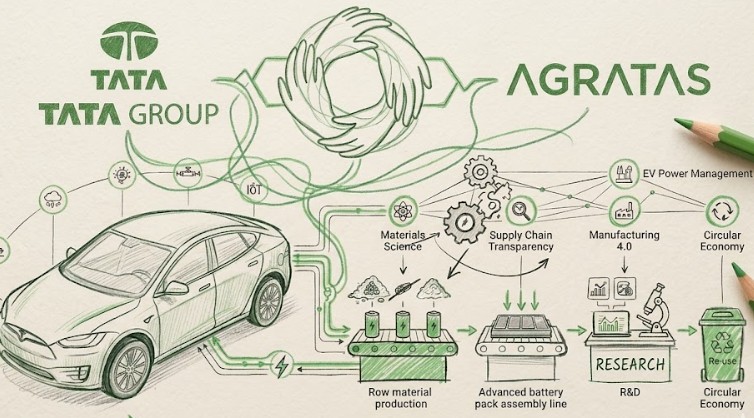
Agratas is the dedicated battery manufacturing arm of the global Tata Group. This connection provides the Somerset facility with a vertically integrated supply chain, secure access to raw materials, and the backing of one of the world’s largest industrial conglomerates.
This integration is key to the project’s reliability. By leveraging Tata’s global expertise, the Somerset plant secures a vital link for UK-based automotive manufacturers, reducing dependence on international logistics and strengthening the UK’s automotive ecosystem.
Project Specifications at the Gravity Smart Campus
| Feature | Detail |
| Primary Investor | Tata Group (Agratas) |
| Total Investment | £4 Billion |
| Primary Focus | EV Battery Cells & Packs |
| Expected Job Creation | 4,000 Direct |
| Site Location | Gravity Smart Campus, Somerset |
Comparison of Major UK Battery Manufacturing Hubs
| Facility Name | Location | Planned Capacity (GWh) | Operational Start |
| Agratas (Somerset) | Bridgwater | 40 | 2027 |
| AESC | Sunderland | 35 | 2025/2026 |
| West Midlands Gigafactory | Coventry | Up to 60 | TBC |
Final Summary
The construction of the Agratas facility at the Gravity Smart Campus marks a pivotal moment for the UK’s industrial landscape.
With the project scheduled to begin production in 2027, the focus is now shifting toward infrastructure completion and technical commissioning.
For stakeholders, keeping an eye on official Agratas updates regarding hiring and supply chain opportunities is recommended, as this site will be a primary engine for UK economic growth in the coming decade.
FAQ about Somerset EV battery plant construction
Where is the new battery plant being built?
The plant is located at the Gravity Smart Campus, a 635-acre former ordnance factory site near Bridgwater, Somerset. This location was chosen for its excellent logistical access and space for large-scale industrial expansion.
When is the Somerset factory expected to start production?
Agratas has stated that the facility is on track for an initial production launch in 2027, with the site being commissioned in phases to reach full 40GWh capacity shortly thereafter.
How many jobs will the project create?
The project is projected to generate up to 4,000 high-quality direct jobs in engineering, manufacturing, and support services, alongside thousands more in the surrounding supply chain and construction sectors.
Is Agratas a Tata company?
Yes, Agratas is the global battery business unit of the Tata Group. The Somerset site represents a massive investment from the group to bolster its position in the European electric mobility market.
What is the purpose of the Gravity Smart Campus?
Gravity is a smart campus designed to host clean, high-tech industrial activity. Its focus is on sustainability, energy efficiency, and attracting innovative businesses that support the UK’s transition to net-zero manufacturing.
How does the plant support the UK automotive industry?
By providing a massive local supply of battery cells, it enables UK car manufacturers to meet domestic and international regulatory requirements for electric vehicles, securing the industry’s future.
Will the plant use renewable energy?
The project design emphasizes sustainability, with plans to integrate significant renewable energy sources and battery storage to power the factory’s intensive manufacturing requirements.
Can I apply for jobs at the site?
Recruitment for the plant is managed through official Agratas channels. As the project enters later construction and fit-out phases, opportunities for technicians and specialized staff are expected to increase.