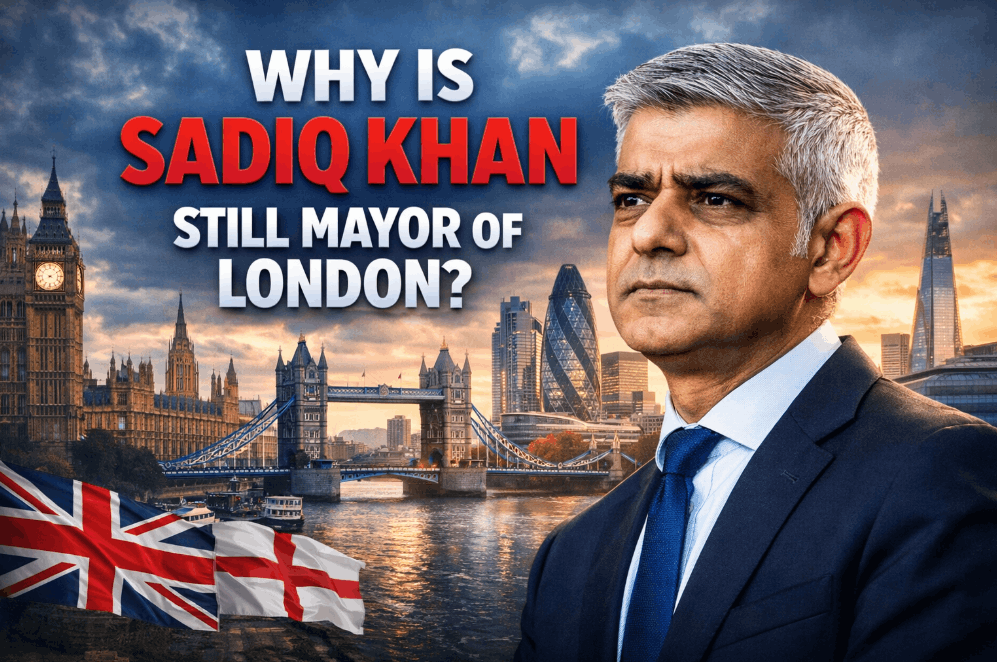
Why is Sadiq Khan still Mayor of London? Sadiq Khan remains the Mayor of London because he won a historic third term in the May 2024 election, securing 1,088,225 votes (43.8%).
Under UK law, there are no term limits for the Mayor of London, allowing him to serve until the next election in May 2028.
Why is Sadiq Khan still Mayor of London in 2026?
Why Sadiq Khan won a third term:
- Electoral System Change: The 2024 election moved to “First-Past-The-Post,” favoring candidates with established bases.
- Key Policy Appeals: High-impact initiatives like Universal Free School Meals and the TfL fare freeze.
- Demographic Support: Strong margins in Inner London heartlands like Hackney and Lambeth.
- Lack of Term Limits: UK law allows the Mayor to serve indefinitely as long as they are re-elected.
By 2026, Khan has cemented his position by leaning into ‘bread and butter’ urban issues, successfully framing himself as a buffer against national economic volatility for the average Londoner.
Khan’s political longevity is not merely a result of recent campaigning; it is the culmination of a three-decade trajectory from a council estate in Tooting to the highest office in the city.
His ability to weather controversies, ranging from ULEZ expansions to clashes with central government, stems from a deeply rooted connection to London’s demographic shifts.
Understanding Khan’s current dominance requires looking beyond the ballot box to his roots as a human rights lawyer and his methodical climb through the ranks of Westminster.
The 2024 Election: A Paradigm Shift in London Politics
The primary reason Sadiq Khan is still holds the position of the Mayor of London is because of the May 2, 2024, election. This election was unique for several reasons that favored an incumbent with a strong brand.
For the first time, the “Supplementary Vote” system (where voters pick a first and second choice) was replaced by “First-Past-The-Post” (FPTP).
Under the old system, a candidate needed broad consensus; under FPTP, they simply need more votes than any other single individual.
Khan successfully framed the election as a two-horse race between himself and the Conservative candidate, Susan Hall.
By consolidating the progressive vote and highlighting Hall’s alignment with more right-wing national policies, Khan maintained a comfortable 11-point lead.
Despite significant pushback in outer London boroughs regarding the Ultra Low Emission Zone (ULEZ), Khan’s strength in inner-city heartlands like Lambeth, Hackney, and Newham proved insurmountable.
Key Figures: The 2024 Mandate
| Election Breakdown | Result & Impact |
|---|---|
| Total Votes | 1,088,225 (Historic high for a third term) |
| Vote Share | 43.8% (Up from 40% in the 2021 first round) |
| Margin of Victory | 275,828 votes over Susan Hall |
| Turnout | 40.5% (Stable despite “voter fatigue” concerns) |
| Legal Status | No term limits exist; eligible for re-election in 2028 |
From Earlsfield Estate to City Hall: The Journey of a Self-Made Londoner
Much of the Mayor’s resilience lies in an origin story that has become a central pillar of his political identity.
Sadiq Aman Khan was born on October 8, 1970, at St George’s Hospital in Tooting. He was the fifth of eight children (seven boys and one girl) born to Amanullah and Sehrun Khan.
The Pakistani Heritage and Move to London
His parents migrated to London from Pakistan in 1968. His father, Amanullah, found steady work as a London bus driver, a job he held for over 25 years.
His mother, Sehrun, worked as a seamstress. The family lived in a three-bedroom council flat on the Henry Prince Estate in Earlsfield. This working-class upbringing in social housing is a fact Khan frequently cites to contrast himself with “out of touch” politicians from privileged backgrounds.
He is fluent in Urdu and has maintained strong ties to his heritage, which has helped him build a coalition of support among London’s diverse immigrant communities.
Education and Early Ambitions
Khan attended Fircroft Primary School and Ernest Bevin School, a local comprehensive. Originally, he intended to become a dentist, but a teacher noted his “argumentative” and persuasive nature, suggesting he pursue law instead.
This, combined with a fascination for the TV show L.A. Law, led him to study at the University of North London (now London Metropolitan University). He was the first in his family to go to university, graduating with a Bachelor of Laws (LLB) in 1991.
The Legal Career: A Human Rights Specialist
Before his name ever appeared on a ballot, Sadiq Khan was a prominent human rights solicitor. This period of his life (1994–2005) is crucial because it established his reputation as a defender of civil liberties, often against the very institutions he now manages, like the Metropolitan Police.
Christian Fisher and Landmark Cases
In 1994, he joined the law firm Christian Fisher as a trainee. By 1997, at just 27 years old, he became a partner. The firm was renamed Christian Khan in 2002. During this decade, Khan specialized in actions against the police, employment law, and discrimination cases. He famously represented:
- Victims of police misconduct and wrongful arrest.
- Individuals facing workplace discrimination based on race or religion.
- The advocacy group Liberty, where he served as Chairman from 2003 to 2005.
This legal background gave him an intimate understanding of London’s judicial and policing systems.
It also made him a target for political opponents later in life, who criticized his history of representing “controversial” figures, though Khan maintained that every individual is entitled to a legal defense under the rule of law.
The Ascent in Westminster: Councillor to Minister
Khan’s entry into formal politics was methodical. He did not start at the top; he spent over 20 years climbing the ranks of the Labour Party.
1. Local Government (1994–2006)
While still practicing law, Khan was elected as a councillor for the London Borough of Wandsworth, representing the Furzedown ward.
He served for 12 years, gaining deep experience in local housing, planning, and community services. This “grassroots” phase allowed him to build a local power base in Tooting.
2. Member of Parliament (2005–2016)
In the 2005 General Election, he was elected as the MP for Tooting, succeeding Tom Cox. His arrival in Parliament was immediately notable; he was named “Newcomer of the Year” by The Spectator magazine.
During his time as an MP, he was a vocal critic of certain Labour policies under Tony Blair, including the Iraq War and proposed anti-terror laws that he felt encroached on civil liberties.
3. Ministerial Roles under Gordon Brown
Khan’s rise accelerated under Prime Minister Gordon Brown:
- Minister of State for Communities (2008): Focusing on social cohesion.
- Minister of State for Transport (2009): He became the first Muslim and first person of Asian descent to attend a UK Cabinet meeting. In this role, he was a key proponent of the Crossrail project (now the Elizabeth Line).
4. Shadow Cabinet and “Kingmaker” Status
After Labour lost the 2010 election, Khan ran Ed Miliband’s successful leadership campaign. As a reward, he was appointed Shadow Secretary of State for Justice and Shadow Lord Chancellor.
By 2013, he was also the Shadow Minister for London, effectively becoming the Labour Party’s “Mayor in waiting.”
Why is Sadiq Khan Successful? An Analysis of His Political Brand
Khan’s success in being elected three times, more than any other Mayor in London’s history, is the result of several strategic factors:
1. Demographic Alignment
London is not the same as the rest of the UK. It is younger, more ethnically diverse, and stayed overwhelmingly “Pro-EU” during Brexit.
Khan has positioned himself as the ultimate “anti-Brexit” and “pro-diversity” leader. His “London is Open” campaign became a global brand, signaling that the city remained welcoming to international talent despite national political trends.
2. The “Suburban Neutralization” Strategy
Critics often focus on his unpopularity in outer London due to ULEZ. However, Khan’s success comes from his ability to dominate the “Inner London” vote so heavily that outer London gains are minimized.
In 2024, he also neutralized Conservative attacks on crime by launching the “Violence Reduction Unit” (VRU), shifting the focus to public health and prevention rather than just “tough on crime” rhetoric.
3. Consistency on Transport
For the average Londoner, transport is the most visible mayoral responsibility. On the ground, his popularity is tied to the economics of the commute. Policies like the ‘Hopper Fare’ and strategic price freezes provided a direct, daily financial win for millions of residents.
Even his critics acknowledge that the Elizabeth Line, opened under his watch, has been a monumental success for the city’s economy.
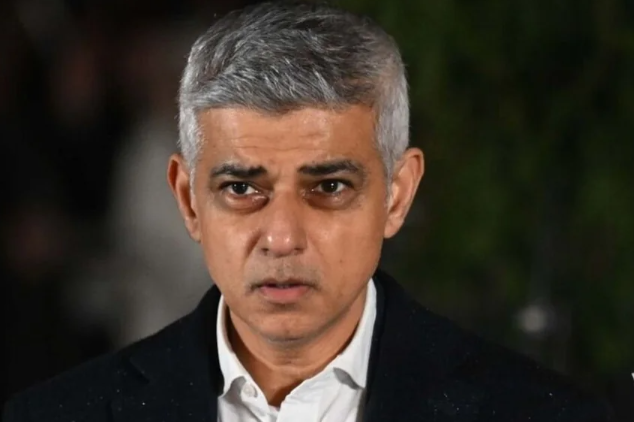
Major Achievements: A Decade of Delivery (2016–2026)
To understand why Sadiq Khan remains a dominant force, one must look at the tangible changes to the city’s infrastructure and social fabric.
While many politicians are judged on rhetoric, the Mayor of London is judged on “delivery”—specifically in transport, housing, and public health.
Khan’s political capital is built on a track record of high-visibility infrastructure and social projects, summarized below:
| Policy Area | Landmark Initiative | 2026 Status & Impact |
| Transport | The Elizabeth Line | Added 10% to central London’s rail capacity; carries 200m+ passengers annually. |
| Transport | The Hopper Fare | Allows unlimited bus/tram transfers for £1.75 within 60 mins; saved Londoners millions in commuting costs. |
| Public Health | ULEZ Expansion | Created the world’s largest Clean Air Zone; reduced central London NO2 levels by an estimated 46%. |
| Education | Universal Free School Meals | Provided 280,000+ primary pupils with daily meals; saving families approx. £1,000 per child over two years. |
| Housing | Council Housebuilding | Oversaw 23,000+ council home starts, the highest level in London since the 1970s. |
| Environment | Green Infrastructure | Funded 500,000+ new trees and created 100+ new green spaces across the capital. |
| Public Safety | Violence Reduction Unit (VRU) | Shifted policing to a “public health” model; stabilized serious youth violence rates in key boroughs. |
The 2024–2028 Manifesto: What is Changing Now?
Sadiq Khan’s third term is focused on “finishing the job.” For residents and business owners, these are the current priorities being implemented through 2026 and 2028:
- Permanent Free School Meals: What started as an emergency measure is now a permanent fixture of London’s social safety net.
- 1,300 New Police Officers: Directly funding neighborhood police to return to a “Bobbies on the beat” model.
- Zero-Emission London by 2030: Targeting a fully electric or hydrogen TfL bus fleet; currently ahead of schedule with thousands of electric buses in service. These local efforts remain a critical component of the broader UK net zero vehicle emissions plans, aligning London’s air quality goals with national decarbonisation targets for 2030 and beyond.
- The London Growth Plan: A strategic move to create 150,000 “high-quality” jobs in tech, life sciences, and green energy by the end of 2028.
The 2028 Outlook: Will Sadiq Khan Run for a Fourth Term?
As London moves past the midpoint of Khan’s third term, the question on every political analyst’s mind is whether the “Bus Driver’s Son” will attempt an unprecedented fourth term in May 2028.
1. Khan’s Current Intentions
Despite early speculation in 2025 that he might return to Westminster, Sadiq Khan confirmed in September 2025 that it is his “intention” to stand again in 2028.
He has frequently described being Mayor as “the best job in politics,” signaling that he has no immediate plans to step aside while his major projects, like the 2030 Net Zero target, are still in progress.
2. Potential Challengers for 2028
The 2028 race is already shaping up to be a clash of ideologies. Key figures to watch include:
- Laila Cunningham (Reform UK): Formally announced in January 2026 as Reform’s candidate. A former Conservative councillor and “vigilante mum” prosecutor, she has declared an “all-out war on crime” and ULEZ, positioning herself as Khan’s primary antagonist.
- The Labour “Succession” List: Should Khan decide to step down, several heavyweights are waiting in the wings. Dawn Butler (MP for Brent East) has already publicly stated she would “love” to run. Other rumored names include Idris Elba, who has been linked to Labour support due to his anti-knife crime advocacy, and Deputy Prime Minister David Lammy.
- The Conservative Rebuild: After Susan Hall’s 2024 defeat, the Conservatives are exploring “big name” candidates like James Cleverly or even Sebastian Coe to reclaim City Hall.
3. The Return of the Supplementary Vote?
A major technical factor for 2028 is the ongoing debate over the voting system. While the 2024 election used First-Past-The-Post, there is significant political pressure to return to the Supplementary Vote system, which allows for second preferences.
If this change is legislated before 2028, it could drastically alter the strategy for third-party candidates from the Greens and Liberal Democrats.
A Legacy of Continuity in a Changing Capital
Sadiq Khan remains the Mayor of London because he has successfully blended his personal history with the city’s modern identity.
From his early days as a human rights lawyer to his role as a national Minister and finally as a three-term Mayor, his career has been defined by a focus on social mobility, air quality, and transport accessibility.
While he remains a polarizing figure in the outer boroughs, his iron-clad grip on the inner-city vote and his ability to leverage the “First-Past-The-Post” system have made him the most electorally successful Mayor in London’s history.
As he looks toward 2028, his focus remains on making London “fairer, greener, and safer” for the next generation of Londoners.
FAQ
How many times has Sadiq Khan been elected?
He has been elected three times: in 2016 (beating Zac Goldsmith), in 2021 (beating Shaun Bailey), and in 2024 (beating Susan Hall).
Why is there no term limit for the London Mayor?
The Greater London Authority Act 1999, which created the role, did not include term limits. This allows any candidate to run as many times as they wish, unlike the two-term limit for US Mayors or Presidents.
Is Sadiq Khan still a Member of Parliament?
No. He resigned as the MP for Tooting in May 2016 immediately after winning the mayoral election to focus entirely on City Hall.
What is his stance on ULEZ in 2026?
Khan has stated he will not further expand the ULEZ boundaries or increase the daily charge (£12.50) during this term. His focus has shifted to the “Superloop” express bus network to provide alternatives for outer Londoners.
Has crime gone up under Sadiq Khan?
This is a debated topic. While certain types of crime, like knife crime and robberies, saw peaks between 2018 and 2024, recent 2025 data shows a downward trend in homicides and a stabilization in serious youth violence following increased investment in neighborhood policing.