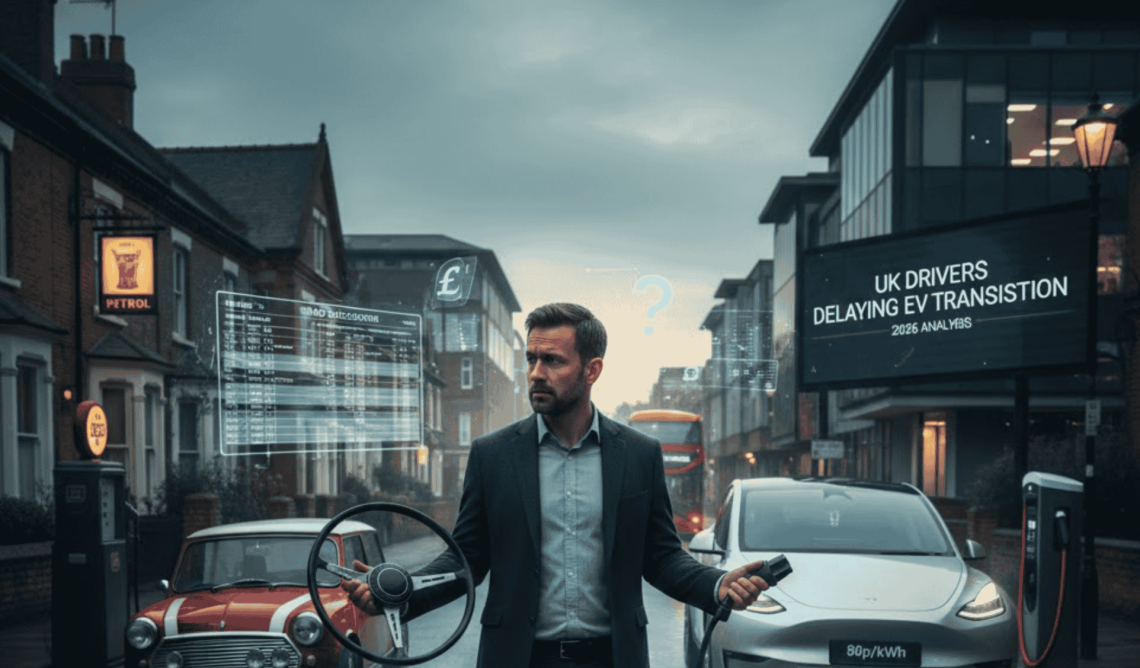
The transition to electric vehicles (EVs) in the UK has hit a significant psychological and financial speed bump. As we move through 2026, a year once predicted to be the “tipping point” for mass adoption, a new trend has emerged: the deliberate delay.
While the Labour government has officially reinstated the 2030 ban on new petrol and diesel cars, the British public is responding with a “wait and see” approach. If you are currently researching uk drivers delaying electric vehicle transition, you aren’t alone. Data from the SMMT and RAC suggests that while the used EV market is growing, new car intent is being stifled by a perfect storm of policy confusion, infrastructure inequality, and the looming 2028 tax changes.
Is the “2028 Tax Trap” the Main Reason for the Delay?
For nearly a decade, the primary financial incentive for going electric was the exemption from Vehicle Excise Duty (VED). That incentive is effectively dead. In 2025, the government confirmed a new pay-per-mile taxation system starting in April 2028.
For many motorists, this feels like a “bait and switch.” You were encouraged to buy an expensive EV to save on tax, only to find a new tracker-based tax system appearing just as you make the switch.
The Financial Reality: 2028 Per-Mile Charges
Under the 2026 policy updates, the projected costs for 2028 are as follows:
| Driver Category | Annual Mileage | Cost at 3p/mile (EV) | Cost at 1.5p/mile (Hybrid) |
| The City Commuter | 4,000 | £120.00 | £60.00 |
| The Average Driver | 7,400 | £222.00 | £111.00 |
| The High-Mileage Business User | 15,000 | £450.00 | £225.00 |
| The Delivery Fleet | 25,000 | £750.00 | £375.00 |
Note: While these figures are still generally lower than the combined cost of VED and Fuel Duty for a petrol car, the introduction of a new recurring bill is a major psychological barrier causing drivers to hold onto their existing ICE (Internal Combustion Engine) vehicles for longer.
Why has the 2030 vs 2035 Ban Caused “Buyer Paralysis”?
In late 2024, the UK government moved the goalposts back to 2030 after the previous administration had delayed the ban to 2035. However, this “re-instated” 2030 ban comes with a significant caveat: Hybrids are allowed until 2035.
This aligns with broader UK Net Zero Vehicle Emissions Plans, which aim to phase out high-emission vehicles while still allowing a transitional period for hybrid technologies.
This “hybrid loophole” has created a massive gap in search intent. Drivers are asking: “If I can buy a hybrid in 2029 and drive it for 10 years, why would I deal with the charging headaches of a full EV now?” The lack of a clear, stable 10-year roadmap from Westminster is a primary driver of the uk drivers delaying electric vehicle transition trend. For a local business, investing in a fleet when the regulations might change again after the next election is seen as a high-risk move.
The “Charging Class System”: A Growing Wealth Divide
One of the most significant “content gaps” in mainstream automotive journalism is the reality of infrastructure inequality.
-
The Driveway Elite: If you have off-street parking, you can access “EV-only” energy tariffs. In 2026, these can be as low as 7p per kWh. This makes your “fuel” cost roughly 2p per mile.
-
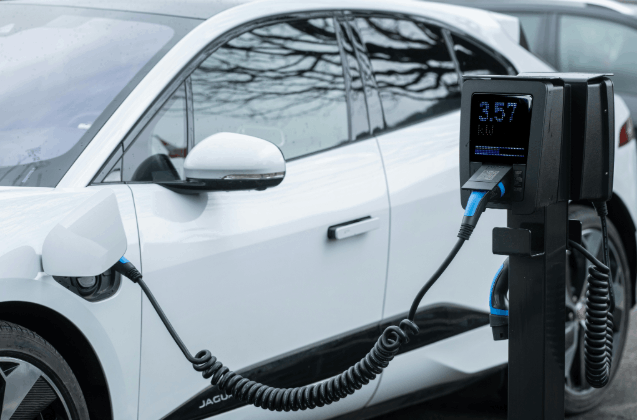
The On-Street Majority: If you live in a terrace house or flat, you rely on public chargers. Rapid chargers in the UK now frequently exceed 80p per kWh.
For the roughly 40% of UK households without a driveway, an EV can actually be more expensive to run per mile than a high-efficiency diesel. Until local councils accelerate the rollout of lamp-post and kerbside charging, this segment of the population will continue to delay their transition.
The Insurance Spike: A Hidden 2026 Barrier
If you have tried to insure a Tesla or a Kia EV6 recently, you have likely noticed a “premium shock.” In 2025/2026, EV insurance rates spiked by an average of 35%, significantly outstripping petrol car insurance inflation.
Why is EV insurance so high?
-
Technician Shortage: The IMI (Institute of the Motor Industry) warns of a “skills chasm,” where there aren’t enough qualified high-voltage technicians, leading to higher labour rates.
-
The “Write-Off” Culture: Because battery health is difficult to assess after a minor collision, insurers are more likely to write off an EV than repair it, fearing future liability. This trend also underscores the importance of understanding what part of the car does the law require you to keep in good condition, especially when owning a vehicle with complex electronic components.
-
Parts Lead Times: As cited in Local Business Magazine, parts for certain EV brands still face longer supply chain delays than traditional brands.
Is Now a Bad Time to Buy? The “Window of Opportunity”
Despite the reasons for delay, there is a counter-argument that 2026 represents a unique “sweet spot” for specific types of buyers.
1. The Used Market Collapse
The “Great Depreciation” of 2024 and 2025 has left the used market flooded with high-quality 3-year-old EVs at 50% of their original RRP. For a local business looking to reduce their carbon footprint, a second-hand EV is currently the best ROI in the automotive market. Additionally, individuals eligible for mobility assistance might find the current PIP mobility car list particularly valuable, as it includes several EV options with favourable leasing terms.
2. Salary Sacrifice
The Benefit-in-Kind (BiK) rates remain at 3% for 2026. For a higher-rate taxpayer, this remains a “no-brainer.” You can effectively drive a brand-new electric car for roughly half the price of a private lease.
FAQ about “UK drivers delaying electric vehicle transition”
Why are UK drivers delaying the switch to electric cars in 2026?
The delay is driven by three main factors: the upcoming 2028 pay-per-mile tax, high insurance premiums, and the “hybrid loophole” that allows petrol-electric vehicles to be sold until 2035.
Is it cheaper to run an EV than a petrol car in 2026?
Only if you can charge at home. Home charging remains significantly cheaper (approx. 2-3p per mile). However, relying on public rapid chargers can cost 15-20p per mile, which is comparable to, or more expensive than, a modern diesel car.
Will my petrol car be banned in 2030?
No. You cannot buy a new pure petrol car from 2030, but you can still drive your current one, buy a used one, or buy a new hybrid until 2035.
What is the 2028 per-mile tax?
Starting in 2028, EVs will no longer be exempt from road tax. The government plans to implement a charge (estimated at 3p per mile) to replace lost fuel duty revenue.
Conclusion: The Pragmatic Shift
The trend of uk drivers delaying electric vehicle transition isn’t a sign that the electric revolution has failed. Rather, it is a sign that the British consumer has become more pragmatic. In 2022, people bought EVs because they were “the future.” In 2026, people are buying them only if the “maths adds up.”
For local businesses, the message is clear: the transition is inevitable, but the timing must be strategic.