The devolution of social security in Scotland marks a significant structural shift in the UK welfare landscape, moving away from the Department for Work and Pensions framework.
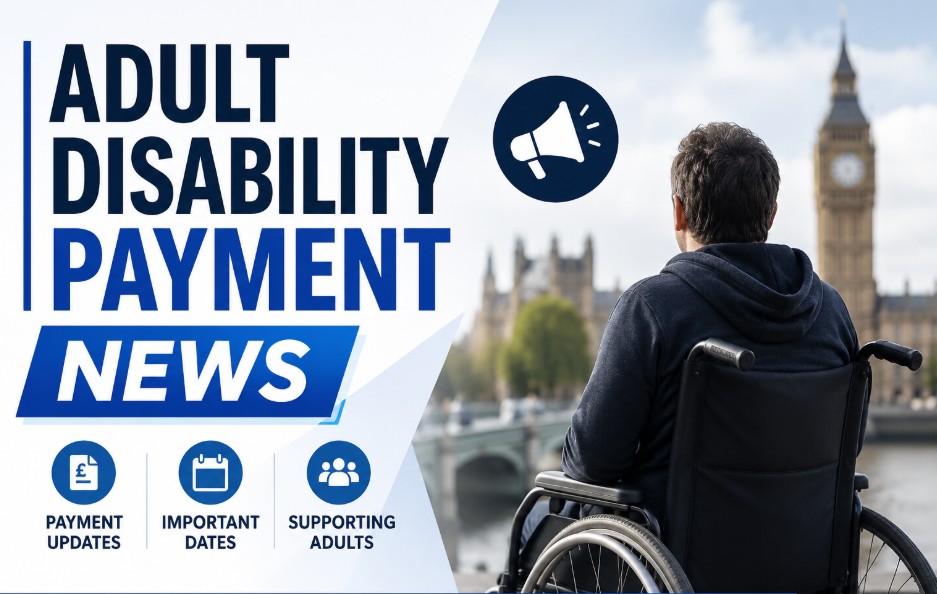
Individuals seeking the latest adult disability payment news will find that Social Security Scotland has implemented a distinct, rights-based system designed to replace Personal Independence Payment for working-age adults.
This transition is closely monitored by advocacy groups like Disability Rights UK to ensure that claimant safety nets remain fully protected under the new regional guidelines.
What Is the New Adult Disability Payment?
Adult Disability Payment is the devolved disability benefit replacing Personal Independence Payment for working-age adults living in Scotland.
Paid by Social Security Scotland, it provides tax-free financial assistance to individuals aged between 16 and State Pension age who experience long-term physical or mental health conditions or disabilities.
The application process emphasises a human rights-based approach, deliberately removing the stressful face-to-face functional assessments commonly associated with the DWP framework.
Instead, the Scottish system prioritises existing clinical information, care plans, and administrative evidence supplied by the applicant’s wider support network to determine appropriate award levels.
Is Adult Disability Payment Going Up in 2026?
Adult Disability Payment (ADP) rates have officially increased by 3.8% for the 2026/2027 financial year. This statutory cost-of-living up-rating took effect in April 2026 following legislation passed by the Scottish Parliament, and is applied automatically to all existing claims.
This financial adjustment ensures that the purchasing power of welfare assistance remains stable.
The up-rating applies automatically across both the Daily Living and Mobility components, meaning existing claimants do not need to contact Social Security Scotland or submit a new application form to receive the adjusted amounts.
How Much Is Adult Disability Payment?
The maximum Adult Disability Payment in 2026 is £194.60 per week, which equals £778.40 per four-week payment cycle. This highest financial bracket is achieved by combining the enhanced rate of both the Daily Living and Mobility components.
2026/2027 Weekly Rate Breakdown
| Component and Award Level | Previous Weekly Rate (2025/26) | New Weekly Rate (2026/27) | Four-Weekly Payment Total |
| Daily Living: Standard | £73.90 | £76.70 | £306.80 |
| Daily Living: Enhanced | £110.40 | £114.60 | £458.40 |
| Mobility: Standard | £29.20 | £30.30 | £121.20 |
| Mobility: Enhanced | £77.05 | £80.00 | £320.00 |
Component Combination Thresholds
| Award Combination | Total Weekly Equivalent | Total Four-Weekly Payment |
| Minimum (Standard Daily Living Only) | £76.70 | £306.80 |
| Maximum (Enhanced Daily Living + Enhanced Mobility) | £194.60 | £778.40 |
When reviewing decisions, a common pattern is that the maximum disability payment reachable under this framework is £194.60 per week, which culminates in a total of £778.40 per four-week payment cycle for individuals experiencing severe restrictions across all core descriptors.
Who is Adult Disability Payment for?
Adult Disability Payment is specifically designed for individuals who incur extra living costs due to a long-term physical illness, mental health condition, or disability. To be eligible to receive this support, you must meet several key criteria:
- Age: You must be aged between 16 and State Pension age.
- Residency: You must be ordinarily resident in Scotland.
- Duration of Needs: You must have experienced your daily living or mobility difficulties for at least 3 months, and expect them to continue for at least another 9 months (unless applying under the special rules for terminal illness).
Crucial note: It is completely non-means-tested. This means it does not matter if you work full-time, part-time, or not at all, and your savings or household income will never affect your eligibility or payment rates.
Who Can Apply for PIP vs. ADP?
Eligibility depends strictly on your ordinary residence at the time you make an application.
- PIP (Personal Independence Payment): Individuals who live in England, Wales, or Northern Ireland must apply through the Department for Work and Pensions (DWP).
- ADP (Adult Disability Payment): Individuals who are ordinarily resident in Scotland must apply through Social Security Scotland.
Both systems require applicants to be aged between 16 and State Pension age. However, their internal administrative frameworks differ completely: Scotland prioritizes existing clinical data, whereas the DWP relies heavily on independent functional assessments.
What Conditions Qualify for ADP?
Social Security Scotland does not maintain a restrictive “allow list” or whitelist of qualifying medical diagnoses.
Instead, eligibility is determined entirely by how a long-term physical illness, mental health condition, or learning disability impacts your safety, speed, and overall capability when undertaking everyday tasks.
To satisfy the basic criteria, you must generally have experienced these difficulties for at least 3 months and expect them to last for at least another 9 months. Common broad categories include:
- Physical Disabilities: Chronic respiratory illnesses, cardiovascular diseases, and musculoskeletal conditions affecting physical mobility.
- Hidden Disabilities: Severe clinical depression, generalized anxiety disorders, and post-traumatic stress disorder (PTSD).
- Neurodivergent Profiles: Attention deficit hyperactivity disorder (ADHD), dyspraxia, and complex learning difficulties.
Does Autism Qualify for Disability?
Yes, autistic spectrum conditions fully qualify for financial support under the Scottish framework.
Eligibility does not require a physical impairment; it is based on how secondary challenges impact social communication, sensory processing, or independent living.
For example, an individual who requires significant prompting, supervision, or assistance to plan and follow journeys, manage severe anxiety in public spaces, or safely prepare meals will gather substantial points across the standard legislative descriptors, securing their legal entitlement to the benefit.
What Is the Special Rate Disability Payment?
The special rules apply explicitly to individuals diagnosed with a terminal illness, utilizing a unique legal definition that sets Scotland apart from the rest of the UK.
Unlike the DWP framework, which requires a fixed life expectancy of 12 months or less, Scotland has no fixed life expectancy restriction. Eligibility is based purely on clinical judgement.
Accessing this fast-track framework requires a specific administrative process:
- The BASRiS Form: A registered medical practitioner or certified specialist nurse involved in the patient’s care completes a Benefits Assessment under Special Rules in Scotland (BASRiS) form. This confirms the condition is advanced, progressive, and not amenable to curative treatment.
- Automatic Maximum Award: Once submitted, these applications bypass ordinary processing queues entirely. The standard 3-month qualifying period is waived, and the applicant is automatically awarded the highest enhanced rates for both the Daily Living (£114.60/week) and Mobility (£80.00/week) components.
- Weekly Payments: While standard ADP is paid every four weeks, individuals qualifying under the special rules can choose to receive their financial assistance on a weekly basis to ensure immediate financial relief.
How Does the Adult Disability Payment Points System Work?
The administrative framework relies on a structured points allocation system across specific daily living and mobility activities. Each activity features a set of progressive descriptors that reflect varying degrees of dependency, impairment, or required supervision.
- The applicant completes the core questionnaire detailing their daily challenges.
- Social Security Scotland gathers supporting evidence from GPs, practitioners, or support workers.
- The case manager reviews the evidence against 10 distinct Daily Living activities.
- Points are allocated based on the claimant’s ability to complete tasks reliably and safely.
- The case manager reviews the evidence against 2 distinct Mobility activities.
- An aggregate score of 8 points secures the Standard rate for that specific component.
- An aggregate score of 12 points secures the enhanced rate for that specific component.
- A formal decision notification is issued to the claimant outlining the total points awarded.
In practice, case managers must evaluate whether an applicant can perform an activity safely, to an acceptable standard, repeatedly, and in a reasonable time.
If a fluctuating health condition restricts an individual for at least half of the days in one year, the points corresponding to that restriction must be applied to the claim.
Will Adult Disability Payment Be Cut?
No, UK government welfare proposals to alter PIP do not apply to Scotland. Because disability assistance is fully devolved, Scottish Ministers maintain complete legislative authority over all Adult Disability Payment eligibility criteria and budgets.
Widespread discussions regarding potential welfare reform in Westminster have caused considerable anxiety among claimants across the UK.
The UK Government has previously signalled intentions to tighten the eligibility parameters for Personal Independence Payment in England and Wales, specifically targeting the descriptors related to mental health conditions and the provision of cash payouts.
However, because social security powers for disability assistance are fully devolved under the Scotland Act, these sweeping disability benefits cuts do not automatically apply north of the border.
Social Security Scotland operates under an independent legislative framework, meaning that Scottish ministers retain full authority over ADP eligibility criteria, evaluation descriptors, and funding allocations.
How Long After a PIP Assessment for a Decision in 2026?
For individuals transitioning between systems or undergoing reviews, processing timescales remain a key concern.
As of 2026, Social Security Scotland reports an average end-to-end processing timeframe of approximately 55 to 60 working days for clean applications that include comprehensive primary medical evidence.
If an individual is currently undergoing an automatic transfer from DWP PIP to Scottish ADP, their financial payments are legally protected.
The transfer process occurs in waves without a gap in entitlement, and individuals continue to receive their existing DWP payment rate until the Scottish case managers complete the administrative migration and review the file.
What Other Benefits Can I Get with an Adult Disability Payment?
Securing an award for Adult Disability Payment unlocks access to multiple complementary financial supports and exemptions across the UK and Scottish systems. These interconnected links help reduce broader cost-of-living burdens for disabled households.
Entitlement Matrix for Passport Support
| Awarded ADP Component | Additional Benefit Eligibility | Financial Benefit or Concession |
| Standard Daily Living | Universal Credit Disability Premium | Increases baseline monthly Universal Credit award |
| Enhanced Daily Living | Carer’s Allowance / Carer Support Payment | Allows an informal caregiver to claim weekly support |
| Standard Mobility | Accessible Travel Framework | Eligible for a Scottish National Blind Scheme or Blue Badge |
| Enhanced Mobility | Motability Scheme Partnership | Direct vehicle, powered wheelchair, or scooter leasing |
| Any Component | Council Tax Reduction Schema | Disregards specific income metrics for local tax calculations |
Consider the real-world scenario of an individual with advanced osteoarthritis who was awarded the enhanced mobility component.
This individual successfully used their award notification letter to transition directly into the Motability scheme, lease an accessible vehicle, and receive a local authority Blue Badge, bypassing secondary local medical examinations entirely.

Summary and Next Steps for Claimants
Staying informed on devolved welfare news ensures that individuals understand their legal rights and financial options.
The 2026/2027 rate increases provide vital assistance, and the Scottish system’s independent legal framework protects claimants from external policy shifts.
Eligible individuals should gather their clinical history, support plans, and relevant administrative documents before submitting their application online via the official mygov.scot portal or scheduling an appointment with the local delivery service.
Verified against official Social Security Scotland statutory guidance and Scottish Parliament up-rating instruments for the 2026/2027 financial year.
FAQ
Can I work full-time while claiming Adult Disability Payment?
Yes. Eligibility is determined by the functional impacts of a health condition on daily living and mobility, completely independent of employment status, hours worked, or household income.
Do I need to reapply if my PIP claim moves to Scotland?
No. The administrative transfer from the DWP to Social Security Scotland happens automatically. Your payments will continue uninterrupted throughout the migration process.
What happens to my disability benefit when I reach State Pension age?
Existing claimants will remain on Adult Disability Payment indefinitely. New applicants who have reached retirement age must apply for the Pension Age Disability Payment instead.
Can I challenge a decision if my ADP application is rejected?
Yes. Claimants can request a Redetermination within 42 calendar days of the decision notice. If unsuccessful, an independent appeal can be lodged with the First-tier Tribunal.
What is Short-Term Assistance during an appeal process?
Short-Term Assistance is a temporary Scottish benefit available if an existing ADP award is reduced or stopped, ensuring financial stability while a redetermination or appeal is reviewed.
How often are Adult Disability Payment claims reviewed?
Awards are typically given with a rolling review period ranging from 1 to 10 years, depending on whether the underlying health condition is likely to change.
Are Adult Disability Payment awards subject to UK income tax?
No. All component tiers of the Adult Disability Payment are completely free from UK income tax and are not counted as income for means-tested benefits.