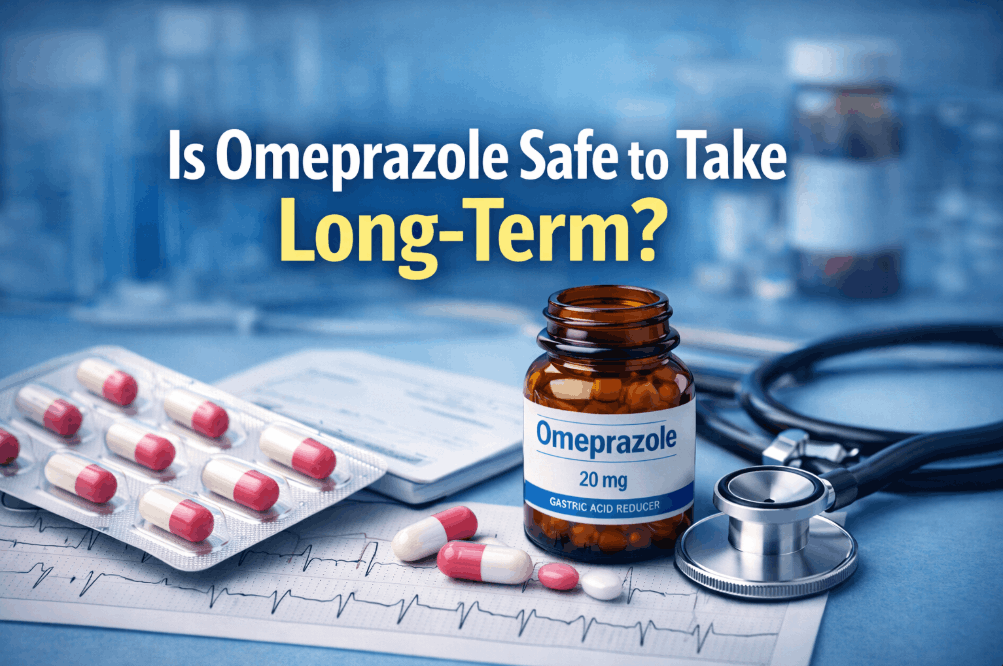
Is omeprazole safe to take long-term? Generally, yes, omeprazole is safe for long-term use when prescribed by a healthcare professional to manage chronic conditions like GORD or Barrett’s oesophagus.
However, taking it for more than a year is associated with an increased risk of specific side effects, including magnesium and Vitamin B12 deficiencies, bone fractures, and gut infections, which require regular monitoring by your GP or pharmacist.
As of 2026, clinical guidance in the UK has shifted toward active surveillance. While the drug is not inherently toxic over time, its primary function, suppressing stomach acid, can eventually interfere with how your body absorbs vital minerals.
For the 15% of the UK population currently using Proton Pump Inhibitors (PPIs), the goal is now to find the lowest effective dose to balance symptom relief with long-term metabolic health.
What is Omeprazole and how did it become the UK’s most popular medicine?
Omeprazole is a Proton Pump Inhibitor (PPI) that reduces the amount of acid produced by the stomach. It works by blocking the pumps (H+/K+ ATPase enzymes) in the stomach lining that release acid during digestion.
From Laboratory to Pharmacy: The UK’s Journey with Omeprazole
Omeprazole was discovered in 1979 by a team at AstraZeneca (then AB Hässle), led by scientist Ivan Östholm. After rigorous testing, it was launched in the UK in 1989 under the brand name Losec.
Since then, it has become one of the most successful medicines in British history. Because the original patents have expired, it is now manufactured by numerous companies, including Teva, Sandoz, and Accord, making it highly cost-effective for the NHS.
The UK’s Gold Pill Status
In the UK, over 73 million prescriptions are issued annually for PPIs. It is widely used by the British public because of our high rates of GORD (Gastro-oesophageal reflux disease), often linked to modern dietary habits and stress. It is approved by the UK government via the MHRA as a safe, essential medicine.

Why do UK doctors recommend Omeprazole?
Doctors recommend omeprazole primarily to treat and prevent damage to the food pipe (oesophagus) and stomach. Without treatment, chronic acid reflux can lead to Barrett’s oesophagus, a precursor to oesophageal cancer.
When is Omeprazole Prescribed?
- Healing Ulcers: To allow stomach or duodenal ulcers to heal without further acid irritation.
- GORD Treatment: Managing persistent heartburn that doesn’t respond to lifestyle changes.
- Gastroprotection: Often prescribed alongside NSAIDs (like Ibuprofen) to prevent them from causing stomach bleeds.
- Zollinger-Ellison Syndrome: A rare condition where the stomach produces far too much acid.
Success Rates in the UK
Clinical data shows that omeprazole has an 80–90% success rate in relieving symptoms within 4 to 8 weeks. In practice, a common pattern seen in UK surgeries is that patients feel back to normal within just a few days, leading many to stay on the medication far longer than initially intended.
| Condition | Success Rate | Time to Healing |
| Acid Reflux (GORD) | 85% | 4-8 Weeks |
| Stomach Ulcers | 90%+ | 4-6 Weeks |
| Indigestion (Dyspepsia) | 70% | 2-4 Weeks |
What is inside an Omeprazole capsule?
The composition of omeprazole is highly specific. Because the medicine itself would be destroyed by stomach acid before it could work, the active ingredient is contained within gastro-resistant pellets.
Chemical Breakdown
The active ingredient is Omeprazole (or Omeprazole Magnesium in some tablets). The excipients or inactive ingredients usually include lactose, hypromellose, and various coatings that ensure the pellets only dissolve once they reach the small intestine, where they can be absorbed into the bloodstream to reach the stomach’s acid pumps.
Manufacturing and Imports
While AstraZeneca discovered it, today most omeprazole used in the UK is generic. Large-scale manufacturers like Teva UK and Sandoz supply the majority of British pharmacies.
Some liquid versions for those who cannot swallow capsules are produced by UK-based specialist manufacturers like Rosemont Pharmaceuticals.

Is Omeprazole safe to take long-term for adults and children?
How long is it safe to remain on a daily omeprazole prescription? For most, a 2-to-4-week course is sufficient. However, for those with chronic conditions, years of use may be required.
Who should not take Omeprazole?
- People with Nelfinavir: This HIV medication cannot be taken with PPIs.
- Allergic individuals: Those with a known hypersensitivity to PPIs.
- Undiagnosed weight loss: If you have red flag symptoms like difficulty swallowing or unexplained weight loss, you must see a GP before starting treatment.
Use in Children
Omeprazole is safe for children under 16, but only under specialist supervision. For infants and toddlers, it is often prescribed as a liquid (oral suspension) or dispersible tablet to manage severe reflux or silent reflux.
Has Omeprazole caused real-life deaths or major alerts?
While headlines often highlight the risks of PPI usage, a balanced clinical perspective is necessary to distinguish rare complications from everyday use. Omeprazole does not cause sudden death, but the MHRA has issued safety alerts for specific rare complications.
- Severe Hypomagnesaemia: Long-term use can cause dangerously low magnesium levels, which in rare, extreme cases can lead to heart arrhythmias.
- C. Difficile Infections: By lowering stomach acid, the body loses a natural barrier against bacteria. This has been linked to severe gut infections in hospitalised or elderly patients.
- Kidney Health: There are rare reports of Acute Interstitial Nephritis (kidney inflammation).
Patient safety in the UK is largely underpinned by the Yellow Card Scheme, which allows patients to report side effects directly to the government.
This rigorous regulatory environment is why some medications available elsewhere are restricted here; for example, many travellers are surprised to learn the reasons why is Pepto-Bismol banned in UK due to specific ingredient concerns. Such measures ensure that even the rarest risks of long-term PPI use are tracked and managed.
Can you take alcohol and smoke while using Omeprazole?
The Impact of Alcohol and Tobacco on Acid Suppression
There is no direct chemical interaction between alcohol and omeprazole. However, alcohol and smoking both relax the valve at the bottom of the oesophagus, making your reflux significantly worse.
If you drink or smoke while taking the medication, you are essentially fighting the medicine’s work.
Foods and Activities to Avoid
Beyond specific food triggers, the overall quality of what you ingest plays a significant role in gut health. While many residents often ask, is London tap water safe to drink when managing sensitive stomachs, yet for reflux sufferers, the focus must remain on chemical irritants.
High-caffeine drinks and alcohol, for instance, stimulate extra acid production and should be limited alongside any other environmental factors that disrupt your digestive balance.
| Avoid (Triggers) | Why? |
| Peppermint & Chocolate | Relaxes the lower oesophageal sphincter (LES). |
| Late Night Meals | Increases pressure on the stomach valve while lying flat. |
| Tight Clothing | Physical pressure on the abdomen can force acid upward. |
| High-Caffeine Drinks | Stimulates extra acid production. |
How to buy Omeprazole in the UK: Do you need a prescription?
In the UK, your access to omeprazole depends on the strength:
- Over the Counter (OTC): You can buy 10mg tablets at most pharmacies and supermarkets (like Boots or Tesco) for short-term relief (up to 2 weeks).
- Prescription Only (POM): Higher doses (20mg, 40mg) or long-term supplies require a prescription from your GP or an independent prescriber.
When do I need to consult a doctor?
You should see your GP if your symptoms don’t improve after two weeks of OTC use, or if you experience Red Flags like persistent vomiting, blood in your stools (which may look black/tarry), or pain when swallowing.

Final Summary and Next Steps
Omeprazole remains the gold standard for acid suppression in the UK. While it is safe for long-term use, the 2026 clinical best practice is to avoid staying on it indefinitely without a medical reason.
Patient Checklist: Managing Your Long-Term Care
- Audit your use: If you’ve been taking it for over 6 months, book a medication review with your local pharmacist.
- Blood Tests: Ask for a Magnesium and B12 check if you have been on PPIs for more than a year.
- Lifestyle First: Try to identify one food trigger this week to see if you can naturally reduce your need for the medication.
FAQ
Can I just stop taking omeprazole after 10 years?
No. Stopping abruptly causes rebound acid hypersecretion. You must work with your pharmacist to taper or step down your dose gradually over several weeks.
What dosage do doctors recommend?
The standard dose for GORD is 20mg once daily. For preventing ulcers while taking other meds, 10mg is common. Severe cases may require 40mg.
Does it cause long-term side effects?
Yes, use over one year increases the risk of B12 deficiency and bone thinning. Your GP should check your blood levels annually.
Is it approved by the UK government?
Yes, it is fully licensed by the MHRA and is on the WHO Model List of Essential Medicines.
Who discovered it?
It was discovered by scientists at the Swedish company Astra (now AstraZeneca) in 1979.
What is the most common mistake?
Taking it with food. It should be taken on an empty stomach, 30–60 minutes before breakfast, to work effectively.
Can it cause dementia?
There is currently no proven clinical link between omeprazole and dementia, despite some early debated studies.
This is for informational purposes only. For medical advice or a diagnosis, consult a professional.