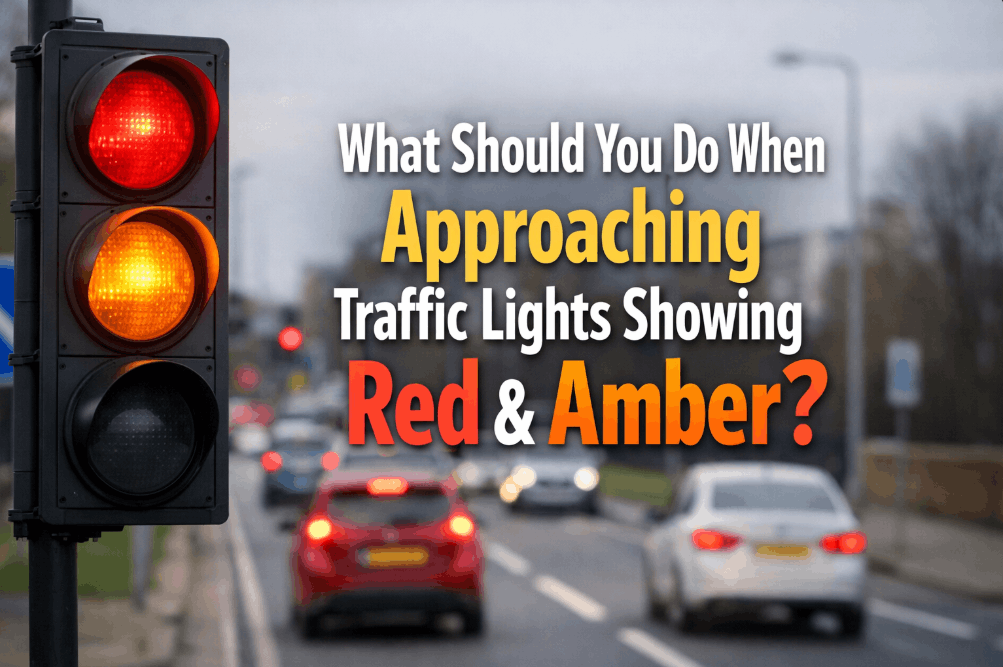
When you’re approaching traffic lights and the red light is showing, the signal that will show next is red and amber together.
This dual-light phase indicates that you must remain stationary but should prepare to move, as the green “go” signal is imminent. You must not cross the stop line until only the green light is visible.
You’re approaching traffic lights and the red light is showing. what signal will show next? Understanding this specific transition is a core requirement for the DVSA theory test and essential for maintaining smooth traffic flow on UK roads.
Failing to anticipate this change correctly can lead to stalling, “creeping” over the line, or committing a red-light offence.
The Purpose of the Red and Amber Phase
The combination of red and amber serves as a transitional “buffer” specifically designed to give drivers time to prepare their vehicle.
In manual cars, this is the moment to select first gear and find the biting point of the clutch.
By providing this short preparatory window, the UK road system ensures that when the light turns green, vehicles can move away promptly, reducing congestion at busy junctions.
What signal shows after red at UK traffic lights?
The signal that follows a solid red light in the standard UK sequence is red and amber displayed simultaneously.
This phase acts as a “get ready” command, notifying drivers that the prohibition of the red light is about to end.
However, it is legally identical to a red light in terms of movement; you must stay behind the white stop line until the green light appears alone.
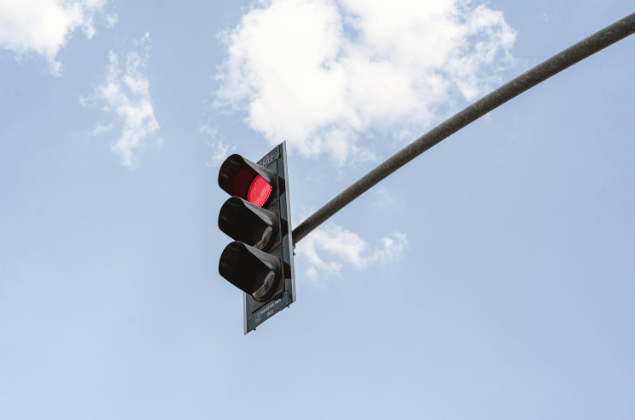
You’re approaching traffic lights and the red light is showing. what signal will show next?
When you see the red light, the immediate next signal is red and amber showing together. This is a critical transition period that signals the end of the “stop” phase and gives you a few seconds to prepare your vehicle.
In a manual car, this is your cue to find the biting point of the clutch, though you must remain completely stationary until the light switches to a solid green.
Why the Red and Amber Signal Still Means Stop?
While the red and amber lights are both lit, the law remains unchanged: you are still required to remain stationary.
The primary purpose of this phase is safely managing the gap between stopping and moving. It provides a necessary pause for the engine to engage, ensuring that when the green light finally appears, traffic can move off efficiently without the delay often caused by finding gears at the last second.
Drivers who move during this phase are technically failing to comply with a red light, which is why observing the full change to green is the only safe and legal way to proceed.
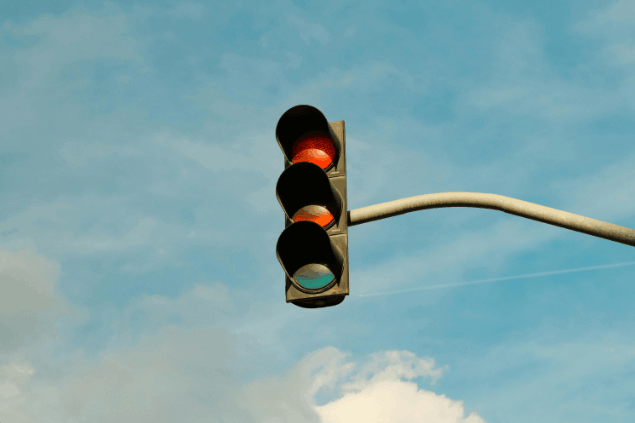
Standard 4-Phase Traffic Light Sequence
To drive safely and pass your theory exam, you must memorise the specific order in which these lights cycle.
Beyond the standard sequence, you should be able to recognise which colour follows the green signal at a puffin crossing, so you aren’t surprised by a sudden change when approaching a junction at speed.
| Light Phase | Legal Meaning | Required Driver Action |
| Red Only | Danger / Prohibition | Stop behind the solid white line; apply handbrake if waiting. |
| Red & Amber | Preparation | Prepare to move; find the biting point; check mirrors. |
| Green Only | Permission | Proceed if the junction is clear; watch for pedestrians. |
| Amber Only | Warning | Stop if safe to do so; do not accelerate to “beat” the light. |
How to manage your vehicle during the red and amber transition?
Efficiently handling the transition from a red light to the red and amber phase is a skill examiners look for during the practical driving test. It demonstrates “anticipation and planning,” two key markers of a competent driver.
- Secure the vehicle: When the red light first shows, stop fully and apply your handbrake if the wait is likely to be long.
- Observe the cross-traffic: Look at the lights for the other directions; when their light turns amber, yours is likely to change soon.
- Prepare the gears: As soon as red and amber appear, depress the clutch and select first gear.
- Find the biting point: Gently bring the clutch to the biting point while keeping the footbrake or handbrake engaged.
- Final observations: Check your interior and exterior mirrors to ensure no cyclists have moved into your blind spots.
- Release and move: Once the green light shows, release the handbrake and accelerate smoothly away from the junction.
In practice, many learners fail because they try to move during the red and amber phase. A common pattern observed by instructors is the “jumped start,” where a driver moves as soon as the amber light flickers, resulting in a major fault on the driving test.
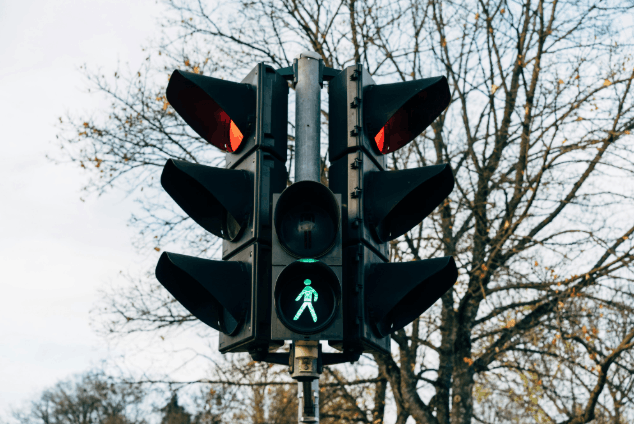
Why does the UK use a red and amber combination?
Unlike many international systems that jump directly from red to green, the UK incorporates the red and amber phase to assist with traffic momentum.
While drivers in other countries might go straight from red to green, the UK system is built around the “prepare” phase. This design choice helps maintain momentum on our busy road networks, specifically catering to the timing required for manual gear changes.
By allowing drivers a few seconds to engage their gears, the system prevents the “lag” that would occur if everyone only started their engine or selected a gear once the green light appeared.
Differences Between Traffic Light Types
- Puffin Crossings: These use on-site sensors to monitor pedestrian movement and follow the standard sequence (Red → Red/Amber → Green). It is also helpful to understand why is a toucan crossing different from a puffin crossing, as Toucan crossings are specifically designed for both cyclists and pedestrians to cross at the same time.
- Pelican Crossings: These feature a flashing amber light after red, requiring you to give way to pedestrians.
- Filter Arrows: A green arrow may appear while the main light is red, permitting movement in a specific direction.
| Feature | Standard/Puffin Crossing | Pelican Crossing |
|---|---|---|
| Signal after Red | Red & Amber (Static) | Flashing Amber |
| Pedestrian Priority | Crossing is clear before Green | Give way if pedestrians are still on the road |
| Driver Action | Wait for Green | Proceed if clear on Flashing Amber |
What are the legal consequences of moving on red and amber?
The law is very clear: the red and amber signal is a “Stop” signal. Under the Road Traffic Act 1988, failing to comply with a traffic light signal is an offence. Since the red light is still illuminated during the red and amber phase, crossing the line at this point is legally equivalent to “running a red light.”
A common mistake is “creeping” forward. If a red-light camera is active, it can trigger even if only the front wheels have crossed the line during the prohibited phase. This usually results in a £100 fine and 3 penalty points on your licence.
A realistic example involves a driver at a quiet junction at night. Seeing the red and amber light, they accelerate early to maintain momentum. If a police vehicle is nearby, the driver could be pulled over for failing to obey a traffic signal.
Advanced stop lines and cyclist safety
Many UK junctions now feature Advanced Stop Lines (ASLs), often referred to as “bike boxes.” These are marked areas between two stop lines designed to protect vulnerable road users.
| Aspect | Rule for Motorists |
|---|---|
| Light is Green | Drive through the box normally; do not linger. |
| Light is Red | Stop at the first white line; leave the box clear for cycles. |
| Caught in box | If the light changes while you are over the first line, stop at the second line. |
Final Summary
When you see a red light, the next signal is always red and amber together. This phase is your cue to prepare your vehicle, checking mirrors and engaging first gear, but you must not move until the green light appears.
Mastering this sequence is vital for road safety, legal compliance, and passing your DVSA exams. Modern UK road safety standards involve a high level of automated enforcement.
In 2026, many junctions are equipped with high-sensitivity cameras that detect even slight movement during the red and amber phase, so waiting for the full green signal is essential for both your safety and your driving record.
FAQ
Does red and amber mean go?
No. It means stop but prepare to move. You must wait until the green light shows before your vehicle crosses the stop line.
What is the flashing amber light for?
Flashing amber is found only at Pelican crossings. It means you must give way to pedestrians on the crossing but may proceed if it is completely clear.
Can I be fined for moving on red and amber?
Yes. Moving on red and amber is legally the same as running a red light. You could face a £100 fine and 3 penalty points.
How long does the red and amber phase last?
In the UK, the red and amber transition typically lasts about 2 seconds. It is designed to be just long enough to select a gear.
What if the traffic lights are broken?
If the lights are out of order, treat the junction as an unmarked crossing and proceed with extreme caution, giving way to others.
What signal comes after green?
After green, the light turns to a steady amber. This warns you that the light is about to turn red and you should stop if safe to do so.
Do all countries use red and amber after red?
No. Many countries, including the USA, switch directly from red to green without a preparatory amber phase.