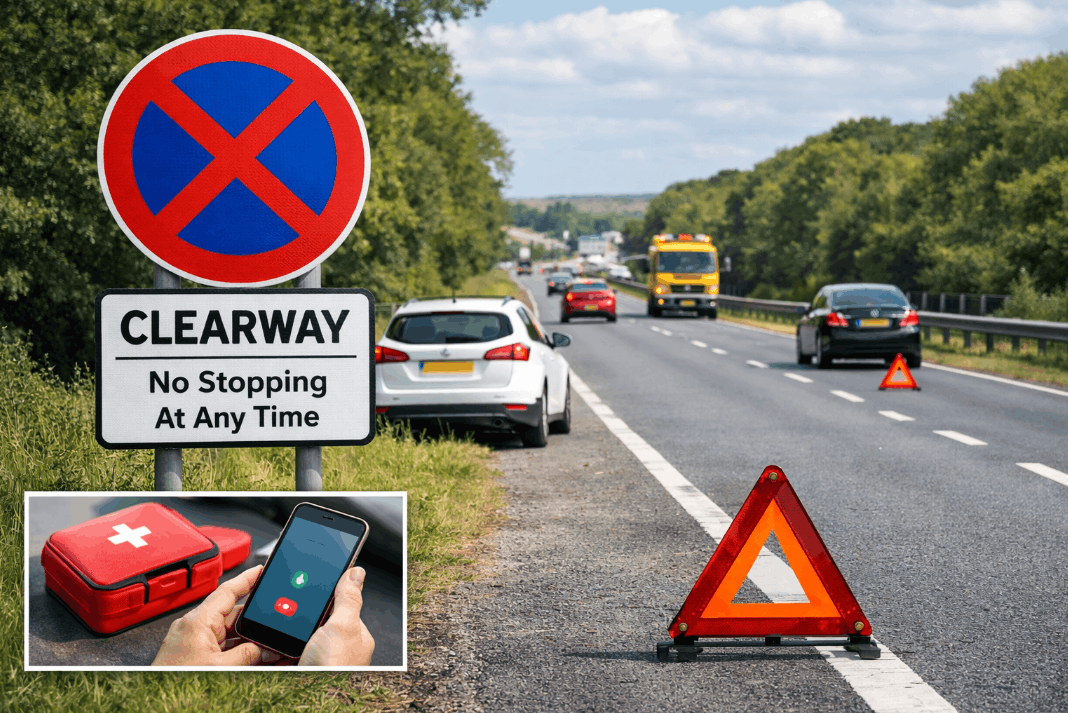
Legally, the only times when may you stop on a clearway are if your vehicle has suffered a mechanical breakdown, you are facing a genuine medical emergency, or you are complying with a direct instruction from a police officer.
You are also permitted to stop if forced to do so by stationary traffic or to avoid a collision. Navigating the various “No Stopping” zones can be challenging for both new learners and experienced motorists.
While understanding these rules is a staple of the DVSA theory test, it is equally vital for seasoned drivers looking to navigate the increasingly automated enforcement systems found across the modern road network.
Understanding these boundaries ensures you maintain traffic flow and avoid costly penalties.
When may you stop on a clearway for legal reasons?
You are legally permitted to stop on a clearway only in circumstances that are strictly unavoidable or mandated by authority.
This includes mechanical failure, medical crises, obeying signals from a police constable or DVSA officer, or when traffic is stationary. Stopping to check a map or use a mobile phone is strictly prohibited.
To maintain safety and avoid a Fixed Penalty Notice (FPN), motorists must adhere to the strictly limited legal exemptions:
- You suffer a vehicle breakdown: If your car experiences a mechanical failure that makes it unsafe to continue, you may stop until recovery arrives.
- There is a medical emergency: You are permitted to stop if you or a passenger has a sudden health crisis that requires immediate attention.
- A police or traffic officer directs you: You must stop if signaled to do so by a police constable in uniform, a DVSA officer, or an authorised traffic warden.
- Traffic is stationary: You may stop when forced to do so by queues of traffic, roadworks, or an accident blocking the road ahead.
- You must avoid an accident: Stopping is legal if it is necessary to prevent a collision or to avoid injury to persons or property.
- You are in an Urban Clearway (specific rule): Unlike 24-hour clearways, you may stop on an Urban Clearway during its hours of operation only to pick up or set down passengers.
Safety and Traffic Flow: Why Clearway Rules are Strictly Enforced?
Clearways serve as high-capacity arteries where stationary vehicles create immediate bottlenecks and safety hazards.
Unlike standard parking restrictions, clearways carry a zero-tolerance policy regarding the main carriageway.
In practice, authorities prioritise the continuous movement of vehicles to prevent the accordion effect of traffic jams. A common pattern observed by road safety auditors is that even a momentary stop on a high-speed A-road can lead to a significant increase in rear-end collisions.
Defining the Clearway: Symbols, Markings, and Road Designations
A clearway is a stretch of road where stopping is prohibited to ensure the free flow of traffic and maximize safety.
Identified by a circular blue sign with a red border and a red cross (the no stopping symbol), these zones often lack the yellow line markings found in urban areas.
Understanding the geometry of the Highway Code is essential for quick identification, which includes identifying the specific what shape are traffic signs giving orders that distinguish mandatory prohibitions from general road guidance.
They are typically designated on busy rural roads or primary routes where any stationary vehicle would pose a severe risk to high-speed traffic.
| Feature | 24-Hour Clearway | Urban Clearway | Red Route (Double Line) |
| Primary Symbol | Blue circle, Red cross | Yellow sign, Black text | Double Red Lines |
| Stopping Rule | No stopping at any time | No stopping during hours | No stopping at any time |
| Passenger Rule | Prohibited | Pick up/Drop off allowed | Prohibited |
| Verge Access | Usually prohibited | Variable | Prohibited |
The Driving Theory and Compliance Risks Behind Clearway Queries
Interest in clearway regulations generally stems from two distinct groups: learner drivers and local business owners.
For learners, the question is a staple of the DVSA theory test, requiring a precise understanding of Highway Code Rule 240. For businesses and residents, the search intent is often driven by a need to understand hidden enforcement.
As of 2026, many local councils have deployed mobile camera units, leading to a surge in drivers seeking to appeal Penalty Charge Notices (PCNs) issued for what they perceived as brief stops.
When may you stop on an urban clearway?
On an urban clearway, you may stop only for the duration required to pick up or set down passengers. This exception is unique to the urban designation and does not apply to 24-hour rural clearways.
You must remain with the vehicle, and the stop must be instantaneous; you cannot wait for a passenger who has not yet arrived at the kerbside.
Navigating the timed restrictions of city clearways
Urban clearways are typically operational during peak commuting hours, such as 08:00 to 09:30 and 16:30 to 18:30. Outside of these times, normal parking rules (such as those indicated by yellow lines) take precedence.
When reviewing decisions made by local traffic tribunals, it is clear that drivers often fail to check the specific time plates on the yellow roadside signs.
If you are a courier or tradesperson, you must ensure that your loading activities are completed outside of these restricted windows or moved to a designated loading bay on a side street.
Why do people stop on clearways despite the risk
Despite the clear legal prohibitions, many motorists find themselves pulling over due to micro-conveniences. These include:
- Navigation Adjustments: Stopping to re-route a GPS or check a digital map.
- Digital Distractions: Answering a phone call or responding to a text message.
- Vehicle Checks: Stopping to secure a rattling boot lid or check a suspected flat tyre.
- Passenger Requests: Dropping off a friend just for a second to avoid a longer walk.
Consider the case of a courier who recently stopped on an A-road clearway verge to secure a loose strap on his roof rack.
Even though he stayed within the vehicle’s shadow and was off the main tarmac, a passing police patrol issued a fine.
The officer noted that the high speed of the road made any pedestrian activity near the vehicle an unacceptable risk.

On what circumstances can I stop at clearway legally?
- When your vehicle has suffered a mechanical breakdown making it unsafe to continue.
- If you or a passenger experiences a sudden, serious medical emergency.
- When directed to do so by a police officer in uniform or a DVSA traffic officer.
- When traffic is stationary due to congestion or an accident ahead.
- If you are involved in a road traffic collision and must exchange details.
- To avoid an immediate accident or to clear a dangerous obstruction from the road.
- In an urban clearway, specifically for picking up or setting down passengers.
Factors to consider before stopping on a clearway
If an emergency forces you to stop, your primary goal is hazard mitigation. Before bringing the vehicle to a halt, you should assess:
- Visibility: Can approaching drivers see your vehicle from a safe distance?
- Verge Stability: Is the ground firm enough to support the vehicle without it slipping or getting stuck?
- Proximity to Hazards: Are you stopping near a blind bend, a brow of a hill, or a junction?
- Exit Strategy: Can you safely exit the vehicle via the passenger side (the side away from traffic)?
Rules to be followed while stopping at a clearway
When an emergency stop is unavoidable, you must follow the safety protocols outlined in the Highway Code to protect yourself and others.
A common pattern in serious road incidents involves secondary collisions where a vehicle hits a stationary car on a clearway.
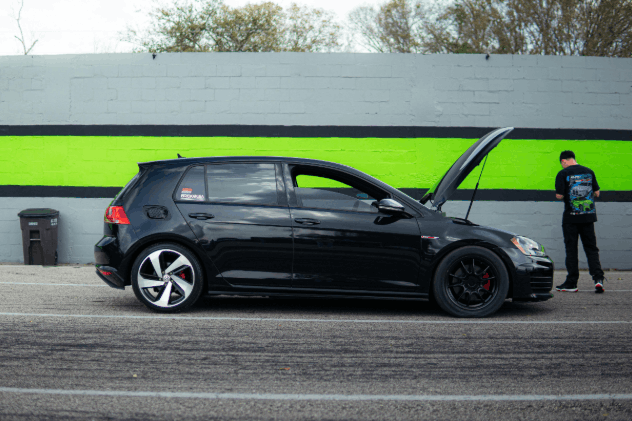
- Activate your hazard warning lights immediately to alert other road users.
- Pull as far off the main carriageway as possible, ideally onto a hard strip or firm verge.
- Turn your steering wheel towards the verge so the car doesn’t roll into traffic if hit.
- If it is dark or visibility is poor, keep your sidelights on.
- Ensure all passengers exit the vehicle through the doors furthest from the live traffic.
- Move well away from the road, preferably behind a safety barrier or up an embankment.
- Call for professional recovery services rather than attempting a DIY repair on the roadside.
- Do not attempt to place a warning triangle on the road itself if the traffic is fast-moving.
When navigating toward the edge of the carriageway at night, motorists can maintain their lane orientation by noting the what colour are the reflective studs on a motorway or dual carriageway, which serve as vital markers for the verge and slip roads.
Dos and Donts of stopping on a clearway
| Action | Permitted? | Notes |
| Emergency Breakdown | Yes | Must move vehicle off the live lane if possible. |
| Picking up Passengers | Urban Only | Instantaneous stop only; no waiting. |
| Checking a Map/GPS | No | Find a lay-by or side road instead. |
| Unloading Goods | No | Strictly prohibited on all clearway types. |
| Police Instruction | Yes | Always follow the directions of a constable. |
| Running out of Fuel | No | Usually viewed as a preventable offence. |
Is there a legal fine for stopping at clearway
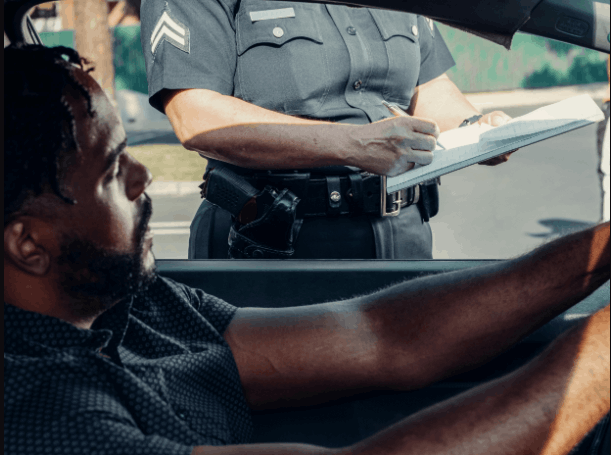
Stopping on a clearway in 2026 typically results in a Fixed Penalty Notice (FPN) or a Penalty Charge Notice (PCN), depending on whether the road is enforced by the police or the local council.
Fines generally range from £70 to £130, though these are often reduced by 50% if paid within 14 days. This level of enforcement mirrors the high-tech systems used for the various types of speed cameras UK motorists face today, including mobile units and ANPR-linked sensors.
Furthermore, if your vehicle is deemed a dangerous obstruction, the police have the authority to remove it, adding significant towing and storage fees to your total costs.
The Insurance Impact: Contributory Negligence
One of the most overlooked consequences of stopping illegally on a clearway is the impact on motor insurance.
In the event of a collision where another vehicle hits your stationary car, insurers may apply the principle of contributory negligence.
If you were stopped in a No Stopping zone without a valid emergency, you could be held partially liable for the accident. This can lead to a 25% to 50% reduction in your payout and a significant increase in future premiums.
How to find the nearby clearway
Finding clearways before you start your journey is the best way to plan for deliveries or rest stops.
- Local Authority Maps: Most UK councils publish Traffic Regulation Orders (TROs) on their official websites, mapping out every clearway and Red Route in their jurisdiction.
- Digital Scouting: Use satellite imagery and street-view tools to look for the Blue Circle/Red Cross signs at the start of major A-roads.
- Signage Recognition: The challenge for many is the silent nature of the restriction; once you pass the initial ‘Start’ sign, the prohibition remains in effect until you reach the strike-through ‘End’ sign.
Final Summary of Clearway Compliance
To stay safe and avoid penalties, treat every clearway as a no-go zone for stopping unless you are facing a genuine emergency or are forced to halt by traffic. Remember:
- Identify: Look for the blue sign with the red cross.
- Anticipate: Plan your rest stops and phone calls for designated lay-bys.
- Prioritise: If you must stop for a breakdown, move the vehicle off the road and stay behind the safety barrier.
FAQ
Does a Blue Badge allow me to stop on a clearway?
No. Blue Badge exemptions for parking do not apply to clearways. These zones are No Stopping areas for safety reasons, and disabled permits do not override this safety-critical rule.
Can I stop on a clearway verge to take a break?
No. Clearway restrictions apply from boundary to boundary, including the verges. You must find a designated lay-by or a motorway service station to rest legally and safely.
Is a Red Route the same as a clearway?
They are similar but have different signs. Red Routes use red lines and are often found in cities, while clearways use blue circular signs and are common on rural A-roads.
What should I do if my car breaks down on a clearway?
Turn on your hazard lights, pull as far off the road as possible, exit the car via the passenger side, and stand well back from the traffic while calling for help.
How long can I stop on an urban clearway to drop someone off?
The stop must be instantaneous. You are permitted only the time it takes for the passenger to physically get out of the car and close the door.
Are there cameras on clearways in 2026?
Yes. Many clearways are now monitored by ANPR cameras and mobile enforcement vans. These systems can issue fines automatically without a physical officer being present at the scene.
Can I stop on a clearway to secure a roof load?
Generally, no. Unless the load is actively falling and creates an immediate danger, you should continue to the nearest safe turning or lay-by to secure your cargo.