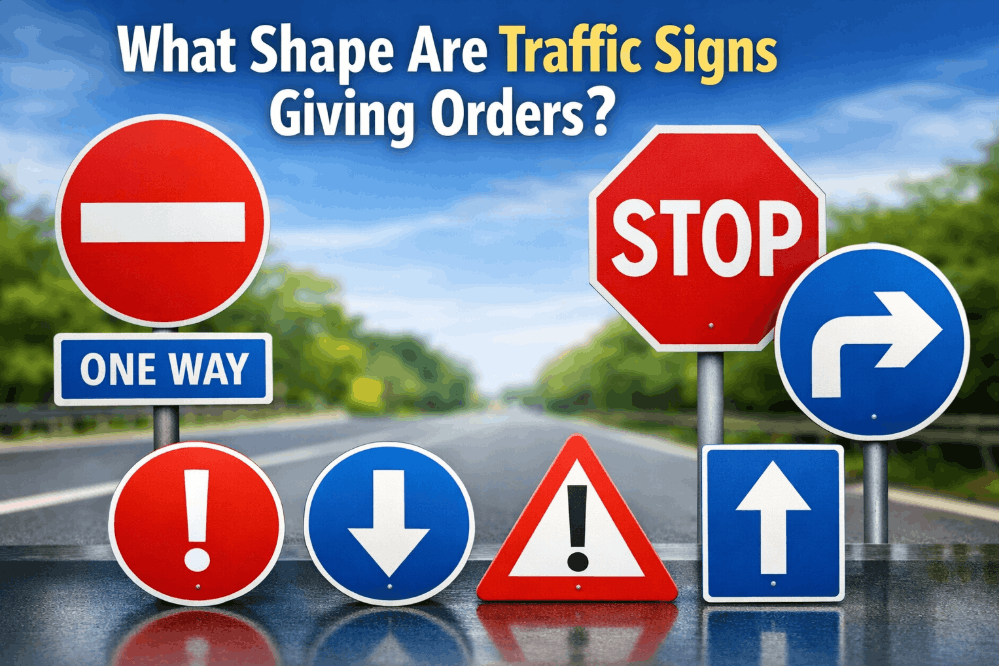
Navigating British roads requires an instant understanding of visual shorthand, particularly when identifying what shape are traffic signs giving orders in the UK, as these specific markers carry the heaviest legal weight.
Circular signs are the primary method used to communicate mandatory instructions or prohibitions. These are distinct from triangular warning signs or rectangular information signs, forming a regulatory framework designed for rapid recognition at high speeds.
In the United Kingdom, traffic signs giving orders are almost always circular. Red-bordered circles indicate actions that are prohibited, such as speed limits or no-entry zones.
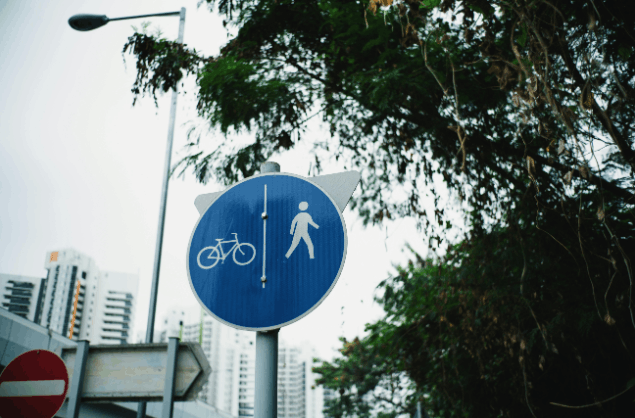
Blue circles provide mandatory positive instructions, such as turn left or designating specific lanes for buses and cycles. These signs are legally enforceable under the Road Traffic Act.
What shape are traffic signs giving orders?
A circular shape is used for all standard traffic signs giving orders. This geometric choice ensures that regulatory commands are immediately distinguishable from hazards or directions.
Red rings generally tell you what you must not do, while solid blue circles tell you what you must do, such as following a specific route or adhering to a minimum speed.
The Legal Authority of the Circular Border
The circular border represents a boundary of law. When a driver encounters a circle, they are interacting with a regulatory sign.
Unlike rectangular signs, which are often informative or advisory, the circular shape signifies a command that is backed by the Traffic Signs Regulations and General Directions (TSRGD).
Failing to comply with a circular sign is not merely a breach of the Highway Code; it is a statutory offence.
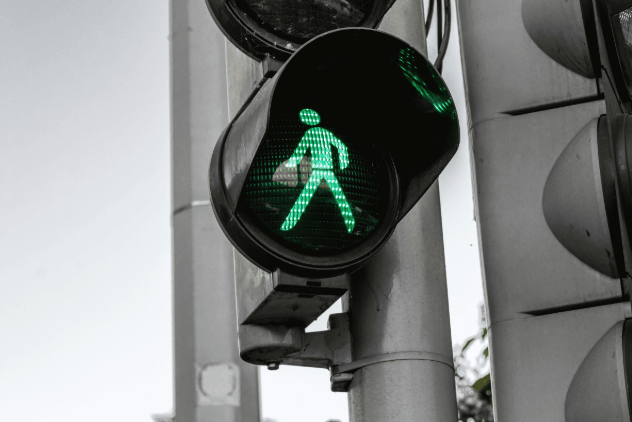
This legal strictness extends to signal-controlled junctions; for instance, knowing that if you’re approaching traffic lights and the red light is showing, what signal will show next is essential for safe and lawful progression.
In practice, local authorities use these specific shapes and light sequences to trigger enforcement through ANPR cameras. Understanding these timings is as critical as recognizing sign shapes for avoiding points on your license.
| Sign Category | Border Colour | Background | Meaning |
| Prohibitory | Red | White | Negative Order: You must not do this. |
| Mandatory | None (Solid) | Blue | Positive Order: You must do this. |
| Warning | Red | White | Awareness: Danger or hazard ahead. |
| Information | Usually Blue/Green | Various | Guidance: Directions or services. |
Why did the UK choose circles for regulatory signs?
The shift to the current system was a revolutionary moment in British transport history. Before the 1960s, road signage was a chaotic mix of text-heavy plates that were difficult to read as vehicle speeds increased.
The landmark decision regarding what shape are traffic signs giving orders was finalised by the Worboys Committee in 1963, standardising the circular design we see today.
This committee, advised by designers Jock Kinneir and Margaret Calvert, sought a symbol-based system that transcended language barriers.
They adopted the circular shape for orders because it is the most contained and authoritative geometry. This change was first trialled on the Preston Bypass, the UK’s first motorway, before being rolled out nationally to replace the 1933 system.
When reviewing decisions from that era, it is clear that the primary goal was reducing the cognitive load on drivers.
By standardising circles for orders, the Ministry of Transport ensured that even in heavy rain or at night, the silhouette of a circle alone tells a driver they are approaching a legal requirement.
What did the UK use before the modern circular system?
Prior to the 1960s, the “Pre-Worboys” system relied heavily on cast-iron signs and text. Orders were often presented on white rectangles with a red disc mounted on a pole above the sign. This was highly inefficient.
For example, a “Halt” sign (the precursor to “Stop”) was a T-shape that lacked the immediate visual impact of the modern octagon or circle.
How to verify a regulatory sign in real-time
To maintain safety and compliance at high speeds, drivers should use a systematic approach to identifying roadside instructions:
- Identify the sign’s outer silhouette to determine its category.
- Look for a red outer ring to confirm a “Must Not” prohibition.
- Check for a solid blue background for a “Must Do” mandatory instruction.
- Examine the central symbol to identify the specific vehicle or action affected.
- Search for a sub-plate beneath the circle for time-based exemptions.
- Assess if the sign is a digital VMS (Variable Message Sign) gantry.
- Check for internal illumination in urban areas, which is often a legal requirement for enforcement.
- Execute the required driving manoeuvre safely to maintain compliance.
How do red and blue circular signs differ in meaning?
While both are circles, the colour coding changes the nature of the order. A red circle is a Prohibitory Sign. It acts as a digital “0”, an off-switch for a specific behaviour.
Common examples include the red-ringed speed limit signs and the No Motor Vehicles sign, which has become prevalent in Low Traffic Neighbourhoods (LTNs).
A blue circle is a Mandatory Sign. It acts as a “1”, an on-switch for a specific direction or requirement. A common pattern is seen at mini-roundabouts, where the blue circle with white arrows dictates the direction of travel.
In a recent case, a driver attempted to argue that a Turn Left blue sign was merely a suggestion; however, because it was circular, the court upheld the Fixed Penalty Notice.
Are there exceptions to the circular order rule?
There are two critical exceptions where the shape of traffic signs giving orders deviates from the circle. These are designed with unique geometries so they can be identified from the back or when covered in snow, ensuring priority is always clear at high-risk junctions.
The Octagonal Stop Sign
The Stop sign is the only eight-sided sign on British roads. Its unique shape is an international standard adopted to ensure it is never confused with any other sign. It is a mandatory order to bring the vehicle to a complete standstill before the line.
The Inverted Triangle Give Way Sign
While warnings are upward-pointing triangles, the Give Way sign is an inverted triangle.
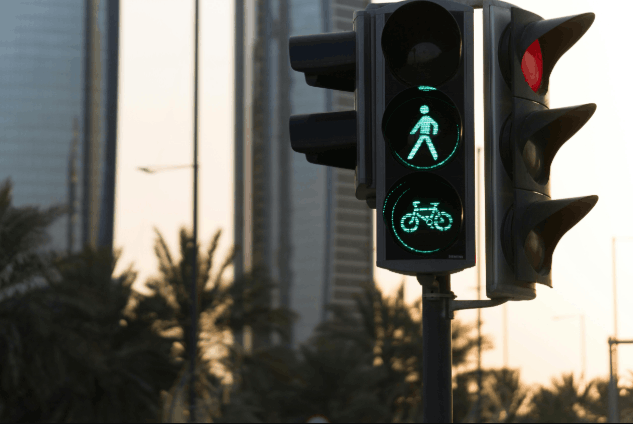
This is a regulatory sign that orders you to yield to traffic on the crossing road. It is often accompanied by double broken white lines on the road surface, similar to the caution required when determining which colour follows the green signal at a puffin crossing before proceeding.
Consistency in these priority rules is vital for protecting all road users, including those at pedestrian crossings where light sequences, rather than shapes, govern the flow of traffic.
Modern 2026 updates for digital and clean air signage
As of 2026, the application of what shape are traffic signs giving orders has expanded into the digital realm through high-resolution LED gantries.
On Smart Motorways, circular red rings displayed on overhead LED gantries are legally binding speed limits.
If the red ring is absent and only a number is shown, the limit may be advisory, but the presence of the circular red border makes it a mandatory order enforceable by speed cameras.
Furthermore, the introduction of Clean Air Zones (CAZ) has introduced new symbols, such as the Cloud icon.
While the icon is new, it is almost always housed within a circular border when it indicates a restriction on certain vehicle classes, maintaining the historical “Circle = Order” logic.
| Year | Signage Milestone | Impact on Drivers |
| 1963 | Worboys Report | Introduction of circles for all regulatory orders. |
| 2016 | TSRGD Update | Simplification of sign mounting and illumination rules. |
| 2024 | LTN Proliferation | Increased use of No Motor Vehicles circles in cities. |
| 2026 | VMS Integration | Full legal parity for digital circular signs on all motorways. |
Final Summary and Next Steps
Understanding that circles are the shape for traffic signs giving orders is essential for legal compliance and road safety. Whether it is a red-bordered prohibition or a blue mandatory instruction, these signs dictate the rules of the road.
To ensure your business fleet or personal driving remains penalty-free, conduct a signage audit of your local routes to identify new 2026 digital or environmental restrictions.
FAQ
What is the difference between a red circle and a red triangle?
A red circle gives a mandatory order or prohibition that you must obey by law. A red triangle is a warning sign that alerts you to a potential hazard ahead without imposing a legal command.
Are all speed limit signs circular?
Yes, all mandatory speed limit signs in the UK are circular with a red border. Rectangular speed signs are usually advisory and are often found in roadworks or on sharp bends.
What is the only octagonal traffic sign?
The Stop sign is the only octagonal sign. Its unique eight-sided shape ensures it is recognisable from both the front and back, even if the face is obscured by dirt or snow.
What does a blue circular sign with a white arrow mean?
This is a mandatory instruction sign. It orders the driver to follow the direction indicated by the arrow, such as Keep Left or Turn Right Ahead, and is legally enforceable.
Why are some circular signs upside down?
The Give Way sign is an inverted triangle, not a circle, but it is often confused with orders. It is the only sign of that shape to ensure it is distinguished from warning triangles.
Do circular signs apply to cyclists?
Yes, unless a sub-plate specifies Except cycles, all circular signs giving orders apply to every road user. This includes shared spaces where understanding why is a toucan crossing different from a puffin crossing helps cyclists identify where they have a mandatory right of way compared to pedestrian-only zones.
What shape are motorway information signs?
Motorway information signs are rectangular and usually blue. They provide directions and lane information. They do not give orders unless they feature a red circular speed limit inside them.