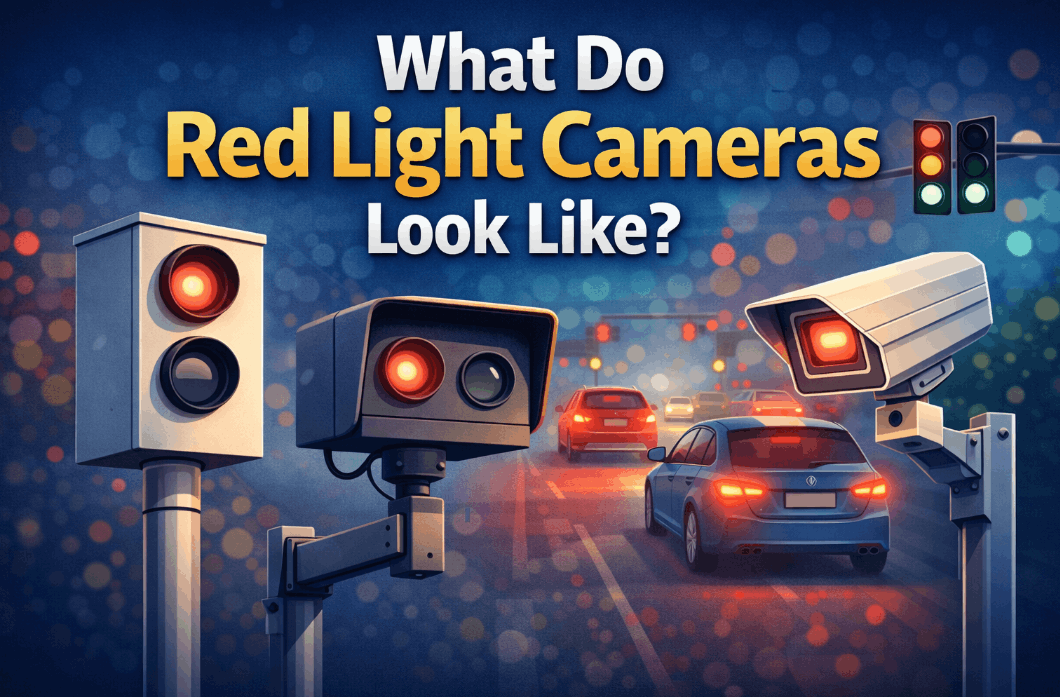
Red light cameras in the UK typically appear as small, rectangular boxes painted bright yellow to ensure high visibility. These units are usually mounted on dedicated poles several metres behind the stop line at controlled junctions.
While older models are bulky and use visible flashes, modern digital versions are sleeker and often utilise infrared technology to capture images without a discernible light burst.
Modern road safety enforcement relies on precision. If you are questioning what do red light cameras look like, it is likely because you have noticed a device atop a traffic pole or are concerned about a potential Notice of Intended Prosecution (NIP).
Distinguishing between enforcement tech and simple traffic management tools is vital for maintaining a clean licence and understanding the criteria for fixed penalty notices.
What do red light cameras look like at UK junctions?
In the UK, a red light camera is a specialized digital device housed in a yellow protective casing, positioned to monitor the stop line of a junction.
Unlike standard CCTV, these are linked to the traffic light phases and are triggered by sensors in the road surface when a vehicle crosses the line during a red signal.
The technology behind the lens
While many drivers look for a large camera, the actual enforcement setup is a combination of optical hardware and ground-based triggers. As of 2026, the transition from film-based wet cameras to fully digital systems is complete across most UK constabularies.
These devices do not just take a single photo; they record the exact moment of the violation, the vehicle’s speed, and the duration the light had been red before the line was crossed.
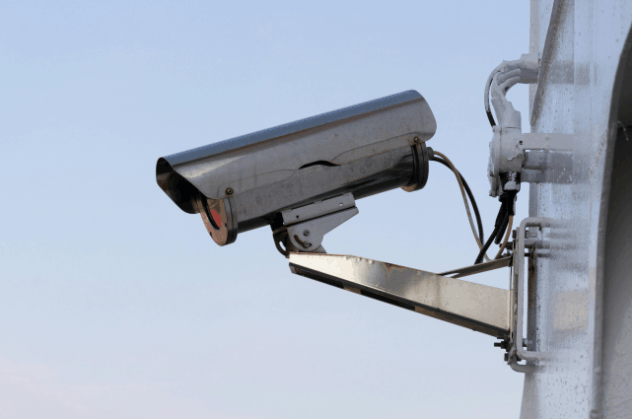
Why do so many drivers search for what red light cameras look like?
For most drivers, the need to identify specific camera hardware stems from the strict 14-day statutory limit for NIP delivery.
Identifying the equipment at a specific junction provides immediate clarity on whether a violation was digitally recorded or if the device was merely a non-enforcement sensor.
Because the UK legal system operates on a strict 14-day notification window, drivers often look for visual confirmation to determine if the junction they just passed was live.
In practice, a driver who realizes they may have clipped a red light will often backtrack or use Street View to identify the hardware.
This search intent is rooted in a desire for peace of mind or preparation for the £100 fine and three penalty points. Understanding the visual cues helps motorists differentiate between a high-stakes enforcement camera and a harmless traffic flow sensor.
What is the speciality of red light cameras?
The speciality of a red light camera lies in its synchronisation with the signal controller. Unlike a standard speed camera that monitors velocity 24/7, a red light camera only arms itself the millisecond the traffic light turns red.
Its internal logic is hard-wired to the light’s phase, creating a digital tripwire at the stop line.
Safe junction navigation relies on anticipating signal phases; specifically, knowing you’re approaching traffic lights and the red light is showing, what signal will show next allows for controlled braking rather than a last-second stop.
Another unique feature is the Double-Evidence Capture. To satisfy UK court standards, the camera must prove the vehicle was in motion. It takes two distinct photographs:
- One showing the vehicle crossing the stop line while the light is red.
- A second showing the vehicle progressing through the intersection.
Without this secondary proof of movement, the prosecution could be challenged on the basis that the vehicle simply overshot the line and stopped.
The Anatomy of Enforcement: How red light cameras are produced
Manufacturing these devices is a highly regulated process. In the UK, every camera must receive Home Office Type Approval (HOTA). This ensures that the evidence produced is legally robust and technologically accurate.
Key Components in Production:
- High-Resolution CMOS Sensors: Unlike consumer cameras, these use global shutters to eliminate motion blur at high speeds.
- 4D Radar Modules: Modern units like the Redspeed Sentio are built with radar that tracks movement in three dimensions plus time.
- IP65-Rated Enclosures: The yellow housings are produced to withstand extreme UK weather, preventing lens fogging or internal overheating.
- Infrared LED Arrays: Built-in invisible flash units allow for 24/7 monitoring without distracting other road users.
Where will red light cameras be used?
Site selection is a data-driven process, with installations restricted to locations that meet specific criteria for accident reduction and public safety.
Local authorities and road safety partnerships typically use the following criteria for installation:
- Accident Blackspots: Junctions with a statistically high rate of T-bone or side-impact collisions.
- High-Risk Zones: Areas near schools, hospitals, or major pedestrian crossings where a red-light violation could be fatal.
- Complex Intersections: Multi-lane urban junctions where drivers are most likely to misjudge amber light timings.
- Smart Motorways: Side-mounted gantries use these cameras to enforce Red X lane closures to protect stranded motorists.
Advantages and Disadvantages of red light cameras
The deployment of junction cameras remains a subject of significant debate, balancing documented safety improvements against common motorist frustrations regarding lane management.
| Enforcement Factor | Safety Benefit | Operational Criticism |
| Collision Type | Drastic reduction in fatal T-bone crashes. | Slight increase in rear-end shunts due to panic braking. |
| Resources | 24/7 enforcement without needing police presence. | High initial installation and maintenance costs. |
| Evidence | Clear, indisputable photographic proof for court. | Potential for false positives (e.g., stopping slightly over the line). |
| Revenue | Fines can be reinvested into road safety schemes. | Public perception that they are money-making traps. |
When are red light cameras most useful?
These systems prove their value in specific high-stakes scenarios. When reviewing collision data, a common pattern is that the most dangerous violations occur during off-peak hours (late at night) when drivers assume the roads are empty and jump lights.
Cameras are also vital during temporary roadworks. Mobile red light units are often produced specifically for these zones to protect road workers from motorists who ignore temporary signals.
These systems also serve as the critical enforcement mechanism for Smart Motorway ‘Red X’ signals, where physical policing is often restricted by high-speed traffic flows.
Evolution of the Species: Other types of UK traffic cameras
The yellow Gatso box is no longer the only predator on the road. Modern enforcement is increasingly multi-functional. Beyond red light units, the UK road network utilizes various types of speed cameras UK motorists should recognise, many of which now serve dual-purpose roles.
As of 2026, a new generation of Super Cameras has emerged.
- 4D AI Cameras (Redspeed Sentio): These look like slim, compact yellow towers. They can track up to six lanes and detect speeding, red lights, mobile phone use, and seatbelt compliance all at once.
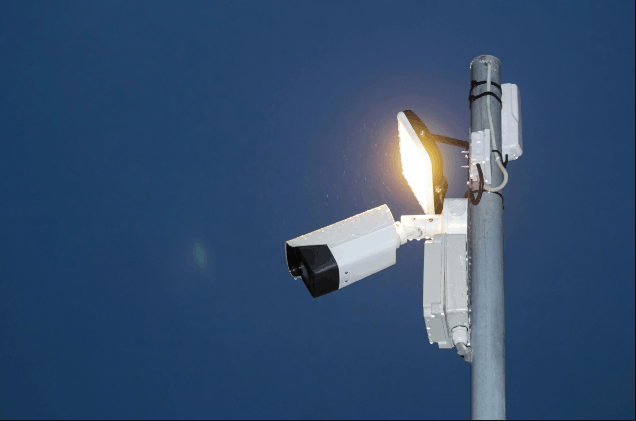
- VECTOR SR: A grey, discreet unit that uses Stealth technology. It is often mistaken for a CCTV camera, but it is a fully-functional digital speed and red-light enforcer.
- HADECS 3: The Motorway Stealth Camera. Small, grey, and mounted on the side of gantries, these are the primary enforcers of variable speed limits and Red X violations.
Summary of red light camera identification
Staying compliant on UK roads requires a mix of observation and understanding of the law. Total road compliance extends beyond hardware; for instance, identifying what shape are traffic signs giving orders in UK roads ensures drivers respect mandatory instructions even in the absence of visible cameras.
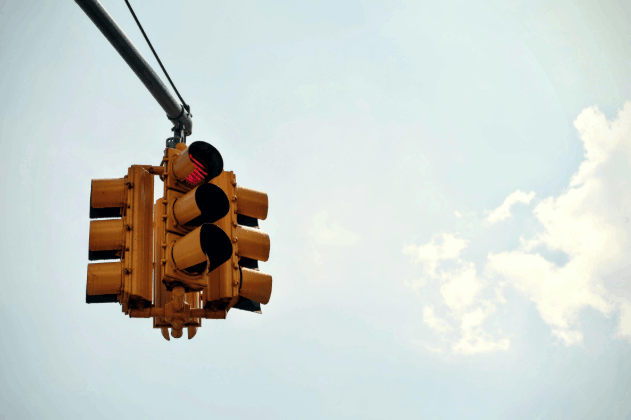
If you are looking for a red light camera, keep an eye out for yellow boxes mounted on poles behind the junction stop line, rather than the small sensors on top of the lights themselves.
Protecting Your Licence: Essential Post-Junction Checks
- Check your V5C: Ensure your address is current so you receive any NIP within the legal 14-day window.
- Respect the Amber: Treat amber as a stop signal to avoid the 0.1-second trigger point.
- Identify the Sensor: Remember that small black boxes on top of lights are traffic sensors, not enforcement cameras.
FAQ
Do red light cameras always flash?
No. Older Gatso models use a visible white flash, but many modern digital cameras use infrared technology. This allows the camera to capture a clear image of the number plate and driver in total darkness without creating a flash that might startle other motorists.
Can a camera catch you on an amber light?
Technically, amber means stop unless it is unsafe. However, most UK red light cameras have a tiny grace period (approx. 0.1 to 0.5 seconds) after the light turns red before the sensors activate to ensure fairness.
Are red light cameras always yellow?
In the UK, the vast majority of enforcement cameras must be yellow for visibility. However, some older grey units still exist, and smaller motorway cameras (HADECS) can sometimes be grey, though they are increasingly being painted yellow.
How far back from the light is the camera?
Typically, the camera is positioned 5 to 20 metres behind the stop line. This vantage point allows the lens to capture both the traffic signal (proving it was red) and the vehicle crossing the line in the same frame.
What if I moved to let an ambulance through?
If you trigger a camera to make way for an emergency vehicle, you may still receive a NIP. Most police forces will waive the fine if the images clearly show you were safely yielding to a vehicle with blue lights.
Can red light cameras see the driver’s face?
Rear-facing cameras (Gatso) only capture the registration plate. However, forward-facing units like the Truvelo D-Cam are designed to capture a clear image of the driver to prevent identity disputes.
Do all traffic lights have cameras?
No, only a small fraction of UK junctions have enforcement cameras. They are prioritized for high-risk sites. You can often check local council websites for a list of fixed camera locations in your area.
How big is a red light camera?
A standard Gatso unit is roughly the size of a microwave. Modern digital units are much slimmer and taller, often resembling a professional PA speaker or a narrow yellow pillar.
Do red light cameras catch speeding on green?
Yes. Many modern installations are Speed on Green cameras. They monitor red light violations but also function as traditional speed cameras when the light is green.