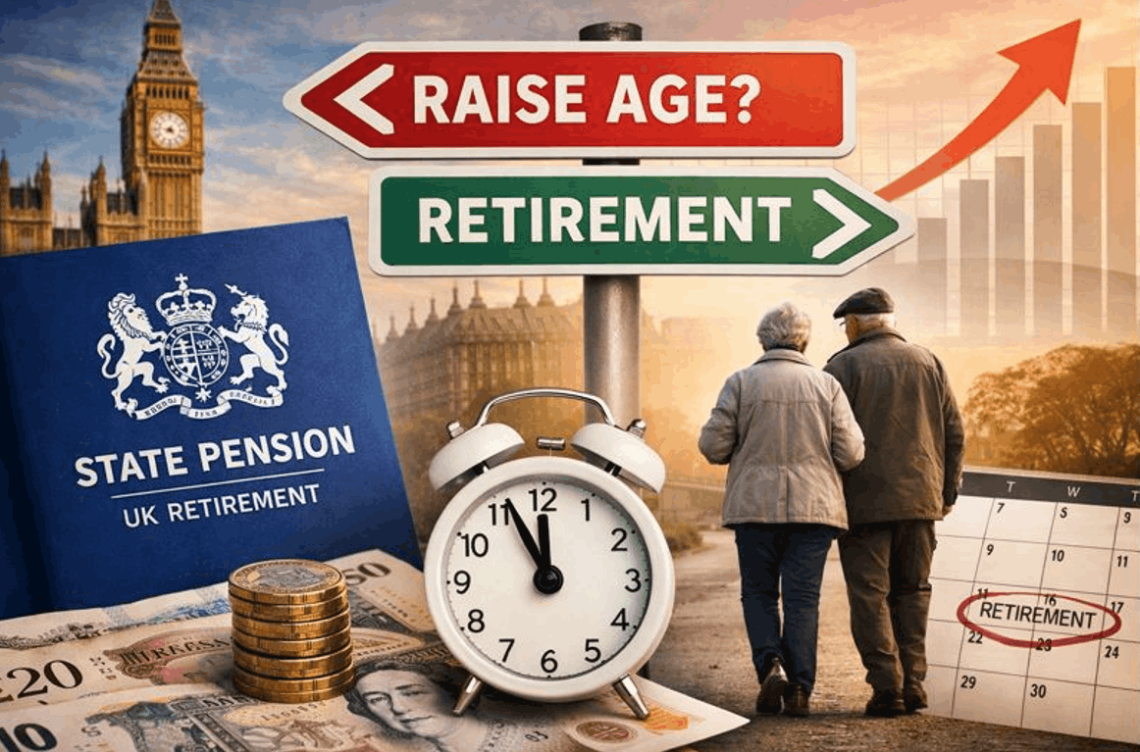
If you’re searching for UK state pension age retirement changes, you likely want one clear answer: when you can claim the State Pension, and whether that date is moving.
As of 2026, the State Pension age is 66 for most people and is scheduled to rise to 67 in stages between 2026 and 2028, depending on date of birth. Current law also sets a rise to 68 between 2044 and 2046, and separate reviews may recommend changes to future timetables.
UK State Pension Age Retirement Changes
The change is a legal timetable that moves the qualifying age later in phases, based on date of birth. It is not a single switch-over day. Your start date is calculated to the month, and the practical impact is how you cover any gap between stopping work and the State Pension starting.
Why This Matters In Real Terms?
Retirement is a personal decision; State Pension age is an eligibility rule. Mixing them up is where avoidable surprises happen.
In practice, timing is what matters: the months you may need to fund through a workplace pension, personal pension, savings, or part-time income. Treat the State Pension start date as the anchor, then build the rest of the plan around it.

What is changing from 66 to 67 and who is affected?
The move to 67 is phased by month across date-of-birth bands. If you’re in the affected window, you reach State Pension age at 66 plus additional months, up to 66 years and 11 months. Those born after the phase-in band reach it at 67.
66 To 67 Phase In At A Glance
| Date of birth band | What happens to your State Pension age |
|---|---|
| 6 Apr 1960 to 5 May 1960 | 66 years + 1 month |
| 6 May 1960 to 5 Jun 1960 | 66 years + 2 months |
| 6 Jun 1960 to 5 Jul 1960 | 66 years + 3 months |
| 6 Jul 1960 to 5 Aug 1960 | 66 years + 4 months |
| 6 Aug 1960 to 5 Sep 1960 | 66 years + 5 months |
| 6 Sep 1960 to 5 Oct 1960 | 66 years + 6 months |
| 6 Oct 1960 to 5 Nov 1960 | 66 years + 7 months |
| 6 Nov 1960 to 5 Dec 1960 | 66 years + 8 months |
| 6 Dec 1960 to 5 Jan 1961 | 66 years + 9 months |
| 6 Jan 1961 to 5 Feb 1961 | 66 years + 10 months |
| 6 Feb 1961 to 5 Mar 1961 | 66 years + 11 months |
| 6 Mar 1961 to 5 Apr 1977 | 67 |
Example: Martin planned to stop full-time work at 66 because his colleagues did. His State Pension age turned out to be 66 years and 9 months, so he used his defined contribution workplace pension to cover the extra months, then claimed the State Pension on time.
Could the State Pension age move again after 67?
Current law already provides for a move from 67 to 68 between 2044 and 2046. Separately, there are periodic State Pension age reviews that assess evidence such as life expectancy and fiscal sustainability.
A review can recommend changes, but the age only changes if the government brings forward legislation and Parliament approves it. A helpful way to read headlines is to ask whether it’s a review, a proposal, or a change already set in law.
How to check your State Pension age and plan the gap years?
Start by confirming your date, then plan your budget backwards from it. Some costs rise in winter, so factor in any support you may receive, such as the winter fuel payment, when you set your bridge-year budget.
- Confirm your State Pension age using the date-of-birth calculator on GOV.UK.
- Check your State Pension forecast to see what you’re on track to receive.
- Review your National Insurance record for gaps and National Insurance credits.
- Map the likely “gap years” between stopping work and the State Pension start.
- Check access rules for workplace and personal pensions, including scheme rules and the normal minimum pension age.
- Build a bridge budget covering essentials, housing, and healthcare costs.
- Decide whether claiming at State Pension age or deferring fits your circumstances and tax position.
Retirement, State Pension Age, And Pension Access Are Different Dates
| Term people use | What it actually means | Who sets it | Why it matters |
|---|---|---|---|
| Retirement age | When you stop working | You and your employer (within rules) | Drives your income gap and lifestyle plan |
| State Pension age | Earliest age you can claim State Pension | Set in law, administered through the claim process | Determines when State Pension can start |
| Normal minimum pension age | Earliest you can usually access many private pensions | Tax rules and scheme rules | Often funds the bridge years; rules can change over time |
Example: Aisha wanted to step back at 60. Her plan worked because she had a small defined benefit pension starting at 60, a cash buffer for surprises, and she didn’t rely on the State Pension immediately.

What are the mistakes that trip people up most often?
Most problems come from timing and admin, not from the headline age. Another common slip is assuming everyone qualifies automatically; it’s worth understanding Do all pensioners get winter fuel allowance before you include it in your monthly numbers.
- Assuming the State Pension begins automatically without checking when and how to claim.
- Treating the State Pension age as the same as the workplace pension access age.
- Missing National Insurance credits during caregiving, unemployment, or illness.
- Forgetting the tax interaction between the State Pension, PAYE income, and pension drawdown.
In practice, plans improve most when the timeline is tightened: exact dates, clear income sources, and a realistic bridge budget.
Which official terms matter for making decisions?
These concepts come up repeatedly in claims, planning, and problem-solving:
- Department for Work and Pensions and the State Pension claim process
- HM Revenue and Customs National Insurance record and credits
- State Pension forecast and qualifying years
- New State Pension and transitional calculations for some records
- Triple lock-uprating (how annual increases are calculated)
- Pension Credit qualifying age and means-tested support
- MoneyHelper, Pension Wise, and Citizens Advice guidance routes
- Workplace pension trustees, scheme rules, and provider communications
- PAYE tax codes and income tax planning around pension drawdown
Household planning can also include what happens after bereavement, so the question if my husband dies do i get his state pension often comes up when checking what income continues.
What People Mean By UK State Pension Increase Campaign?
People use this phrase to bundle a few different demands together. Some are about how the State Pension rises each year, others are about broader fairness arguments.
The phrase usually describes organised pressure for higher State Pension payments or different uprating approaches, alongside high-profile public debate about fairness and communication around past changes.
For planning, keep two tracks separate: payment debates affect how much you may receive, while eligibility age rules affect when you can receive it.

Retirement Age UK For Female: What It Means In Practice?
This search term is common because many people still assume there’s a fixed age that applies to women. In reality, the planning rule you need is tied to eligibility, not employment choices.
There is no single mandatory retirement age for women in most roles; you can choose when to stop working. The fixed rule that affects planning is the State Pension age, which is 66 for most people and is scheduled to phase to 67 between 2026 and 2028 depending on date of birth.
Retirement Age UK For Male: What It Means In Practice?
This term usually appears when people want a clear “official retirement age” for men. The more useful framing is the eligibility date for the State Pension, and how you cover any gap before it.
There is no single mandatory retirement age for men in most roles; retirement is usually a personal and employment decision. The planning anchor is the State Pension age, currently 66 for most and scheduled to phase to 67 during 2026 to 2028, depending on date of birth.
What does a state pension age increase bring?
It won’t change every part of your plan, but it can move the dates. For most people, that shift is where the impact shows up.
A state pension age increase changes the earliest date you can claim the State Pension, not whether you are allowed to retire. The current timetable phases the move to 67 between 2026 and 2028 for specific birth-date bands. Longer-term law also sets a move to 68 between 2044 and 2046, subject to future review and legislation.
How to fund the gap years without derailing your plan?
The “gap years” are the period between reducing work and the State Pension starting. This is where workplace pensions, savings, and benefits rules intersect.
- Workplace and personal pension options can include annuity purchase, flexible drawdown, lump sums, or phased retirement.
- Employment options can include reduced hours, consultancy, seasonal work, or bridge contracts.
- Safety nets can include means-tested support, with eligibility depending on age and circumstances.
Example: Denise left work at 64 due to caregiving. National Insurance credits helped protect her qualifying years, and she used a small drawdown pot to cover household bills until her State Pension date.
UK state pension age retirement changes and bridge-year planning
This is where precision matters: confirm your date, then build a plan that can handle inflation, unexpected health costs, and changes to earnings. A practical first step is to check your State Pension age and your National Insurance record, then decide how you will cover any gap in between.
Actions that tend to make the biggest difference
| Action | What you’re trying to prevent | Who it involves |
|---|---|---|
| Confirm your State Pension age date | Planning to the wrong date | GOV.UK tool and claim records |
| Check your State Pension forecast | Surprises about the amount or qualifying years | Forecast service and your NI history |
| Review National Insurance gaps and credits | Reduced entitlement from missing years | HMRC record, credits, and contributions |
| Align pension access ages with your plan | Running out of cash before the State Pension starts | Provider, scheme rules, trustees |
| Build a drawdown and tax-aware budget | Paying avoidable tax or destabilising support | Provider, PAYE, personal budget |
What people talk about this online?
UK Pension Age Changes: Workers Warned They May Work Until 80
byu/novagridd inuknews
State pension age could hit 80 unless major changes made, expert warns
byu/PrestigiousBrit inunitedkingdom
Final Summary
As of 2026, the key timetable change is the phased move from 66 to 67 during 2026 to 2028, based on date of birth. Confirm your exact date first, then check your forecast and National Insurance record, and map the gap years. From there, choose a bridge strategy that matches your pension access rules and household budget.
FAQ
What is the State Pension age right now?
For most people it is 66. Your exact State Pension age depends on your date of birth and the statutory timetable. If you are in the phased increase band, your State Pension age may be 66 plus a number of months, up to 66 years and 11 months.
When is the State Pension age rising to 67?
The move to 67 is phased between 2026 and 2028 for specific birth-date bands. That means people reach State Pension age at 66 plus additional months rather than everyone switching on one day. The timetable is set by date of birth.
How do I check my State Pension age by date of birth?
Use the GOV.UK State Pension age tool and enter your date of birth. It gives your State Pension age and the date you reach it. That single date is the anchor for retirement income planning, benefits timing, and pension drawdown decisions.
Can I retire before State Pension age?
Yes. Retirement is when you stop working, and you can choose it in most cases. The State Pension cannot normally be claimed early, so retiring before State Pension age usually requires funding the gap using a workplace or personal pension, savings, or continued earnings.
How many National Insurance years do I need for a State Pension?
Entitlement depends on your National Insurance record and whether you fall under new State Pension rules or earlier calculations. Many people need a minimum number of qualifying years to receive anything, and more years to build up more. Your State Pension forecast shows your current position.
What happens if I have gaps in my National Insurance record?
Gaps can reduce your State Pension amount, but some gaps are covered by National Insurance credits, for example during certain benefits or caregiving periods. The practical step is checking your record, then confirming whether credits apply or whether filling gaps could help in your circumstances.
Is the State Pension age going to 68?
Current law sets a move to 68 between 2044 and 2046. State Pension age is also reviewed periodically, and reviews can recommend changes, but any earlier or different timetable would require legislation and Parliamentary approval. A review is not the same as a change in law.
Do benefits like Pension Credit change when State Pension age changes?
Yes, because Pension Credit qualifying age is linked to State Pension age. As the State Pension age rises, Pension Credit eligibility timing rises with it. That link matters if your plan relies on means-tested support later.
Does the State Pension start automatically when I reach State Pension age?
Often, you need to claim it, and timing can affect when payments begin. The safest approach is to check your State Pension age well ahead of time and keep your contact details up to date, especially if you move or change your name.
Author Note
Written from a pensions content and retirement-planning perspective, using standard terminology such as State Pension age timetable, State Pension forecast, and National Insurance record checks. It’s general information to support clearer decisions and better questions, not financial or legal advice.