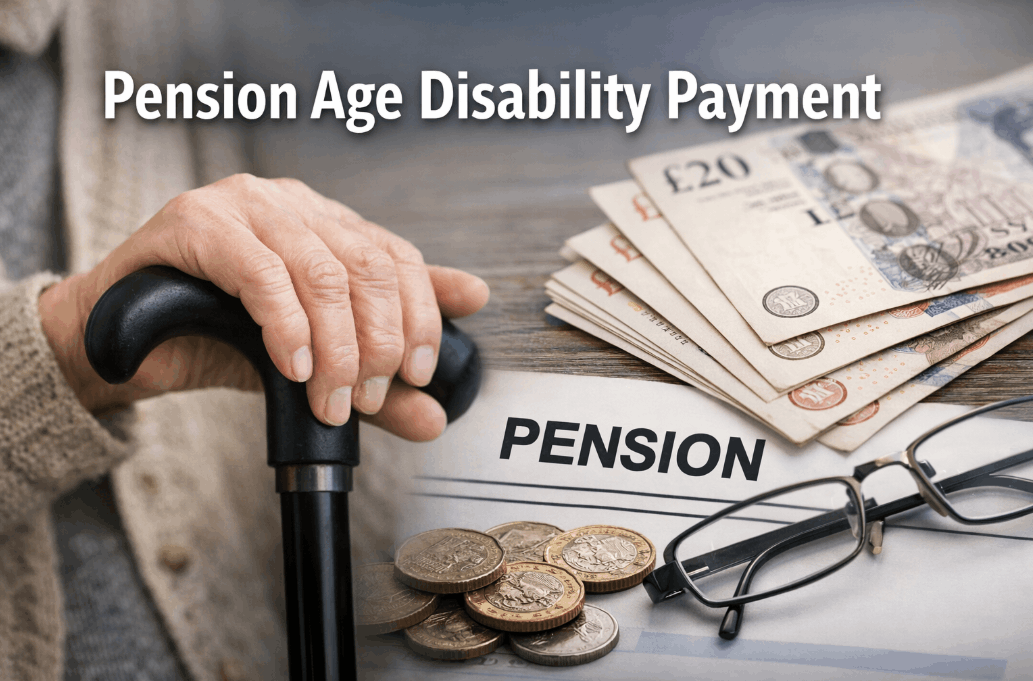
The pension age disability payment is a tax-free, non-means-tested social security benefit available to individuals who have reached State Pension age and have a physical or mental disability.
Managed by Social Security Scotland, it provides financial assistance to cover the extra costs of care or supervision required due to long-term health conditions or terminal illness.
What is the Pension Age Disability Payment?
The pension age disability payment is a recurring financial award for older people in Scotland who require help with personal care or supervision to stay safe.
As of 2026, it serves as the permanent replacement for Attendance Allowance for all new claimants residing in Scotland, ensuring that disability support remains tailored to the specific needs of the Scottish social security system.
Moving from Attendance Allowance to the new Scottish system
The introduction of this payment marks a significant shift in how disability support is administered.
While the eligibility criteria regarding care needs remain largely aligned with the previous system to ensure fairness, the administration is handled entirely by Social Security Scotland rather than the Department for Work and Pensions (DWP).
This change is part of a broader move to a more rights-based social security model that prioritises dignity and respect throughout the application process.
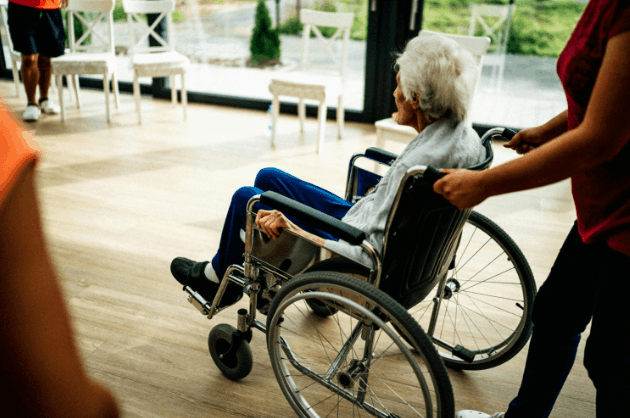
Who is eligible for the pension age disability payment?
To qualify for this support in 2026, you must typically have reached State Pension age and be ordinarily resident in Scotland.
Planning for this award often goes hand-in-hand with broader retirement budgeting, such as calculating how much state pension will i get at 66 to establish a clear baseline for your monthly household income.
The disability benefit is designed for those who have lived with a condition for at least 26 weeks, though this waiting period is waived for terminal diagnoses.
| Eligibility Factor | Requirement Summary |
| Age | Must have reached State Pension age (currently 66 or older). |
| Residency | Must be ordinarily resident in Scotland. |
| Duration | Must have had the condition for at least 26 weeks (unless terminally ill). |
| Financials | Not affected by income or savings (non-means-tested). |
| Health Impact | Requires help with personal care or supervision for safety. |
A frequent misunderstanding among applicants is the belief that a formal medical diagnosis is the only way to qualify. However, the assessment is based on the impact your condition has on your daily life.
For instance, if you have severe arthritis that makes dressing difficult, it is the functional limitation, not just the diagnosis, that qualifies you for the award.
How much is the pension age disability payment in 2026?
The payment is structured into two distinct rates, determined by the level of care or supervision required throughout the day and night. These rates are adjusted annually to keep pace with inflation and the cost of living.
- Lower Rate (£73.90 per week): Awarded if you require frequent help or constant supervision during either the day OR the night.
- Higher Rate (£110.40 per week): Awarded if you require help or supervision during both the day AND the night, or if you are terminally ill.

Financial impact on other benefits
Receiving this payment can often trigger premiums or additional amounts in other benefits such as Pension Credit, Housing Benefit, or Council Tax Reduction.
Because it is not treated as income, it provides a net increase in household resources without reducing your State Pension.
How do you apply for the pension age disability payment?
The application process is designed to be accessible, offering multiple channels for submission to accommodate different needs.
When completing Part 1 of the application, you will be asked for your National Insurance number.
While eligibility for a standard retirement income often depends on your NI record, leading many to ask I have never paid national insurance will i get a pension, this specific disability payment is based solely on your current care needs rather than your
Social Security Scotland has implemented a two-part application system to make the workload more manageable for seniors.
- Contact Social Security Scotland: Phone them or go online to register your intent to claim.
- Complete Part 1: Provide your basic personal details, including your National Insurance number and residency status.
- Complete Part 2: Detail how your condition affects your daily life, such as difficulty washing, eating, or moving safely.
- Gather Supporting Evidence: Collect letters from GPs, consultants, or carers that confirm your care requirements.
- Submit the Application: Send the completed forms via the online portal or by post.
- Assessment Review: A case manager reviews your file; a face-to-face consultation is rarely required if sufficient evidence is provided.
- Receive Decision: You will be notified in writing regarding your award rate and the date of your first payment.
Experience shows that claimants often instinctively under-report their daily struggles because they have gradually adapted to living with their condition.
When reviewing your daily routine for the application, it is vital to describe your worst days rather than your best ones to ensure the award accurately reflects your level of need.
What are the care and supervision requirements?
The legal definition of care and supervision is specific. To be successful in a claim, you must demonstrate that your needs fall into one of several categories.
- Personal Care: Assistance with bodily functions such as dressing, bathing, toileting, or taking medication.
- Supervision: The need for another person to be nearby to prevent you from harming yourself or others (e.g., due to falls, seizures, or confusion).
- Night-time Needs: Assistance required at least twice a night or for a period of 20 minutes or more.
Consider the case of James, a 72-year-old with advancing Parkinson’s. During the day, he can manage basic tasks but requires significant help with buttons and zips.
At night, he frequently falls when trying to reach the bathroom. Because James has distinct needs during both the day and night, he would likely qualify for the higher rate of the pension age disability payment.

What if you move between Scotland and England?
Moving across the border creates a specific set of rules that you’ll need to navigate carefully. Because the pension age disability payment is specific to Scotland, moving to England or Wales requires a transition back to the DWP-managed Attendance Allowance.
- The 13-Week Rule: If you move from Scotland to England, Social Security Scotland will usually continue to pay your benefit for 13 weeks to give you time to apply for Attendance Allowance.
- No Gap in Pay: Provided you apply promptly in your new location, the transition is designed to be seamless with no loss of income.
- Reporting the Move: You must notify Social Security Scotland as soon as your move date is confirmed to avoid overpayments or administrative delays.
| Feature | Pension Age Disability Payment (Scotland) | Attendance Allowance (England/Wales) |
| Provider | Social Security Scotland | DWP |
| Application | 2-part digital/paper | Paper-heavy (DS700) |
| Principles | Rights-based, dignity-focused | Traditional medical model |
| Payment Frequency | Every 4 weeks | Every 4 weeks |
Summary and Next Steps
The pension age disability payment is a vital resource for maintaining independence in later life. If you are over State Pension age and find that daily tasks are becoming increasingly difficult or unsafe to perform alone, you should consider starting an application.
First, verify your age and residency eligibility. Then, document your daily struggles for a full week to ensure you can answer the application questions accurately. Finally, contact Social Security Scotland…
FAQ about pension age disability payment
Can I get PADP if I live in a care home?
You can apply, but payments usually stop after 28 days if the local council is funding your care. If you are self-funding your care home fees, you can continue to receive the payment.
Do I need a carer to apply?
No. You do not need to have a carer currently in place to qualify. The benefit is based on the help you need, not the help you are currently receiving.
Can I claim PADP and PIP at the same time?
No. You cannot receive Personal Independence Payment (PIP) and Pension Age Disability Payment simultaneously. PADP is specifically for those who develop needs after reaching State Pension age.
How long does a decision take in 2026?
Most decisions are currently reaching claimants within 8 to 12 weeks, though cases involving terminal illness are fast-tracked within days under the Special Rules.
Is the payment means-tested?
Your income, savings, and State Pension have no bearing on your eligibility. This is a non-means-tested benefit based entirely on your health and care requirements.
You can rest assured that any separate lump sums, such as DWP state pension back payments issued to correct past underpayments, will not reduce or disqualify your disability award.
Does it cover mobility needs?
Unlike PIP or Adult Disability Payment, this benefit does not have a specific mobility component. However, the money can be used for any purpose, including transport.
What if my condition improves?
You are legally required to report any significant improvement in your health to Social Security Scotland, as this may result in a change to your award rate.