
Is Budapest safe? Yes, Budapest is one of the safest capital cities in Europe for UK travellers in 2026.
While the UK Foreign, Commonwealth and Development Office (FCDO) highlights that petty crime like pickpocketing occurs, violent crime is significantly lower than in major British cities like London or Manchester.
Most visits are entirely trouble-free, provided you use licensed transport apps and stay alert in high-traffic tourist districts.
Is Budapest safe for tourists in 2026?
Budapest is currently categorized as a Level 1 safety destination, which essentially means you should stay as sharp as you would in any major UK city.
Statistically, the city remains one of the safest capitals in Europe; its 2026 Crime Index rating of approximately 33.9 is significantly lower than that of London (approx. 54) or Birmingham (approx. 63).
While there was a slight uptick in nationwide registered crimes in 2024–2025, this was primarily driven by domestic and non-tourist-related incidents.
As of 2026, the city remains highly secure, with a visible police presence in central hubs like District V and the Jewish Quarter.
While opportunistic theft exists, the risk of serious harm to visitors is exceptionally low, with violent crime rates falling well below the European average.
The Bottom Line on Budapest Safety
For a British tourist, the primary safety concerns in Budapest are financial rather than physical. You are much more likely to be overcharged for a taxi or a round of drinks than to experience a mugging.
In practice, security in the capital is robust, and the integration of the EU’s Entry/Exit System (EES) in 2026 has modernized border security at Ferenc Liszt International Airport (BUD).
While the city is secure, ensuring you have comprehensive travel insurance remains the most effective way to protect yourself against unforeseen medical issues or flight disruptions. Taking care of the basics early means you can focus on the trip itself rather than stressing over paperwork.
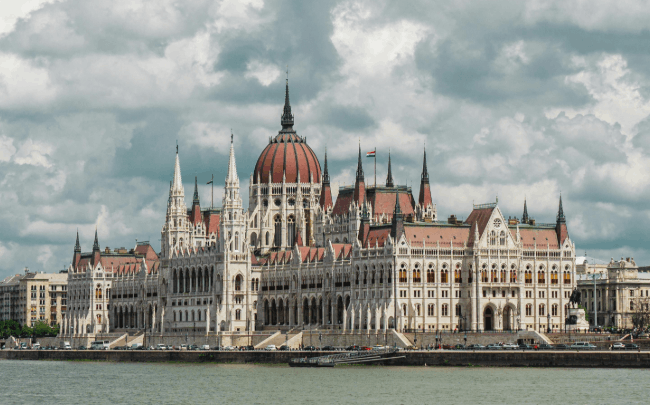
Where is Budapest located and what is its history?
Budapest is the capital city of Hungary, a landlocked country in Central Europe. Sitting right on the banks of the Danube, Budapest is the pulse of Hungary, bringing together the country’s best history, food, and nightlife in one place.
Why is it named Budapest?
The city’s name is a literal combination of its two historic halves: Buda and Pest.
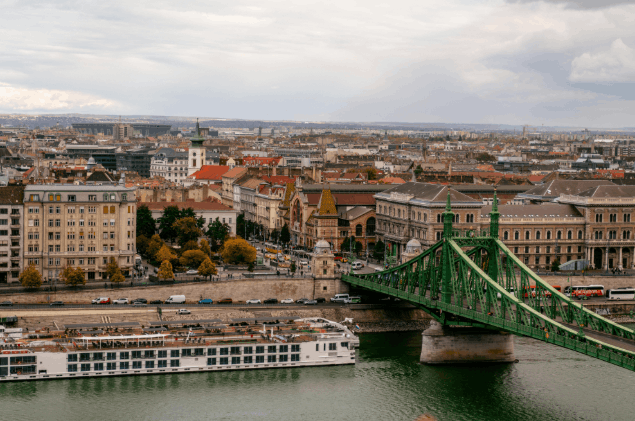
- Buda: The hilly, leafy side on the west bank, home to the Royal Palace and ancient history.
- Pest: The flat, vibrant side on the east bank, where the Parliament and nightlife thrive.
- History: The two were officially unified in 1873. The name Budapest was popularized by Count István Széchenyi, who believed a unified capital was essential for Hungarian progress.
The UK-Budapest Connection
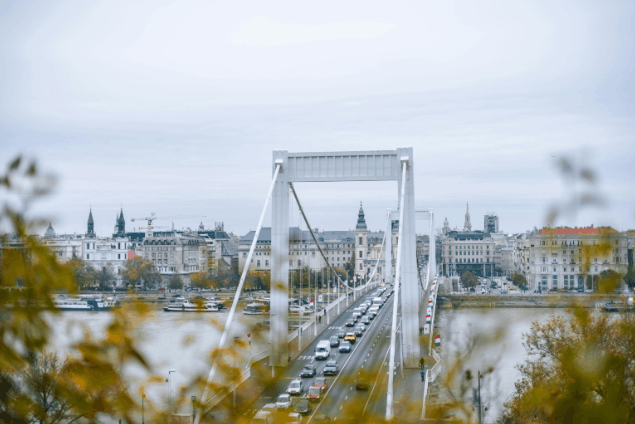
The relationship between the UK and Budapest is surprisingly deep. The city’s most famous landmark, the Chain Bridge, was designed by English engineer William Tierney Clark.
Historically, British travellers have been dubbed the Magyars of the West by Hungarian thinkers, reflecting a long-standing mutual respect and a shared love for constitutional history.
Why Budapest is a Top Pick for Brits
Budapest is an elite-tier tourist destination that consistently ranks as a favourite for UK holidaymakers due to its unique Ruin Bar culture, world-class thermal baths, and grand architecture.
Why is it so famous in the UK?
For many in the UK, Budapest offers Grand Canal vibes at a fraction of the price of Venice or London. It is famous for being affordable but high-end. You’ll find everything from £2.50 pints in gritty ruin bars to world-class spa treatments in marble palaces; there really is something for every budget.
Who is the city suited for?
- Couples and Honeymoons: The romantic sunsets at Fisherman’s Bastion are world-renowned.
- Solo Travellers: High safety ratings and a social hostel scene make it ideal for independent exploration.
- Vacationers: Families enjoy the vast parks and the zoo, while friend groups flock to the Sziget Festival in August.
The Budapest Bucket List: 8 Essentials
- Soak in the Széchenyi Thermal Baths (Book in advance).
- Take a Night Danube Cruise to see the Parliament lit up.
- Explore the Buda Castle District for panoramic views.
- Visit a Ruin Bar (Szimpla Kert is the original).
- Walk across the Chain Bridge at sunset.
- Eat authentic Goulash at the Central Market Hall.
- Climb the stairs of St. Stephen’s Basilica.
- Ride the M1 Metro Line, the oldest on the continent.
Entry Requirements: Do I need a visa from the UK?
As of 2026, UK citizens do not need a traditional visa for short stays (up to 90 days in any 180-day period) for tourism. However, new digital systems are in place.
- ETIAS (Late 2026): By the end of 2026, you will likely need to apply for the ETIAS (European Travel Information and Authorisation System) online before you fly. It costs roughly €7 and is valid for three years.
- Passport Validity: Your passport must be less than 10 years old on the day you enter and have at least 3 months of validity left after the day you plan to leave.
- Flights: You can fly direct to Budapest from London (LHR, LGW, STN, LTN), Manchester, Bristol, Edinburgh, and Birmingham. The flight time is approximately 2 hours and 30 minutes.
If you find your document is expiring soon, you might wonder what if i don’t know anyone to countersign my passport during the renewal process. Getting this sorted before you head to the airport makes the breeze through the new biometric gates much easier.
Is Budapest cheap or expensive?
Budapest remains significantly cheaper than London, but it is no longer the dirt-cheap destination it was a decade ago.
You cannot use UK Currency (GBP) in shops. While some places accept Euros, they will give you a terrible exchange rate. Always use the local currency: Hungarian Forint (HUF).
| Item | Estimated Cost (2026) | GBP Equivalent |
| Large Draught Beer | 1,200 HUF | £2.60 |
| Three-course meal (Mid-range) | 12,000 HUF | £26.00 |
| Single Metro Ticket | 450 HUF | £1.00 |
| Coffee in a Café | 900 HUF | £1.95 |
The UK Traveller’s Code of Conduct: Rules and Etiquette
To stay safe and respectful, British tourists should be aware of specific local customs and laws.
- Alcohol & Drinking: The legal age is 18. While ruin bars are wild, street drinking is illegal in most districts and can lead to on-the-spot fines.
- ID Laws: By law, you must carry your physical passport at all times. A photocopy is technically not sufficient if stopped by the police.
- Beer Etiquette: Never clink your beer glasses. This is a 150-year-old tradition stemming from the 1849 execution of Hungarian generals; locals still find it disrespectful.
- Public Transport: You must validate your paper ticket before the journey starts (metro) or immediately upon boarding (bus/tram). Plain-clothes Ninja inspectors are famous for being uncompromising with tourists.
What NOT to do: Do not shout or be excessively loud in residential areas (like the backstreets of District VII). Locals are increasingly sensitive to party tourism, and police are quick to issue noise complaint fines.
What are the most common scams in Budapest to avoid?
While violent crime is rare, financial traps are the biggest threat to your holiday budget.
- The Friendly Girls Trap: Attractive women approach men on Váci Street, asking for a drink. They lead you to a specific bar where a single round costs £500, enforced by security.
- The Taxi Freelancer: Always avoid taxis without a company logo on the door. Use the Bolt app to ensure fixed, fair pricing.
- The Wrong Change: When paying in Forint, ensure you know your notes. Scammers may give you obsolete currency or lower-value notes that look similar.
When is the best time to visit Budapest?
Budapest is a four-season city, but for the best balance of safety, crowds, and weather, timing is key.
- Best Overall: May, June, and September (warm, sunny, manageable crowds).
- Budget Choice: February and November (cold, but hotel prices drop by 40%).
- Event Seekers: August for Sziget Festival; December for some of Europe’s best Christmas Markets.
Winter shows off the city’s festive side, but it’s natural to compare safety across different regions before booking. For instance, many Brits also ask is tunisia safe to visit when deciding between a snowy city break or a bit of North African sun.
Final Summary
Budapest is an exceptionally safe, vibrant, and culturally rich city that remains a top choice for UK travellers in 2026. By staying vigilant against common financial scams and respecting local transport rules, you will likely find it safer and more hospitable than many UK cities.
Your Next Steps:
- Check your passport expiry date, ensure it has at least 3 months left.
- Download the BudapestGO app for easy, scam-free transport tickets.
- Ensure you have a physical ID on your person for your entire trip.
FAQ
Is Budapest safe for solo female travellers in 2026?
Yes, Budapest is highly rated for solo women. Stick to central districts and use the Bolt app for late-night travel to your accommodation.
Is the water safe to drink?
Absolutely. Budapest’s tap water is high-quality and safe. Carry a reusable bottle to save money and reduce plastic.
What language do they speak?
The official language is Hungarian (Magyar). However, English is widely spoken in the tourism industry, hotels, and restaurants.
How do I travel to the city from the airport?
The safest and cheapest way is the 100E Airport Express bus, which goes directly to the city centre for around 2,200 HUF.
Is District VIII dangerous?
The Palace District, part of District VIII, is safe and beautiful. The outer parts (towards Orczy tér) are poorer and can feel intimidating at night, so they are best avoided after dark.
Do I need to tip in Budapest?
A 10-15% service charge is often included in restaurant bills. If not, a 10% tip for good service is standard.
Are drugs legal in Budapest?
No. Hungary has some of the strictest drug laws in Europe. Possession of even small amounts can lead to jail time.
Author Note
This guide was produced by a veteran travel strategist specializing in Central European safety and UK-EU travel regulations. Our team cross-references real-time FCDO advisories with local crime data from the Hungarian National Police to ensure 2026 accuracy. This article is for informational purposes and does not constitute legal travel advice. Stay Travel Aware.