Bad Boy Records is one of the most recognisable names in hip-hop and R&B history, which is why so many people still type is Bad Boy Records still in business when the label doesn’t appear in mainstream music headlines the way it once did.
The brand still pops up everywhere, through classic tracks, streaming playlists, samples, and nostalgia content, yet the label’s modern operations can feel quieter from the outside.
That quietness is exactly what confuses readers. Many people assume a label is only in business if it’s constantly signing artists, announcing deals, and pushing new releases every week. In 2026, that’s simply not how many legacy labels operate.
This article answers that question clearly, then explains what “still in business” actually means in today’s music industry and how Bad Boy fits into that picture.
Is Bad Boy Records still in business?
Yes, Bad Boy Records is still in business in 2026, but it operates mainly as a legacy label focused on catalogue monetisation, licensing, and rights/brand management rather than frequent new releases or highly public signings.
What does “still in business” mean for a record label in 2026?
A huge reason people keep asking is bad boy records still in business because they’re using an old-school definition of active.
In the streaming era, a label can be “in business” if it:
- Exists as an imprint/brand that is maintained and used.
- Controls or administers rights tied to recordings and releases.
- Earns revenue from catalogue streaming (often the biggest slice).
- Licenses music for TV, film, adverts, games, and online content.
- Benefits from sampling/interpolations that require approvals and payments.
It does not need to:
- Sign new artists every month.
- Run loud press campaigns.
- Flood the market with weekly releases.
So yes, “Is Bad Boy Records still in business?” can be true even if the label looks quiet.
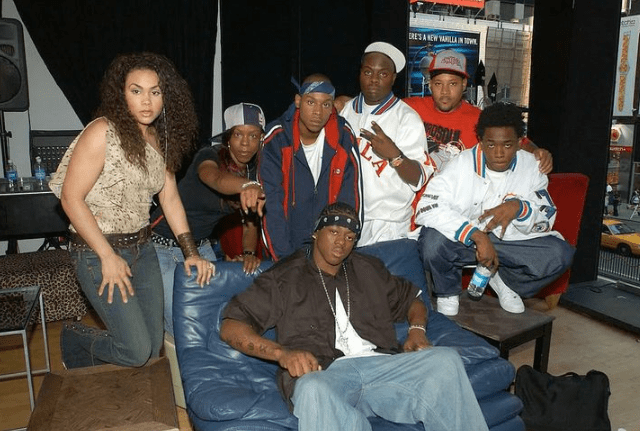
Why Bad Boy feels quieter today and why that’s normal?
Bad Boy grew in an era where labels were highly visible. Labels controlled physical distribution, retail placement, radio promotion, and magazine-driven publicity. Visibility was part of the business model.
Today, visibility comes from platforms and creators:
- Streaming editorial placement
- Algorithmic discovery
- Short-form video trends
- Artist-led marketing
Legacy labels often shift to a lower-visibility model because their most valuable asset is their back catalogue. The catalogue doesn’t require constant public announcements to generate revenue. That’s one of the simplest reasons the answer to Is Bad Boy Records still in business stays “yes”.
How catalogue keep Bad Boy Records in business?
One of the most practical ways to understand how Bad Boy Records is still in business is to understand how the catalogue works.
Catalogue earns money through:
- Ongoing streaming royalties (year after year).
- Playlist placements that keep older songs circulating.
- Sync licensing (TV, film, adverts, games).
- Reissues, anniversary editions, remasters, compilations.
- Sampling/interpolation approvals tied to modern releases.
Because Bad Boy’s catalogue remains culturally relevant and commercially valuable, it can continue operating as a real business even without heavy new-artist output.
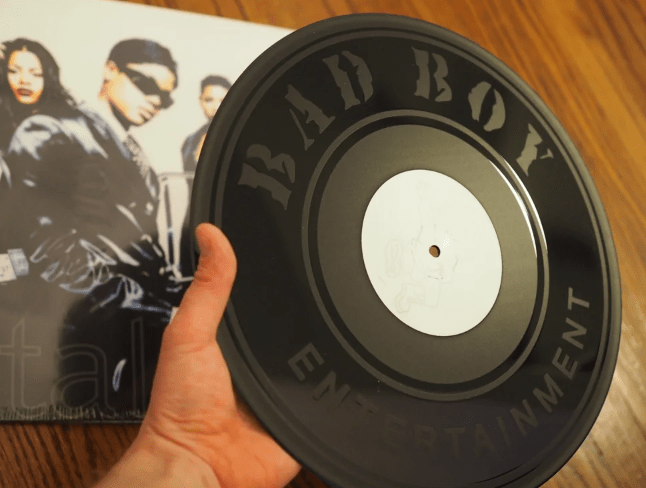
What does that look like in money terms?
A lot of UK readers asking Is Bad Boy Records still in business are really asking: does it still make money today? Labels like Bad Boy don’t typically publish full financial statements, so you won’t find a clean official “annual income” figure.
But you can understand the business realistically by looking at how legacy catalogues generate revenue in the streaming era, especially in the UK, where evergreen US hip-hop and R&B continue to perform strongly through playlists, radio throwbacks, clubs, and algorithm-driven discovery.
In practical terms, Bad Boy’s modern income is best understood as recurring, catalogue-led revenue rather than “big launch” income from constant new releases.
That matters because catalogue can earn every single day, including in the UK market, where older hits often resurface through curated playlists (e.g., 90s hip-hop, R&B classics, “old school” mixes) and background listening.
Where does the income come from?
Bad Boy’s business activity today would typically be tied to five main buckets:
- Streaming royalties: ongoing plays in the UK and globally
- Licensing/sync: placement in UK-viewed TV, film, adverts, trailers, games, and social campaigns
- Sampling/interpolation approvals: when newer music reuses iconic recordings
- Reissues and compilations: anniversary editions and catalogue repackaging
- Brand/IP value: the Bad Boy name as an asset (campaigns, partnerships, legacy positioning)
For UK readers, the biggest point is this: Even if you never see a new “Bad Boy artist launch,” the catalogue can still generate meaningful income from UK listeners daily, because UK streaming consumption is global, not local-only.
Estimated annual revenue range
Because Bad Boy is not a publicly traded company releasing audited statements, any “income number” you see online is usually guesswork. The most responsible way to add depth is to use ranges and explain why those ranges exist.
A legacy label with a globally recognised catalogue can reasonably generate high six figures to low eight figures per year in total business revenue, depending on licensing activity, streaming performance, and how rights are split across deals.
A reasonable UK-friendly working range (illustrative, not official):
- Estimated annual revenue: £0.5 million to £10 million+ in a typical year
- Lower end if it’s a quiet licensing year
- Higher end if major licensing placements, catalogue campaigns, or special releases occur
Important note: This reflects business revenue, not profit, and not any one person’s personal income. Streaming payouts are split across multiple stakeholders, and catalogue businesses often have ongoing contractual obligations.
What is Bad Boy Records’ net worth as a catalogue asset?
When people ask about net worth in connection with a label, the most meaningful concept is catalogue valuation, not “cash in a bank account.”
Music catalogues are often valued using a multiple of annual net revenue, and the multiple varies depending on stability, longevity, licensing potential, and how evergreen the songs are.
Because Bad Boy’s catalogue includes culturally durable records that continue to stream globally (including in the UK), it would be reasonable to view the catalogue’s valuation in a broad range rather than a single number.
Estimated long-term catalogue valuation (illustrative range):
-
£50 million to £200 million+
That range can move up or down depending on:
- What rights are owned vs licensed?
- How revenue splits are structured?
- How consistently does the catalogue perform year to year?
- How licensing demand evolves?
Why “net worth” isn’t the same thing as “who gets paid”?
This is the part many articles skip, and it’s why confusion persists when readers search for Is Bad Boy Records still in business.
- A catalogue can be “worth” £100M on paper, but that doesn’t mean anyone has £100M in cash.
- Revenue is earned gradually via royalties and licensing.
- Rights can be fragmented across artists, writers, producers, estates, and partners.
- Some deals transfer or reassign parts of rights over time.
So when you’re judging whether Bad Boy is still a business, the key takeaway is simpler than the numbers:
If the catalogue is still streaming, licensing, and being administered as an asset, the label is still operating as a business, even if it’s quieter than it used to be.

Does Bad Boy still matter in the UK market?
If you’re in the UK and wondering if Bad Boy Records is still in business, it helps to remember that streaming has made music consumption more global than ever.
UK listeners don’t just consume UK catalogue; they constantly stream US hip-hop and R&B classics through playlists, radio throwbacks, club nights, and algorithm-driven recommendations.
In practical terms, Bad Boy’s influence (and earning power) still shows up in the UK in three main ways:
UK streaming habits favour evergreen classics
UK listeners routinely cycle back to 90s and 2000s hip-hop and R&B through “old school” playlists, gym playlists, party mixes, and throwback editorial collections.
That behaviour is ideal for catalogue-heavy labels because it creates steady, repeatable listening, exactly the kind of pattern that supports a label staying in business quietly.
Cultural relevance travels through sampling and nostalgia
A lot of Bad Boy’s most recognisable records remain reference points in popular culture. Even when the label isn’t pushing new releases, the sound and era keep resurfacing through modern sampling, social media nostalgia trends, and retrospective content.
That continued cultural presence helps keep catalogue demand alive across markets, including the UK.
UK media consumption still feeds licensing value
Even if a sync placement happens in a global film, a streaming series, or a major ad campaign, UK audiences can still be part of the viewership that makes those placements valuable.
Licensing is one of the biggest reasons the answer to Is Bad Boy Records still in business remains “yes” even when the label isn’t loudly announcing signings.
UK takeaway: Bad Boy doesn’t need to look active in the UK to still benefit from UK listening. If the catalogue remains popular, discoverable, and licensable, the business remains active, even if it’s operating more like a legacy label than a modern talent pipeline.
Bad Boy Records hits (catalogue that still drives the business)
If you’re asking Is Bad Boy Records still in business, one of the clearest reasons is that its catalogue still has long-term value; these are the Bad Boy-era hits that continue to drive streaming, nostalgia listening, and licensing interest.
Top 10 essentials
- The Notorious B.I.G. — Juicy
- The Notorious B.I.G. — Big Poppa
- The Notorious B.I.G. — Hypnotize
- The Notorious B.I.G. — Mo Money Mo Problems
- Puff Daddy & Faith Evans feat. 112 — I’ll Be Missing You
- Puff Daddy feat. Mase — Can’t Nobody Hold Me Down
- Puff Daddy — Been Around the World
- Puff Daddy feat. The Notorious B.I.G. & Busta Rhymes — Victory
- Mase — Feel So Good
- Puff Daddy — Bad Boy for Life
Full list
1990s core era
- The Notorious B.I.G. — Juicy
- The Notorious B.I.G. — Big Poppa
- The Notorious B.I.G. — Hypnotize
- The Notorious B.I.G. — Mo Money Mo Problems
- Puff Daddy & Faith Evans feat. 112 — I’ll Be Missing You
- Puff Daddy feat. Mase — Can’t Nobody Hold Me Down
- Puff Daddy — Been Around the World
- Puff Daddy — Victory
- Mase — Feel So Good
- Mase — What You Want
- The LOX — Money, Power & Respect
- Total — Can’t You See (feat. The Notorious B.I.G.)
- Faith Evans — Soon as I Get Home
- 112 — Only You
- 112 — Cupid
- Carl Thomas — I Wish
- Black Rob — Whoa!
- Craig Mack — Flava in Ya Ear (Remix)
2000s–early 2010s
- Puff Daddy — Bad Boy for Life
- Diddy — I Need a Girl (Part One)
- Diddy — I Need a Girl (Part Two)
- Diddy feat. Christina Aguilera — Tell Me
- Diddy feat. Keyshia Cole — Last Night
- Diddy – Dirty Money — Coming Home
- Danity Kane — Show Stopper
- Danity Kane — Damaged
- Cassie — Me & U
- Cassie — Long Way 2 Go
These hits are a big part of why the answer to is bad boy records still in business remains “yes”, catalogue music can generate revenue and relevance for decades.
Is Bad Boy Records still in business as a label releasing new music?
If your definition of “in business” means constantly releasing new music under the Bad Boy imprint, the answer becomes more nuanced. Bad Boy today is not widely perceived as a high-volume, new-music pipeline in the way it once was. But that does not contradict the main truth:
- A label can be in business primarily through a catalogue and licensing
- New releases can be occasional, selective, or routed through other structures
- Public-facing activity is not the same as business activity
So when readers ask Is Bad Boy Records still in business, the most accurate clarification is: Yes, but the business model is legacy-driven now.
How to tell if a label is still operating?
If you want to evaluate whether “is bad boy records still in business” is true using evidence (not rumours), look for these operational signals:
- The catalogue is widely available on major streaming services
- Release credits still show the imprint/label metadata
- Licensing footprints exist (songs placed in media)
- Catalogue collections, reissues, or remasters appear
- Brand identity remains maintained (name, marks, official presence)
Quick proof signals
| Signal | What it indicates | Why it matters |
|---|---|---|
| Catalogue stays available | Ongoing distribution | Suggests continuing operations |
| Credits show the imprint | Brand still used in metadata | Confirms label footprint |
| Reissues/collections appear | Catalogue actively managed | Monetisation continues |
| Licensing/sync usage | Rights being approved | Strong business activity |
| Brand remains maintained | Trademark/identity kept alive | Shows long-term intent |
Bad Boy continues to meet multiple “still operating” signals, which is why “still in business” is the most accurate summary.
Is Bad Boy Records still in business or just a brand?
This is a common follow-up: Is Bad Boy Records still in business as a label, or is it simply a cultural brand? The real answer is: it can be both.
In 2026, brand value is not a side feature; it’s a revenue engine. A strong label identity can support:
- Licensing and partnerships
- Catalogue marketing campaigns
- Anniversary releases and curated drops
- Long-term cultural relevance that keeps streaming strong
So “being a brand” does not mean “not being a business”.
Active label vs legacy label: what you’d expect to see?
| What you’re looking for | Modern active label | Legacy label (Bad Boy-style today) |
|---|---|---|
| Frequent new signings | Common | Rare/selective |
| Constant new releases | Common | Occasional |
| Loud press + weekly campaigns | Common | Not required |
| Catalogue strategy | Secondary | Primary focus |
| Licensing + brand monetisation | Important | Core business |
This is why people can feel uncertain while searching is bad boy records still in business; they’re expecting modern “active label” behaviour from a legacy label structure.
Is Bad Boy Records still in business if it’s rarely in the headlines?
Yes. Headlines are not a reliable measure of whether a label is operating. Some of the most profitable parts of the music business run quietly:
- Royalty collection
- Licensing approvals
- Catalogue performance
- Rights administration
Bad Boy can remain in business even if it isn’t dominating news cycles.
How do people react to this online?
Author expertise note
I research music-industry business models, catalogue monetisation, and label strategy (how labels earn, operate, and evolve in the streaming era). This article reflects how legacy labels typically function today, where the biggest commercial engine is often rights plus catalogue, not constant public signings.