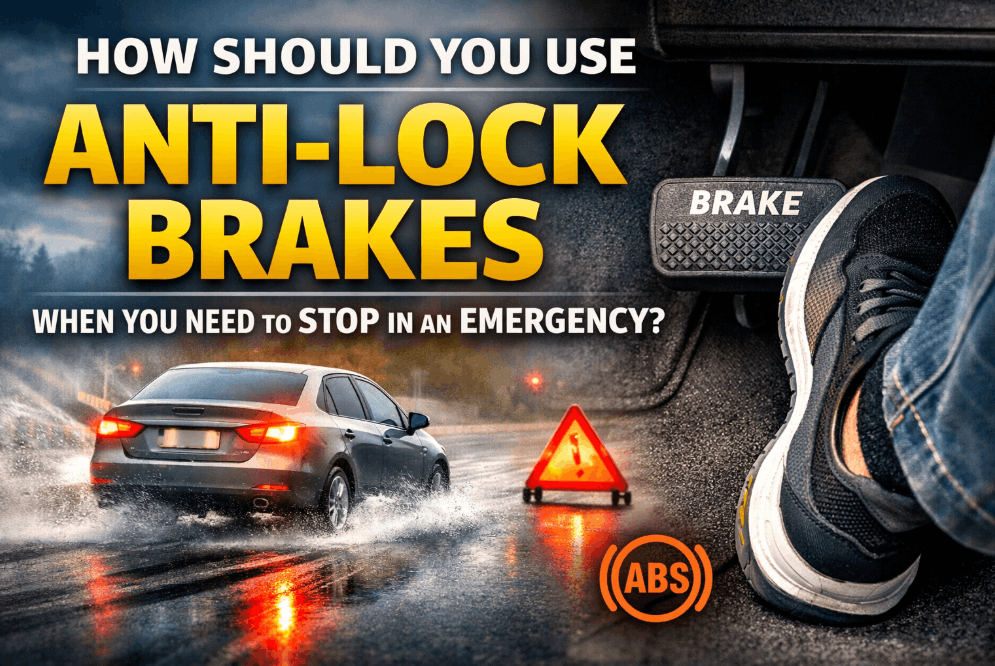
To use anti-lock brakes in an emergency, you must apply the brake pedal quickly and firmly, maintaining constant pressure until the vehicle has come to a complete stop.
You should not pump the brakes or remove your foot if you feel the pedal vibrate, as the system is designed to handle the threshold braking for you.
When a driver faces a sudden hazard on the road, the natural instinct is often to slam on the brakes. While this is necessary, the way the vehicle responds depends heavily on whether an Anti-lock Braking System (ABS) is fitted.
For those practicing for the UK theory test or looking to improve road safety, understanding the mechanical intervention of ABS is vital for maintaining control during a crisis.
How should you use anti-lock brakes when you need to stop in an emergency? The answer lies in trusting the technology to manage tyre traction while you focus on steering.
How should you use anti-lock brakes when you need to stop in an emergency?
In an emergency, you should press the brake pedal down hard and keep it pressed. Do not release the pressure when you feel the pedal pulsing or hear a grinding noise, as this indicates the ABS is working to prevent your wheels from locking.
You should simultaneously depress the clutch in a manual car to prevent the engine from stalling.
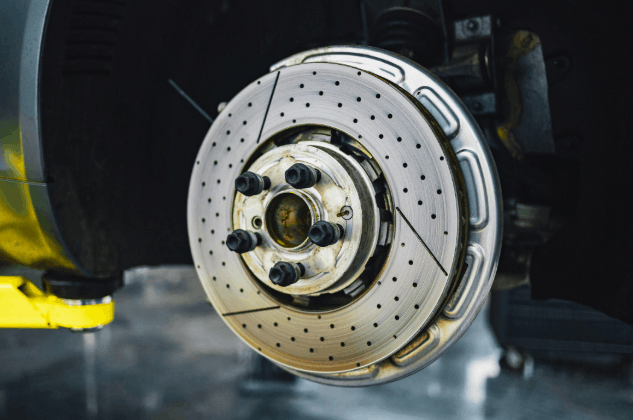
The mechanics of the emergency stop
The core objective of ABS is not necessarily to stop the car in a shorter distance, but to prevent the wheels from skidding.
When a wheel locks, it loses longitudinal traction and lateral stability, meaning the car will slide in its current direction regardless of where the steering wheel is turned.
By pumping the brakes hundreds of times per second, the ABS allows the tyre to maintain a rolling contact point with the road surface.
| Feature | ABS Braking | Non-ABS Braking |
| Foot Action | Firm, constant pressure | Manual pumping (Cadence braking) |
| Steering | Full control maintained | Minimal to no steering control |
| Pedal Feel | Vibrating or pulsing sensation | Hard or locked sensation |
| Wheel State | Rapidly grip and release | Fully locked and sliding |
Why are anti-lock brakes essential for UK road conditions?
The UK climate and infrastructure present unique challenges that make ABS a critical safety feature. With frequent rainfall leading to surface water and grease buildup, the coefficient of friction on UK roads varies significantly within a single journey.
Drivers must stay alert when visibility is low, especially when identifying what colour are the reflective studs between a motorway and a slip road to ensure they don’t brake sharply on a painted line.
ABS prevents accidents by allowing drivers to navigate narrow country lanes or busy urban junctions even when the surface is dangerously slick.
How anti-lock brakes prevent accidents
In practice, most accidents occur because a driver cannot stop in time and cannot steer away from the impact. ABS solves the second half of that equation.
By preventing a total wheel lock-up, the system ensures that the front wheels continue to rotate, allowing the vehicle to follow the path dictated by the steering wheel.
This is particularly helpful on the UK’s winding B-roads, where a locked-wheel slide would likely result in a head-on collision or a ditch entry.

What are the advantages and disadvantages of using anti-lock brakes?
While ABS is a life-saving technology, it is important to understand both its strengths and its physical limitations. It is not a magic button that ignores the laws of physics, but a tool that optimizes the grip available.
Advantages of using anti-lock brakes
- Steering Control: You can steer around hazards while braking at 100% capacity.
- Reduced Skidding: Significantly lowers the risk of the car rotating or spinning out on wet tarmac.
- Higher Resale Value: In the UK market, vehicles without functional ABS are harder to sell and often viewed as safety risks.
- Insurance Benefits: Many insurers factor in safety electronics when calculating premiums, as ABS-equipped cars are statistically less likely to be involved in high-speed pile-ups.
Disadvantages of using anti-lock brakes
- Extended Stopping Distances: On certain surfaces like loose gravel or deep snow, ABS can actually take longer to stop the car than locked wheels would.
- System Complexity: ABS involves sensors, wiring, and a computer (ECU). If any part fails, the system is disabled.
- Maintenance Costs: Replacing an ABS pump or wheel speed sensor is more expensive than maintaining a standard braking system.
Using anti-lock brakes on slippery or icy roads
There is a common misconception that ABS is a winter-driving cure-all. In reality, you must stay cautious on specific road types where the sensors may struggle to interpret the data correctly.
Which climate does not support anti-lock brakes effectively?
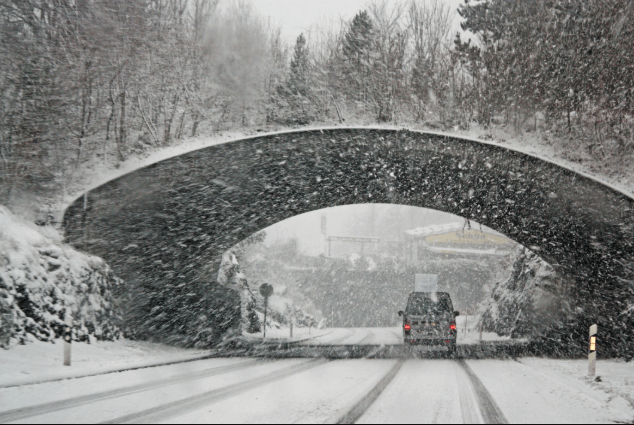
Extremely cold climates with deep, loose snow or thick sheets of black ice are the most challenging for ABS. On deep snow, a locked tyre creates a wedge that helps stop the car; ABS prevents this, sometimes doubling the stopping distance.
Similarly, on black ice, there may be so little friction that the ABS activates immediately, but the car continues to glide forward.
Hazard awareness is equally important in temporary roadworks; for instance, knowing what would you expect to find at a contraflow system on a motorway can help you anticipate the need for early, controlled braking.
Roads requiring extra caution
- Loose Gravel: The sensors may interpret the shifting stones as a skid, causing the brakes to release too often.
- Cobbled Streets: Frequent in older UK town centres, these can cause rapid vibrations that trigger the ABS prematurely.
- Mud-Covered Rural Roads: Sludge can coat the wheel sensors, leading to system errors or delayed responses.
Is ABS compulsory in the UK and can it be added as an accessory?
As of 2026, the regulatory landscape for ABS is very clear. It is an inbuilt feature of the vehicle’s safety architecture, not an optional add-on or accessory that can be easily fitted later.
Legal status and retrofitting
Using anti-lock brakes in the UK is compulsory in the sense that all new passenger cars sold in the UK since 2004 have been required by law to have ABS fitted as standard.
You cannot legally remove it, and if your car was manufactured with it, the system must be functional to pass an MOT test.
Can I install or modify anti-lock brakes?
- Retrofitting: You generally cannot install ABS as an extra accessory. It requires specific hubs, wiring harnesses, and an ECU integration that is cost-prohibitive to add to a non-ABS car.
- Modification: You should never modify the ABS software or hardware. Unauthorised modifications can cause the brakes to fail entirely or behave unpredictably during an emergency stop.
A driver’s checklist: Choosing and maintaining a vehicle with ABS
When purchasing a vehicle, particularly a used car, verifying the health of the ABS is a non-negotiable safety step. A common pattern in second-hand sales is for sellers to hide ABS faults by removing the warning bulb from the dashboard.
How to find if your vehicle has anti-lock brakes
- Dashboard Check: Turn the ignition key. You should see a yellow or orange ABS symbol light up for a few seconds and then disappear.
- Visual Inspection: Look behind the front wheels for a serrated ABS ring and a sensor wire leading to the hub.
- The Owner’s Manual: Check the vehicle specifications for ABS or EBD (Electronic Brakeforce Distribution).
How to maintain and check the system
- Brake Fluid Flushes: ABS pumps have tiny valves that can be clogged by dirty fluid. Change your fluid every 2 years.
- Sensor Cleaning: If you drive on muddy roads, ensure the area behind the wheels is cleaned to prevent debris from blocking the sensors. Safe braking habits also rely on anticipation at junctions; knowing you’re approaching traffic lights and the red light is showing, what signal will show next allows for a smoother stop rather than a sudden ABS-triggering event.
- The Safe Test: In a controlled, empty area on a dry road, perform a firm stop from a low speed. If you feel the pedal pulse, the system is active.
| Maintenance Task | Frequency | Benefit |
| Check ABS Dashboard Light | Every journey | Early warning of system failure |
| Brake Fluid Change | Every 24 months | Protects the ABS hydraulic pump |
| Wheel Sensor Cleaning | After off-road/muddy driving | Prevents false ABS activation |
| Professional Diagnostic | During annual service | Detects soft codes in the ECU |
Does insurance cover accidents caused by ABS failure?
In the UK, motor insurance generally covers accidents regardless of mechanical failure, provided the vehicle was in a roadworthy condition.
However, if you knew the ABS was faulty (e.g., the light was on for weeks) and you did not repair it, the insurer could argue that you failed in your duty to maintain a roadworthy vehicle.
This could lead to a reduced payout or a rejected claim. Always notify your insurer if you have a persistent braking fault.
Summary of safe emergency braking
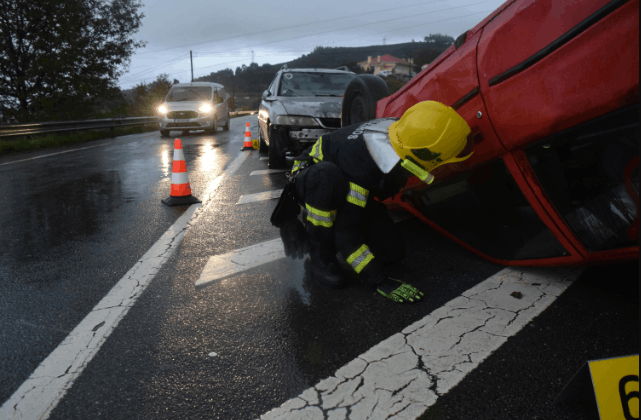
The key to mastering an emergency stop with ABS is to overcome the instinct to pump the pedal. Press hard, stay firm, and use the steering to navigate around the hazard. Regular maintenance, such as checking your dashboard lights and changing brake fluid, ensures this safety net is ready when you need it most.
FAQ
Which vehicles do not have anti-lock brakes?
Most cars built before 2000 and some classic cars lack ABS. Additionally, some very small motorcycles or older agricultural vehicles may not be equipped with the system.
Does ABS make the car stop faster?
Not necessarily. ABS is designed for steering control. On surfaces like gravel or deep snow, it can actually increase the distance required to stop.
Should I pump the brakes if my car has ABS?
No. Pumping the brakes interferes with the ABS computer. The system can pump the brakes much faster and more effectively than any human driver.
Can I still steer while braking heavily with ABS?
Yes, this is the main benefit. As long as the wheels are rotating, which the ABS ensures, you can steer the vehicle to avoid a collision.
What if the ABS warning light is on?
The system is likely deactivated. Your brakes will still work like conventional brakes, but you will not have anti-lock protection in an emergency.
Does ABS work on black ice?
ABS will attempt to work, but with zero traction, it cannot create grip. On ice, you may slide regardless of the system’s electronic intervention.
Should I use the clutch during an emergency stop?
Yes, in a manual car, press the clutch and brake together. This prevents the engine from stalling, ensuring power steering remains functional during the manoeuvre.
Can I install ABS as an extra accessory?
No, it is not a bolt-on accessory. It is a factory-integrated system involving the car’s core electronics and wheel hub assemblies.