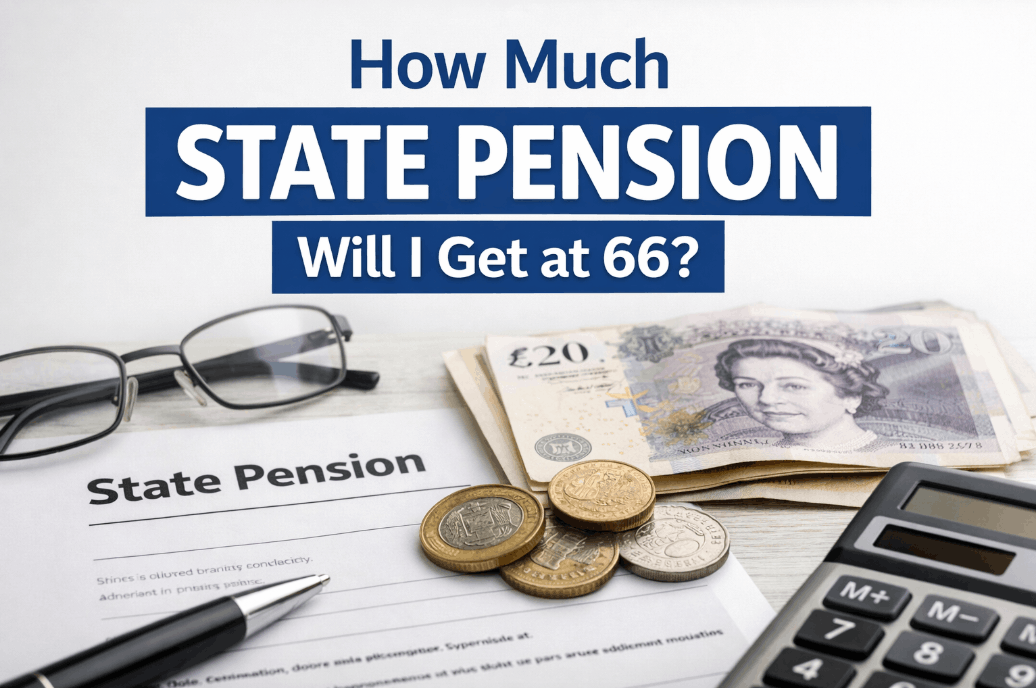
To determine how much state pension will i get at 66, you must review your National Insurance record. In the 2026/27 tax year, the full New State Pension is £241.30 per week, provided you have 35 qualifying years. If you have at least 10 years but fewer than 35, you receive a pro-rata amount.
What is the UK State Pension rate for the 2026/2027 tax year?
As of April 2026, the UK State Pension has increased by 4.8% following the application of the Triple Lock. This adjustment ensures that the payment keeps pace with the highest of average earnings growth, inflation, or a 2.5% minimum.
This 4.8% increase is particularly welcomed by those who were concerned by the trend of UK state pension reduction 2025, a period which saw the real-term value of many retirees’ income eroded by high inflation.
For anyone approaching retirement this April, these updated figures represent a fundamental shift in how you should calculate your annual household budget
Core 2026/27 State Pension Rates
| Payment Frequency | New State Pension (Full) | Basic State Pension (Full) |
| Weekly | £241.30 | £184.70 |
| Monthly (4-weekly) | £965.20 | £738.80 |
| Annually | £12,547.60 | £9,604.40 |
Understanding the 2026 Triple Lock Impact
The 4.8% uplift is a direct response to the earnings data captured in late 2025. For a retiree, this means an extra £574.60 per year compared to the previous tax year.
Crucially, these headline rates reflect the maximum entitlement; your actual payment is dictated by your unique National Insurance record.

How much state pension will I get at 66 per year?
The maximum figure for the 2026/27 tax year is £12,547.60 per annum. This total is reached by multiplying the weekly rate of £241.30 by the 52 weeks in a year.
In practice, I often see business owners surprised that they don’t hit this maximum because they prioritised dividends over a qualifying salary in previous decades.
How much state pension will I get at 66 per month?
While the government calculates the pension weekly, most UK pensioners receive their payments every four weeks. For the 2026/27 period, this monthly payment is £965.20. It is paid in arrears, meaning the money you receive covers the four weeks that have just passed, rather than the month ahead.
How much state pension will I get with 20 years of National Insurance?
If you reach age 66 with 20 qualifying years on your record, you will receive a pro-rata portion of the New State Pension.
Based on the 2026/27 rates, the calculation is $(20 \div 35) \times £241.30$. This results in a weekly payment of approximately £137.89, or roughly £7,170 per year.
The 10-Year Eligibility Threshold
A common pitfall I observe involves individuals who have 8 or 9 years of contributions. Under current DWP rules, you generally need at least 10 qualifying years to receive any State Pension at all. If you fall below this 10-year cliff edge, you receive £0, regardless of how close you were to the limit.
To illustrate, take the case of a local consultant who spent 15 years working abroad. Upon returning to the UK, she reached age 66 with only 9 years of NI contributions.
Without making voluntary contributions to reach the 10-year mark, she would be ineligible for the standard State Pension.

How does the State Pension work for married couples and women?
The modern New State Pension system, introduced in 2016, is based on individual records. This means there is no longer a joint pension for married couples.
Each partner must qualify based on their own NI years. However, for those who reached pension age before 2016, older rules regarding Category B pensions may still apply, allowing a spouse to claim based on their partner’s record.
State Pension for a woman in 2026
For women, particularly those who took career breaks for childcare, the record might include Home Responsibilities Protection (HRP) or Child Benefit credits. It is essential to verify these are showing correctly on your forecast.
Many female retirees are currently discovering gaps in their records. For many, this is the first step in successfully claiming state pension back payments for women, addressing historical DWP underpayments that are only now being corrected.
Furthermore, some women may still be affected by the Married Woman’s Stamp (Reduced Rate Election), which can lower the final payout but may offer different benefits under older rules.
Inheriting a partner’s pension
Under the New State Pension rules, you cannot usually inherit your deceased spouse’s state pension.
One of the most frequent queries I encounter from business owners planning their estate is the sensitive question if my husband dies do i get his state pension?
The answer is no longer a simple yes; it often depends on your respective NI records and whether your marriage predates 2016.
There are very specific exceptions for those who have Protected Payments or extra state pension built up under the old system.
Will I definitely get my pension on my 66th birthday?
While the current State Pension age is 66, the UK is in the middle of a phased transition.
Monitoring the current UK state pension age retirement changes is vital for business continuity, as your birth date now dictates exactly when your employer’s NI obligations cease.
Depending on your exact birth date, you may find that you have to wait several months past your 66th birthday to claim.
The 2026 to 2028 Age Transition Table
| If your birth date falls between: | Your State Pension Age is: |
| 6 April 1960 – 5 May 1960 | 66 years and 1 month |
| 6 June 1960 – 5 July 1960 | 66 years and 3 months |
| 6 March 1961 – 5 April 1961 | 67 years |
| After 6 April 1961 | 67 years |
How does the calculation change if you retire at 67?
If your qualifying age falls in 2027 or 2028, you will receive the prevailing rate for those years. While we expect the rate to rise again due to the Triple Lock, the underlying calculation remains the same: you still need 35 years for the full amount.

The 2026 Tax Trap: Why the pension is now a tax issue
A major concern for 2026 is Fiscal Drag. The government has frozen the Personal Tax Allowance at £12,570. Because the full New State Pension has risen to £12,547.60, a pensioner is now just £22.40 away from being a taxpayer based on their state pension alone.
Why business owners are at risk
When reviewing decisions for small business directors, I often find that even a small amount of dividend income or a modest private pension draw-down will now push them into the 20% tax bracket. In previous years, there was more breathing room between the pension and the tax threshold.
How to increase your pension: Voluntary NI and Forecasts
If your record is incomplete, you may be able to pay for voluntary Class 3 National Insurance contributions. Currently, there is a significant opportunity to fill gaps going back to 2006, but a key deadline in April 2025/2026 often limits how far back you can go for certain age groups.
6 Steps to Secure Your State Pension Forecast
- Access the Service: Go to the official GOV.UK Check your State Pension page.
- Verify Identity: Use your Government Gateway ID or register via GOV.UK One Login.
- Review the Date: Note your State Pension Age, it may be 66 or 67.
- Check the Amount: Look at your forecasted amount based on current and projected years.
- Examine NI Record: Identify Full years versus Years when you did not contribute enough.
- Assess Costs: View the specific cost of filling any gaps to see if the investment is worth the weekly increase.
Strategic Focus Points for 2026
The retirement landscape in 2026 involves more than just the base payment. Recent policy changes have altered how retirees must manage their finances.
- Losing the Winter Fuel Payment: As of late 2025, Winter Fuel Payments are now means-tested. Unless you receive Pension Credit or other specific benefits, you likely will not receive this £200–£300 payment at age 66.
- The National Insurance Bonus: Once you reach 66, you stop paying NI on your earnings, even if you keep working. This effectively gives working pensioners a 2% to 8% pay rise on their take-home income.
- Retiring Abroad: If you move to a country like Spain or the USA, your UK pension will increase each year. However, if you move to frozen countries like Australia or Canada, your pension will remain at the rate it was when you left the UK.
- The Triple Lock Future: While the lock remains in place for 2026/27, there is ongoing political debate about its sustainability. Planning for a slightly lower inflation-only increase in future years is a prudent move for long-term budgeting.

Summary and Next Steps
Planning a 2026 retirement involves looking beyond the basic weekly rate to the tax and timing implications that follow.
In 2026, the intersection of the Triple Lock increase and frozen tax thresholds creates a unique financial environment for UK residents. To ensure you are prepared:
- Check your NI record immediately via GOV.UK to identify any gaps.
- Calculate your total income to see if the new pension rates will push you into a higher tax bracket.
- Verify your eligibility date, as you may be required to wait until age 67 depending on your birth month.
To ensure you are fully prepared for the April 2026 transition, your immediate priority should be verifying your NI record via GOV.UK.
This is the only way to identify if you are eligible for any DWP state pension back payments or if you need to make voluntary contributions before the tax year deadline
FAQ about how much state pension will i get at 66
What is the highest State Pension you can receive?
The standard maximum is £241.30 per week (2026/27). However, you can receive more if you have Protected Payments from the old system or if you choose to defer (delay) claiming your pension, which adds 5.8% for every year delayed.
How long after my 66th birthday will I receive my State Pension?
Payments are made 4 weeks in arrears. You typically receive your first full payment five weeks after reaching your pension age, provided you have successfully made a claim through the DWP.
Do I need to apply for the State Pension or is it automatic?
It is not automatic. You should receive a letter from the Pension Service four months before you reach age 66. If you don’t, you must claim it online or by phone to avoid missing payments.
What happens if I have less than 35 years of National Insurance?
You receive a reduced payment. For every qualifying year you have, you receive 1/35th of the full amount. For example, 25 years would grant you approximately £172.35 per week in 2026.
Does my private pension reduce my State Pension?
No. Your State Pension is based solely on your National Insurance record. However, your total income (State + Private) will be assessed for Income Tax purposes.
Can I get a State Pension if I have never worked?
You may still qualify if you received NI credits for being a parent, a carer, or if you were on certain disability benefits. Without these credits or 10 years of work, you cannot claim.
Is the Triple Lock safe for 2027?
While the current government has committed to the Triple Lock for the duration of the current parliament, it is reviewed annually. Most forecasts suggest it will remain for at least the next two cycles.