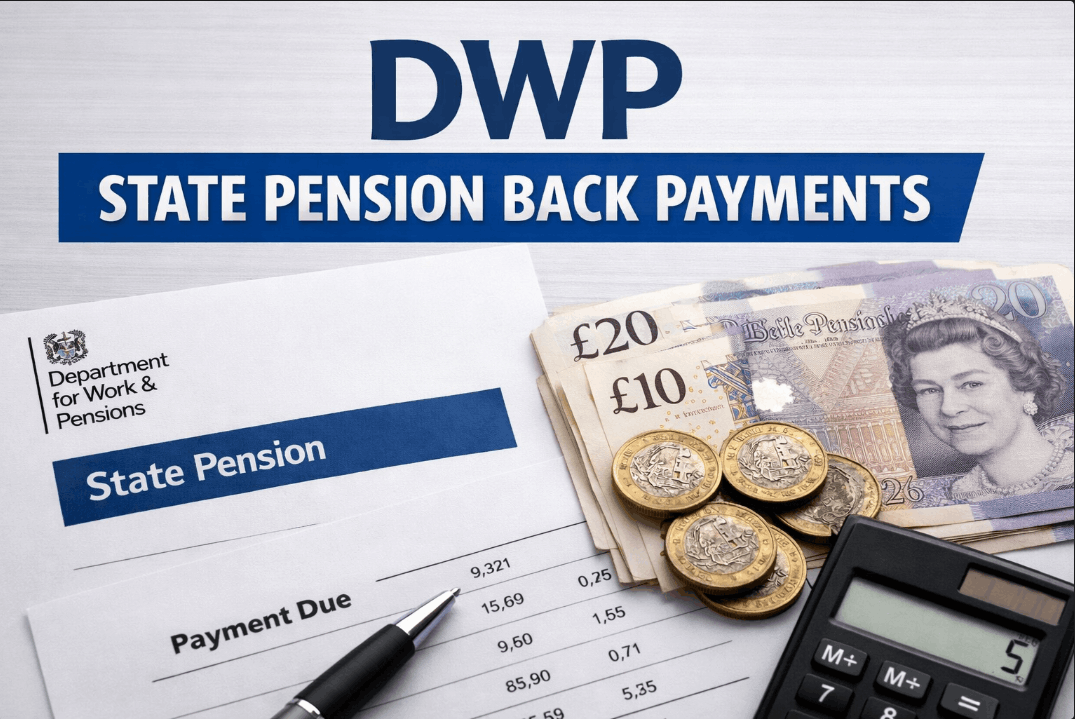
Thousands of retirees are eligible for DWP state pension back payments due to historical administrative errors and specific claiming rules.
These arrears primarily affect married women, widows, and individuals over 80 who were underpaid for years. Eligible claimants may receive automatic refunds or must proactively contact the Pension Service to rectify their National Insurance records and secure their funds.
Key Takeaways for 2026
- Automatic vs. Manual Claims: While the DWP is automatically reviewing millions of records (LEAP exercise), many groups, particularly divorced women and those with HRP gaps, must still initiate a manual review.
- Substantial Arrears: Average payouts range from £5,000 to over £12,000, covering underpayments that, in some cases, span several decades.
- The 12-Month Rule: Voluntary backdating for late claims is strictly capped at 12 months, whereas DWP official errors have no backdating time limit.
- Impact on Benefits: A large lump sum payment can push your savings above the £16,000 threshold, potentially affecting your eligibility for Pension Credit or Housing Benefit.
- Tax Treatment: Arrears are taxable, but you can request HMRC to spread the tax over the years the money was originally due to avoid a higher tax bracket.
How do DWP state pension back payments work?
These arrears represent a one-off, tax-free reimbursement issued by the Department for Work and Pensions to retirees who were inadvertently paid less than their legal entitlement.
Most commonly, these funds bridge the financial gap between a person’s historical payments and the correct rate dictated by their marital status, National Insurance record, or age.
The legislative basis for pension arrears
When reviewing decisions regarding the State Pension, it is evident that these payments are not discretionary bonuses but the fulfillment of statutory rights.
The DWP is legally bound to correct underpayments caused by official error, which often results in payments covering multiple decades.
In practice, a significant portion of these funds stems from the DWP’s failure to automatically increase pensions for women when their husbands reached age 65, or when the claimant themselves reached age 80.

Why did the government introduce DWP state pension back payments?
The government formalised the widespread repayment process in 2021 through the LEAP (Lifting Entitlements and Addressing Underpayments) exercise. This was introduced following intense pressure from pension experts and parliamentary committees who identified systemic flaws in the Pension Service’s IT systems.
The core reason for these payments is to restore financial fairness. For years, the complexity of the old State Pension system (pre-April 2016) led to manual errors that the DWP failed to catch.
This historical confusion is often compounded by shifting legislation and complex eligibility rules. For instance, recent adjustments like the UK state pension reduction 2025 highlight how essential it is for retirees to monitor their exact entitlements.
The resulting back payments ensure that those on low incomes receive the inflation-linked increases and spouse-based entitlements originally promised under the law.
Who benefits from DWP state pension back payments?
Eligibility is largely determined by which Category of the old State Pension system you fall into. As of 2026, the DWP is still actively processing claims for those whose records were not automatically flagged by their internal software.
- Married Women (Category BL): Women whose husbands reached age 65 before March 2008 and who are receiving less than 60% of their husband’s basic State Pension.
- Widowed Claimants: Those who did not see their pension increase to the correct inherited rate after their spouse passed away.
- The Over 80s (Category D): Individuals receiving less than £101.55 per week (2025/26 rates) despite reaching the age of 80.
- Divorced Women: Those who could have benefited from their ex-husband’s National Insurance record but were never prompted to provide divorce papers to the DWP.
The impact for the self-employed
A common pattern has emerged where self-employed individuals with Class 2 National Insurance contribution gaps are finding themselves underpaid.
If HMRC failed to properly record these contributions during the transition to new digital systems, the resulting pension shortfall can lead to substantial backdated claims once the record is corrected.
| Eligibility Group | Primary Reason for Arrears | Average Payout (Estimated) |
| Category BL (Married) | Failure to apply 60% uplift | £5,700 |
| Widows | Incorrect inheritance of NI | £11,500 |
| Category D (Over 80s) | Minimum rate not applied | £2,700 |
| HRP (Mothers) | Missing Child Benefit credits | £5,000+ |
The Mothers Missing Millions: Understanding HRP Back Payments
A major focus for the 2026 fiscal year is the correction of Home Responsibilities Protection (HRP) errors. This affects parents, mostly mothers, who stayed home to care for children between 1978 and 2010.
Because National Insurance numbers were not always recorded on Child Benefit claims before 2000, thousands of years of credits are missing from the records.
How the HMRC and DWP work together
To resolve an HRP underpayment, you must first deal with HMRC to correct your National Insurance record. Once HMRC updates the record to include the missing HRP years, they notify the DWP, which then recalculates the State Pension and issues the back payment.
How to track DWP state pension back payments in 2026
Tracking your payment status requires a proactive approach, especially if you believe you have been overlooked by the automated LEAP scans. The DWP does not have a live tracker like a parcel delivery, but there are established ways to verify your position in the queue.
- Access your Personal Tax Account: Use the Government Gateway to view your full National Insurance record and check for blank years.
- Verify Child Benefit dates: Cross-reference your children’s birth dates with your NI record to ensure HRP is present.
- Contact the Pension Service: Call the helpline on 0800 731 0469 and specifically ask for an underpayment review.
- Request a State Pension Forecast: Even if you are already claiming, a new forecast can sometimes highlight discrepancies in the starting amount.
- Check for HMRC Letter CA4361: This specific letter is sent to those identified as having missing HRP; if you haven’t received it but suspect an error, contact HMRC.
- Submit a manual enquiry: If the automated systems fail, write a formal letter to the Pension Service detailing your spouse’s NI number and your marriage date.

Do people really benefit from these payments?
The evidence suggests that for those who successfully navigate the bureaucracy, the benefits are life-changing.
By early 2026, the DWP has returned over £900 million to underpaid retirees, often providing a vital secondary income alongside other disability-related support.
This is particularly relevant for those who previously benefited from the DWP 750 payment boost June 2025, as backdated arrears can offer a more permanent solution to long-term financial shortfalls.
Take the case of a widow in the North of England who had been surviving on a basic pension for a decade.
After a manual review triggered by her daughter, it was discovered her husband’s contributions had been ignored since 2014. She received a lump sum of £14,000, which significantly improved her quality of life and allowed for essential home repairs.
What are the risks and hidden traps of a lump sum?
While a large payment is welcome, it can trigger secondary financial consequences that caught many by surprise. One of the most significant issues involves means-tested benefits.
- Benefit Thresholds: If a back payment takes your total savings above £16,000, you may lose eligibility for Pension Credit, Housing Benefit, and Council Tax Support.
- The 4-Year Deletion Rule: The DWP only keeps certain records for a limited time. If you are claiming for a deceased relative, you must act before the data-retention window closes, or proving the underpayment becomes significantly harder.
- Income Tax: While back payments are taxable, you should request that HMRC spread the income across the years it was actually due to avoid a massive tax bill in the current year.
2026 Safety Warning: Avoiding Pension Back Payment Scams
The rise in DWP state pension back payments has unfortunately led to a surge in fraudulent activity. Scammers often pose as pension recovery specialists and contact retirees via text or phone.
Authentic DWP and HMRC communications regarding underpayments will always arrive by post and will never request bank details via text message.
While the government has introduced more robust monitoring, such as the DWP bank account checks 2026, these are strictly regulated internal processes.
They are never used as a reason for officials to contact you for sensitive login credentials via unofficial digital channels.
Furthermore, you do not need to pay a processing fee or give up a percentage of your arrears to a third party. The Pension Service performs these reviews for free, and using a claims firm only reduces the amount of money that ends up in your pocket.

FAQ
How far back will the DWP backdate my pension?
For official errors made by the DWP, there is no time limit; arrears are backdated to the exact point the underpayment began.
However, claimants should remain aware of their broader obligations to the department. For example, understanding PIP Claimants DWP holiday rules is a good reminder that staying compliant with reporting requirements is key to protecting all forms of government support.
Do I need to apply for the back payment?
While the DWP is automatically reviewing millions of records, many people, especially divorced women and those with HRP gaps, still need to contact the Pension Service or HMRC to trigger a manual review.
Will my back payment include interest?
No. The DWP does not currently pay interest on state pension arrears, regardless of how long the money was withheld. You only receive the raw amount that was underpaid.
Can I claim for a husband or wife who has passed away?
Yes. If your spouse was underpaid while they were alive, you can claim the arrears as the next of kin or executor of their estate.
How long does a manual review take?
Due to high demand in 2026, manual reviews are currently taking between 3 to 6 months. Complex cases involving HMRC record updates may take longer.
Is the back payment affected by the Triple Lock?
Yes. The arrears are calculated based on the pension rates that were active during each year of the underpayment, all of which were influenced by the Triple Lock increases.
What if the DWP says I am not owed anything?
If you disagree with a decision, you have the right to request a Mandatory Reconsideration within one month of the letter date. You can provide further evidence, such as marriage certificates or old NI records.
Summary
If you suspect you are eligible for DWP state pension back payments, your first step is to verify your National Insurance record via the HMRC app or website.
Pay close attention to the years you were raising children or any periods following a change in marital status. Once you have identified a potential gap, contact the Pension Service directly to request a formal underpayment review.
Rather than waiting for an official letter that may never arrive, taking the initiative can significantly accelerate your claim.
With the DWP still clearing a substantial backlog in 2026, checking your rates against current legal minimums is the most effective way to ensure you receive every penny you have earned through a lifetime of contributions.