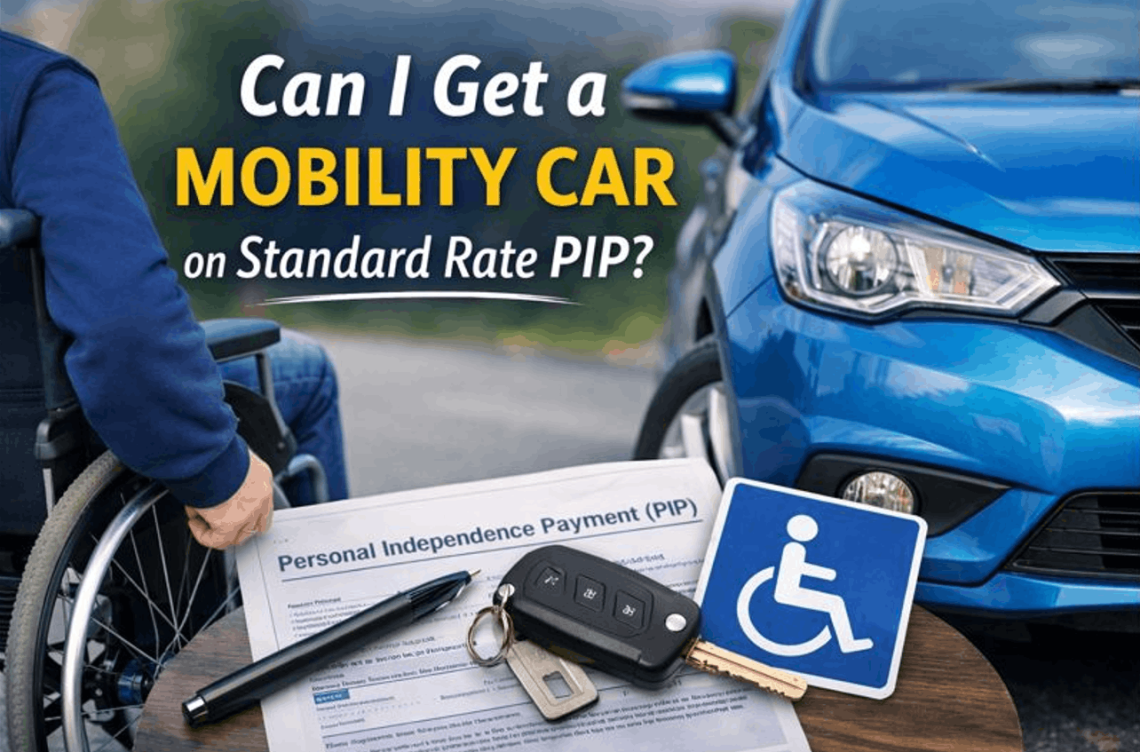
If you’re asking, can i get a mobility car on standard rate PIP, it comes down to whether your PIP award includes the mobility rate the Motability Scheme can use.
In most cases, you cannot lease a Motability car on the standard rate of the PIP mobility component. The scheme is generally available only if you receive the enhanced rate mobility component and meet the minimum remaining award period.
If you’re on the standard rate, the practical routes are either to challenge the mobility decision where it doesn’t reflect your day-to-day needs, or to use other travel support.
Can I Get A Mobility Car On Standard Rate PIP?
A Motability car lease is funded by assigning a qualifying mobility allowance to the Motability Scheme. Standard rate mobility does not usually meet that qualifying level.
Eligibility is tied to the mobility component award type and the remaining length of your award, not to your income, savings, or whether you can pay extra privately.
Why The Scheme Is Set Up This Way?
Motability leases are structured around a fixed weekly allowance being paid directly to the scheme. That funding model is why the scheme relies on specific qualifying benefits and rates, rather than a case-by-case affordability check.
How This Plays Out Day To Day?
It can sound like a simple yes-or-no, but in reality it affects how you plan transport and costs week to week.
Many people only spot the gap when they line up the weekly cost of keeping a car running against the extra mobility costs they’re already covering. A common pattern is that the award letter arrives with standard mobility, and only later does someone realise that the scheme requires enhanced mobility.
Example
Amir received standard mobility and assumed it would cover a basic lease. At the dealership, he learned the scheme needed enhanced mobility. He used the next two weeks to request his assessment report and review how the “moving around” activity had been scored before deciding whether to challenge.

What Rate Of PIP Mobility Is Needed For A Motability Car?
Motability car access is linked to the enhanced rate of the PIP mobility component, not the daily living component.
| Item | Standard rate mobility | Enhanced rate mobility |
|---|---|---|
| Typically accepted for Motability car lease | No | Yes |
| Tied to PIP mobility activities | Yes | Yes |
| Depends on daily living award | No | No |
| Common eligibility blocker | Rate too low | Award length too short |
For a quick snapshot of the kinds of vehicles people consider once they qualify, the PIP mobility car list can be a helpful reference. It keeps the eligibility question separate from choosing a model.
As of 2026, the scheme’s core model remains that the qualifying mobility allowance is assigned to the lease, often alongside an Advance Payment for some vehicles.
Can I Get A Mobility Car On Standard Rate PIP If I Pay The Difference?
Usually no. Paying an “extra amount” yourself does not convert standard rate mobility into a qualifying benefit for the scheme.
If you don’t qualify through the scheme, these are the most common alternatives people use:
- Private lease or used purchase using your own budgeting plan, separate from Motability.
- Try a different mobility solution, such as community transport, taxi-card schemes, or a powered wheelchair/scooter, through other funding routes.
- Review your award decision if you believe the mobility descriptors were applied incorrectly.
What Motability Typically Bundles Into The Lease?
- Insurance for named drivers.
- Servicing and maintenance.
- Tyre replacement due to fair wear.
- Breakdown cover.
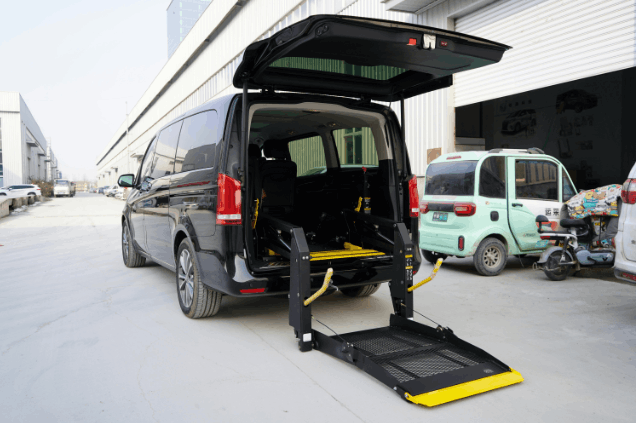
- Some adaptations and WAV options depending on needs and availability.
This package value is one reason people explore whether their mobility award accurately reflects their day-to-day limitations.

How PIP Mobility Is Decided And What To Look For In Your Paperwork?
PIP mobility is decided using descriptor-based scoring across two activities:
- Planning and following journeys
- Moving around
Key documents and entities to know:
- PIP decision letter (award outcome and review date)
- PA4 assessment report (how the assessor recommended points)
- PIP2 “How your disability affects you” form (your reported limitations)
- DWP case manager (decision-making role)
- Mandatory Reconsideration notice (MR outcome)
- HMCTS appeal and the First-tier Tribunal (independent appeal route)
If anything in the report feels off, it helps to know where mix-ups tend to happen. The DWP PIP benefit errors notes common issues people spot when checking their paperwork.
When reviewing decisions, the most useful check is whether the report reflects what happens reliably in real conditions: safely, to an acceptable standard, repeatedly, and within a reasonable time.
What To Do If You Think You Should Have Enhanced Mobility?
This is the route many people take when the standard rate does not reflect their needs. The process is structured, with clear names and deadlines.
The Most Common Mistake
Many challenges fail because the evidence describes a diagnosis but does not show functional impact against the exact mobility activities. The decision is descriptor-led, so evidence works best when it is activity-led.
Evidence That Often Helps In Mobility Disputes
- GP or consultant letters that describe functional limits, not just conditions.
- Physiotherapy or OT notes showing gait limits, falls risk, or fatigue effects.
- Pain management plans that explain variability and recovery time.
- Journey logs describing supervision needs, distress, or disorientation.
- Mobility-aid usage notes, including distances and post-exertional impact.
How To Challenge A PIP Mobility Decision Step By Step
- Ask for a copy of the PA4 assessment report and compare it to what you said on the PIP2 form.
- Identify which mobility activity you believe was scored incorrectly and why.
- Request a Mandatory Reconsideration within one month of the decision date if possible.
- Send focused evidence that links directly to the descriptor language and reliability criteria.
- If MR is refused, submit an HMCTS appeal within one month of the MR notice date.
- Prepare a short submission that explains day-to-day impact with two or three real examples.
- Attend the tribunal hearing if you can, and answer questions about function, not labels.
| Stage | What it is | Typical deadline |
|---|---|---|
| Mandatory Reconsideration | DWP internal review | Usually within 1 month of decision |
| Appeal to tribunal | Independent review by First-tier Tribunal | Usually within 1 month of MR notice |
| Change of circumstances | Reporting worsened needs | Can trigger a reassessment |
Can I Get A Mobility Car On Standard Rate PIP While Waiting For An Appeal?
Generally, no, because eligibility depends on the award you currently hold, not the award you may receive later.
It still helps to plan ahead. If you are appealing, think about how you will manage transport during the waiting period:
- Short-term hire with adaptations where available.
- Community transport for medical appointments.
- Employer Access to Work support if you are in work or starting work.
- Local authority schemes such as Dial-a-Ride or concessionary travel options, where applicable.
Example
Sofia appealed after receiving standard mobility despite needing supervision on unfamiliar routes. While waiting, she arranged community transport for key appointments and asked her clinician to document functional issues in plain language tied to journeys and supervision. Her plan reduced missed appointments even before the appeal outcome.
What If Your Award Length Blocks Motability Even With Enhanced Mobility?
Some people receive enhanced mobility but still cannot start a lease because the award is too short or too close to review. Scheme rules commonly require a minimum remaining award length at the point of application.
Steps that can reduce disruption:
- Check your review date and keep copies of all award letters.
- If reassessment is pending, avoid signing commitments you may not be able to keep.
- If your health needs are stable, keep consistent evidence ready for the review process.
A common pattern is that short awards lead to repeated uncertainty, so document management becomes as important as the medical evidence.
Alternatives To Motability If You Are On Standard Rate Mobility
Even without a scheme lease, there are still workable options.
| Alternative | What it can cover | Good fit for |
|---|---|---|
| Community transport | Door-to-door rides, assisted travel | People who struggle with buses or rail |
| Taxi-card or subsidised travel | Reduced-cost journeys | Regular local trips and appointments |
| Access to Work | Work-related travel costs and support | People in work or starting work |
| Blue Badge route | Parking support where eligible | Drivers or passengers with severe limits |
| Charitable grants | One-off help for mobility equipment | Specific need with supporting evidence |
Can I Get A Mobility Car On Standard Rate PIP In Any Edge Case?
There are a few edge cases, but they rarely change the basic eligibility position. Points that often trip people up:
- Daily living only awards do not create eligibility for a Motability car.
- Standard mobility plus personal top-ups still does not qualify for the scheme.
- Short-term changes reported to DWP can trigger a reassessment and may move your award up or down.
- Different benefits can qualify, but the qualifying element must be the right mobility rate.
Example
Jon had standard mobility and daily living, and his family offered to cover the full lease cost. The dealer explained that the scheme could not accept the application without the qualifying mobility rate. He decided to focus on getting accurate scoring first, then explored a used vehicle with adaptation quotes in the meantime.
What People Talk About This Online
Numbers claiming new cars under disability scheme soars due to TikTok
by inunitedkingdom
Final summary
If you’re asking, can i get a mobility car on standard rate PIP, the answer is usually no, because Motability leases rely on the enhanced mobility rate or another qualifying mobility benefit.
Some people also keep an eye on the wider policy discussion, including PIP cuts, as it can influence how they plan for reviews and longer-term transport. It doesn’t change the current eligibility rule.
Next steps: check your award and review dates, request the PA4 report, and only challenge the decision if you can link clear functional evidence to the mobility descriptors. If not, focus on interim transport support and keep your paperwork organised for review.
FAQ
Do you need enhanced mobility for a Motability car?
Yes. Motability car leases generally require the enhanced rate of the PIP mobility component or another qualifying mobility benefit at the accepted level. Standard rate mobility usually does not meet the scheme’s eligibility criteria because the lease is funded through assigning the qualifying allowance.
Can I get a Motability car with standard mobility if I pay an Advance Payment?
Advance Payment helps with the cost of a specific vehicle on the scheme, but it does not replace the requirement for a qualifying mobility allowance. If you only have standard rate mobility, paying an Advance Payment typically will not make you eligible to lease through Motability.
Does PIP daily living qualify you for Motability?
No. PIP daily living is a separate component and does not normally provide eligibility for a Motability car. Eligibility is linked to the mobility component at the qualifying rate, alongside any minimum remaining-award rules set by the scheme.
How long do you need left on your PIP award to apply for Motability?
The scheme commonly requires a minimum amount of time left on your award at the start of the lease. If your award is close to review, you may be blocked even with enhanced mobility. Check your award end date and review date on the decision letter.
What is a Mandatory Reconsideration and when should you ask for it?
A Mandatory Reconsideration is the DWP’s internal review of a PIP decision. It is usually requested within one month of the decision date. It is most effective when you specify which mobility descriptors were wrongly applied and provide evidence tied to function and reliability.
Can I appeal a PIP mobility decision after Mandatory Reconsideration?
Yes. If you disagree with the Mandatory Reconsideration outcome, you can usually appeal to the First-tier Tribunal via HMCTS within one month of the MR notice date. Tribunal decisions are independent of the DWP, and attending can help explain real-world functional limits.
Will challenging my award affect my current PIP payments?
A challenge can sometimes result in an increase, no change, or a decrease, depending on the full reconsideration. If you are considering disputing your mobility points, weigh the strength of your evidence and seek welfare rights support if you can, especially if your current award is essential.
Can I get a Motability scooter or wheelchair on standard rate PIP?
Motability’s eligibility rules for its scheme products are still linked to qualifying mobility benefits at accepted levels. Standard rate mobility usually does not qualify. If you need equipment, explore NHS wheelchair services, OT referrals, or charitable support routes for mobility aids.
What is the fastest way to check why I got standard mobility?
Request your PA4 assessment report and compare it to your PIP2 form, then map the report wording to the mobility descriptors. The “moving around” and “planning and following journeys” activities show where points were awarded or missed, which guides what evidence to gather next.
Author note
Written by a UK benefits content specialist who reviews PIP and Motability guidance, decision terminology, and real-world claim patterns to explain processes clearly and safely. This is practical information to help you prepare and ask the right questions, not legal advice.