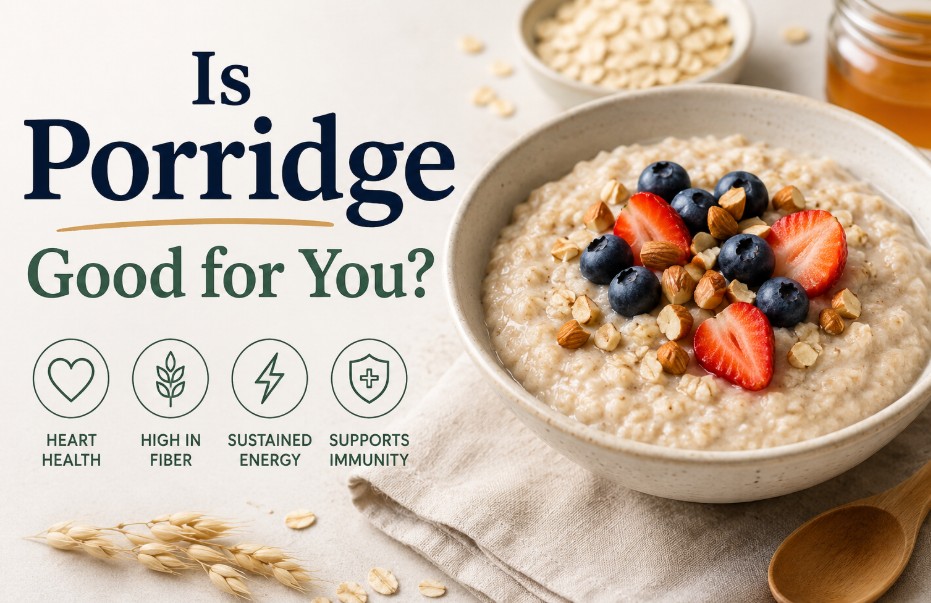
Yes, Porridge is a highly nutritious, whole-grain breakfast option that offers exceptional benefits for metabolic, cardiovascular, and digestive health. Rich in complex carbohydrates, vitamins, and minerals, it provides sustained energy release without causing rapid blood sugar spikes.
Clinical evidence confirms that its high concentration of a unique soluble fibre called beta-glucan actively lowers blood cholesterol levels, supports weight management through prolonged satiety, and improves overall gut function.
What is Porridge?
Historically a staple across northern Europe, porridge is a hot cereal dish made by boiling crushed, chopped, or rolled starchy grains in water or milk. While it can be made from grains like barley, rye, or rice, traditional British porridge relies exclusively on whole oats (Avena sativa).
During the cooking process, the starch granules within the oats absorb liquid and swell, while the grain’s natural soluble fibres dissolve to create its signature creamy, comforting texture.
Is Porridge Good for You?
Yes, porridge is exceptionally good for you because it is a nutrient-dense whole grain that provides long-term health protection, stabilises morning energy levels, and reduces cardiovascular risk.
Because it undergoes minimal processing compared to refined cereal flakes, it retains its natural bran and germ, delivering uncompromised dietary value that protects the heart, stabilises metabolism, and fuels cellular energy.
The Nutritional Foundation of a Standard British Bowl
To understand its physiological value, it helps to examine the raw materials. According to dietary metrics aligned with Public Health England data, a standard 40g serving of dry jumbo rolled oats cooked with water provides a remarkably efficient macronutrient profile:
- Energy: Approximately 150 calories.
- Carbohydrates: 27g, predominantly low-glycemic complex starches.
- Fibre: 4g, with a high proportion of soluble beta-glucan.
- Protein: 5g, offering a robust plant-based amino acid spectrum.
- Fat: 3g, mostly heart-healthy unsaturated fatty acids.
A common pattern in nutritional assessments is overlooking how these metrics shift when prepared with milk. Cooking a bowl with 200ml of semi-skimmed milk adds roughly 100 calories, 7g of protein, and essential calcium, transforming the meal into a highly balanced, macronutrient-dense option for morning recovery.
How often can you eat it?
Porridge can safely and beneficially be eaten every single day. For the vast majority of people, making oats a daily morning habit is highly recommended.
Continuous daily intake ensures that the body receives a steady supply of beta-glucan to consistently manage cholesterol levels, alongside a predictable dose of complex carbohydrates that stabilise morning energy levels.
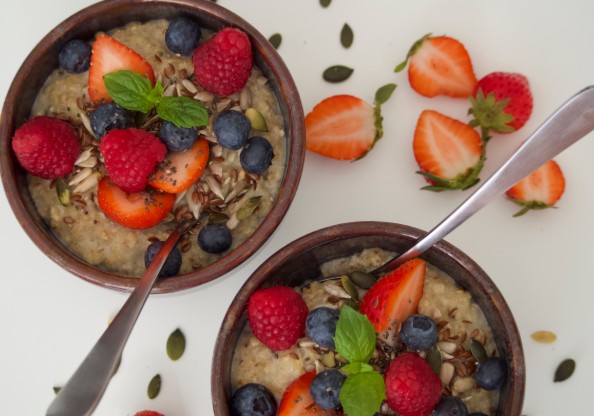
While daily intake is excellent, remember to rotate your toppings (such as alternating between different nuts, seeds, and fruits) to ensure you are exposed to a broad spectrum of micronutrients and plant compounds throughout the week.
What is the difference between oatmeal and porridge?
The main difference is that porridge is a broad umbrella term for any hot cereal made from boiled grains, whereas oatmeal specifically refers to a type of porridge made exclusively from processed oat grains. In the UK, porridge is the standard term for the cooked meal, while in the US, oatmeal is preferred.
Given that search terms vary across regions, many users ask about how these terms compare. In the UK, porridge is an overarching culinary term for any grain boiled in liquid, whereas oatmeal refers strictly to the processed oat crop itself.
| Feature | Porridge | Oatmeal |
| Definition | A broad umbrella term for any hot cereal made by boiling grains, legumes, or starchy plants in liquid. | A specific type of porridge made exclusively from processed oat grains. |
| Primary Ingredient | Can be made from any grain (oats, rice, corn, barley, buckwheat, quinoa, or semolina). | Made only from oats (steel-cut, rolled, or instant). |
| Flavor Profile | Frequently prepared as both sweet (breakfast) and savoury dishes. | Traditionally served sweet in the West, though savoury variations exist. |
| Global Examples | Includes Italian polenta (corn), Asian congee (rice), Russian kasha (buckwheat), and Southern American grits (hominy). | Includes Scottish porridge, overnight oats, and instant oat sachets. |
| Regional Usage | The preferred, everyday term used in the UK, Ireland, Australia, and New Zealand. | The preferred, everyday term used in the United States and Canada. |
| Linguistic Nuance (UK) | Refers strictly to the finished, cooked meal. | Can refer specifically to oats ground into a coarse flour used as a baking ingredient. |
How does Porridge Help for different purposes?
Porridge is remarkably versatile, and its metabolic impact can be tailored depending on your specific physical and lifestyle goals:
For Weight Loss & Fat Management
Oats feature an exceptionally high Satiety Index. Because the viscous gel formed by oat fibre slows down gastric emptying, it physically triggers a prolonged release of satiety hormones like Peptide YY (PYY) and cholecystokinin (CCK). This process suppresses the hunger hormone ghrelin, effectively stopping mid-morning snack cravings.

For Visceral (Belly) Fat Reduction
While no single food can spot-reduce fat, choosing high-fibre whole grains like oats remains a proven method for reducing deep abdominal layers.
Visceral fat is highly sensitive to insulin levels; by preventing rapid blood sugar spikes, a regular morning bowl discourages the body from storing excess calories around internal organs.
For Bodybuilding & Muscle Recovery
When cooked with milk or stirred with protein powder, porridge provides the perfect post-workout fuel. The low-GI complex carbohydrates replenish depleted muscle glycogen stores gradually, while the added protein delivers the essential amino acids required for muscle tissue repair and synthesis.
What Are the Main Health Benefits of Porridge?
Daily consumption of whole oats initiates several distinct biochemical pathways that systematically protect the body from chronic lifestyle diseases.
How Does Porridge Lower Cholesterol?
The cardiovascular protection offered by oats is primarily driven by beta-glucan. When digested, this soluble fibre forms a thick, viscous gel within the small intestine.
This gel binds to cholesterol-rich bile acids, preventing their reabsorption into the bloodstream and forcing the liver to extract circulating Low-Density Lipoprotein (LDL) cholesterol from the blood to synthesise new bile.
Clinical studies reviewed by HEART UK indicate that a daily intake of 3g of oat beta-glucan can significantly reduce blood cholesterol levels, lowering the long-term risk of coronary heart disease.
Is Porridge Good for You Diabetes Management?
Yes, porridge is highly beneficial for Type 2 diabetes management because coarse oats have a low Glycemic Index (GI), which slows the enzymatic breakdown of carbohydrates into glucose and prevents dangerous post-meal insulin spikes.
This slow, controlled release supports long-term HbA1c management and aligns with baseline recommendations from Diabetes UK.
How Do Antioxidants in Oats Support Heart and Skin Health?
Oats are the exclusive dietary source of avenanthramides, a unique group of polyphenol antioxidants. Avenanthramides stimulate the production of nitric oxide in the inner lining of blood vessels, which dilates the arteries, improves systemic blood flow, and naturally lowers blood pressure.
Furthermore, these anti-inflammatory compounds help mitigate systemic oxidative stress, indirectly benefiting skin barrier health and vascular elasticity.
Is Porridge Good for Your Gut and Bowels?
Yes, the gel-forming properties of soluble fibre provide substantial benefits throughout the digestive tract. It acts as a high-quality prebiotic, providing fuel for beneficial gut microbes such as Bifidobacteria and Lactobacillus.
As these bacteria ferment the fibre, they produce short-chain fatty acids (SCFAs) like butyrate, which strengthen the intestinal barrier, reduce inflammation, and optimise peristalsis to prevent chronic constipation.
Are There Any Side Effects or Disadvantages to Eating Porridge?
Despite its universal health benefits, porridge can cause specific physiological issues for certain individuals based on underlying medical conditions.
Coeliac Disease & Cross-Contamination
Oats are naturally free from gluten, but they present a severe risk for individuals with coeliac disease due to agricultural cross-contamination.
Oats are frequently grown in rotation with wheat, rye, and barley, and harvested using the same machinery, or processed in the exact same milling facilities.
For those with severe gluten hypersensitivity, consuming standard oats can trigger an autoimmune response that damages the villi of the small intestine. Therefore, coeliacs must strictly purchase oats explicitly labelled with a certified gluten-free seal.

Irritable Bowel Syndrome (IBS) and Sudden Fibre Loads
For individuals diagnosed with Irritable Bowel Syndrome or those unaccustomed to a high-fibre diet, a large bowl of porridge can cause unexpected abdominal discomfort.
The high concentration of soluble fibre and resistant starch undergoes rapid fermentation by colonic bacteria. If introduced to the digestive tract too quickly, this process can generate significant amounts of gas, resulting in temporary bloating, abdominal cramping, and flatulence.
Those increasing their fibre intake should start with smaller portions and drink plenty of water throughout the day to help the digestive tract adapt smoothly.
Which Type of Porridge is Healthiest?
The health value of your breakfast is fundamentally dictated by the mechanical processing style of the oat grain.
| Oat Type | Processing Level | Glycemic Index (GI) | Best Used For |
| Steel-Cut (Pinhead) | Minimal; whole groats cut into pieces. | Low (~52) | Maximum blood sugar control and distinct texture. |
| Jumbo Rolled | Moderate; whole groats steamed and flattened. | Low to Medium (~55) | Everyday balance of nutrition, texture, and convenience. |
| Instant / Finely Milled | High; pre-cooked, dried, and thinly rolled. | High (~70+) | Ultra-rapid preparation; higher risk of glucose spikes. |
How to prepare porridge?
To transform porridge into a fully balanced meal that sustains energy levels into the afternoon, the macro profile should be intentionally optimised. A plain bowl cooked solely in water presents a nutritional gap: a distinct lack of dietary protein and essential fatty acids.
Here is how to select, cook, and balance your breakfast perfectly using the Macro-Balancing Protocol:
- Select Coarse Oats: Measure 40g of jumbo rolled or steel-cut oats to ensure a low-GI base.
- Introduce a High-Quality Protein Source: Stir in 100g of authentic Greek yoghurt after cooking, or blend in a scoop of pure whey or plant-based protein powder during the final simmering stage.
- Incorporate Essential Healthy Fats: Add one tablespoon of milled chia seeds, flaxseeds, or whole hemp hearts to introduce omega-3 fatty acids.
- Layer Micronutrient-Dense Toppings: Top with a handful of fresh blueberries or raspberries for anthocyanin antioxidants.
- Enhance with Thermogenic Spices: Dust with Ceylon cinnamon to further assist with insulin sensitivity without adding calories.
By adding healthy fats and proteins, you lower the overall glycemic load of the meal even further. The protein and fat content delays digestion time, ensuring that energy is released steadily over four to five hours, completely eliminating the classic 11:00 AM energy crash.
A Smart Approach to Oats
Porridge remains an exceptional cornerstone of a healthy British diet, fully supported by modern clinical science and public health guidelines. However, its health benefits are not automatic; they depend entirely on how the grain is processed and prepared.
To get the most out of your morning bowl, opt for minimally processed jumbo rolled or steel-cut oats, steer clear of heavily sweetened instant varieties, and always balance your porridge with a clean source of protein and healthy fats.
FAQ about Is Porridge Good for You
Is it healthy to eat porridge every day?
Yes, eating porridge daily is highly beneficial for the vast majority of people. Continuous daily intake allows oat beta-glucan to consistently bind bile acids, leading to sustainable reductions in blood cholesterol and better long-term blood sugar stability.
Does porridge count towards your daily fibre target?
Yes, a single 40g serving of rolled oats delivers approximately 4g of dietary fibre. This contributes more than 13% toward the NHS-recommended daily adult target of 30g of fibre, supporting overall bowel health.
Is it healthier to make porridge with milk or water?
Milk enhances the nutritional value by adding high-quality protein, calcium, and B vitamins, which lowers the meal’s overall glycemic index. Water is ideal for minimising calories, but requires an added protein source to keep you full.
Are overnight oats as healthy as hot cooked porridge?
Yes, overnight oats retain all the raw nutritional benefits of rolled oats. Because they are soaked rather than boiled, they contain slightly higher levels of resistant starch, which provides excellent fuel for beneficial gut microbes.
Is honey in porridge good for you?
Honey contains natural antioxidants, but metabolically it behaves exactly like sugar. Adding large spoonfuls will cause a rapid blood sugar spike, so it should be used sparingly as a light accent rather than a heavy sweetener.
Is porridge good for you at night?
Yes, porridge serves as an excellent evening snack. Oats are a natural source of tryptophan and magnesium, which help the body produce serotonin and melatonin, relaxing muscles and promoting a restful night’s sleep.
Is microwave porridge good for you?
Yes, cooking plain rolled oats in the microwave is completely healthy. The microwave process uses rapid water-molecule heating, which preserves water-soluble B vitamins just as effectively, if not better, than traditional stovetop simmering.
Disclaimer: This article is for informational purposes only and does not substitute for professional medical advice, diagnosis, or treatment. While porridge is highly nutritious, individuals with coeliac disease, gluten hypersensitivities, or irritable bowel syndrome (IBS) should consult a healthcare professional or registered dietitian before making significant dietary changes.