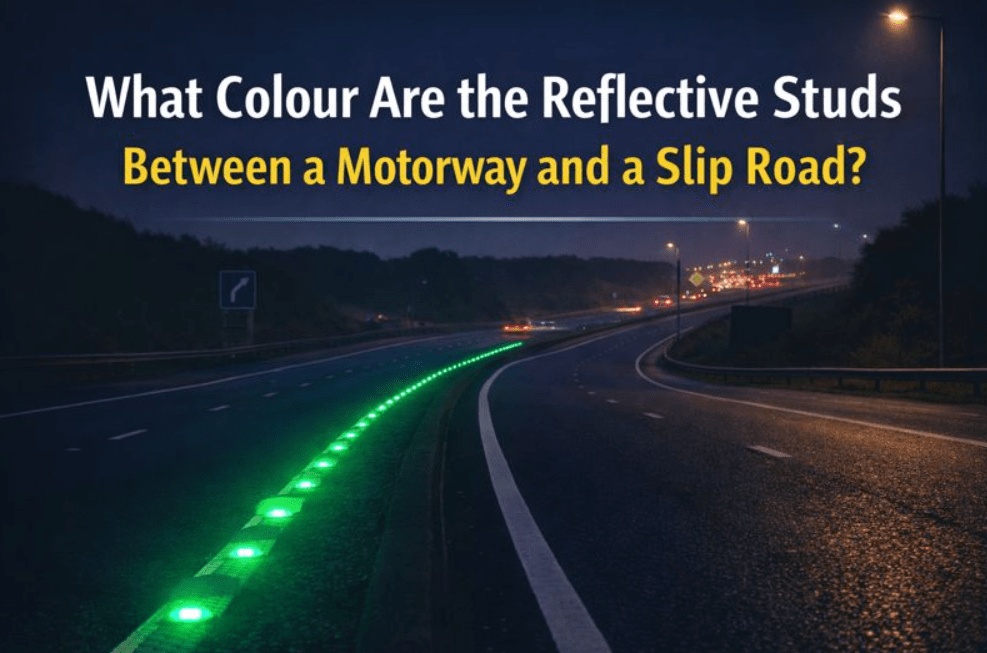
Driving at motorway speeds, the road gives you “quiet signals” long before you reach a junction, especially after dark. One of the clearest is what colour are the reflective studs between a motorway and a slip road? because those cat’s eyes can tell you you’re approaching a place where traffic will split or merge.
In the UK, the answer is green. That green line marks the edge of the main carriageway at slip roads (and lay-bys), helping you spot exits and entries sooner and drive more smoothly in rain, fog, or night conditions.
What Colour Are the Reflective Studs Between a Motorway and a Slip Road?
In the UK, the reflective studs (cat’s eyes) you see between a motorway and a slip road are green.
That “green line” is there to help you instantly recognise, especially at night or in heavy rain, that you’re at a place where traffic can leave the main carriageway (exit slip road) or join it (entry slip road).
In other words, green studs are a visual cue for junction activity: vehicles may be slowing to peel off, or accelerating to merge on.
Why green is used here? What is it telling you?
Green studs mark the edge of the main carriageway at slip roads. That’s why they appear right where the motorway boundary “splits” into an exit lane, or where a slip road runs alongside before merging.
Practical meaning for you:
- Expect lane changes nearby (drivers positioning for exits or merges).
- Expect speed differences (some drivers braking early to exit; others accelerating hard to join).
- Plan earlier, check mirrors sooner and avoid last-second moves.
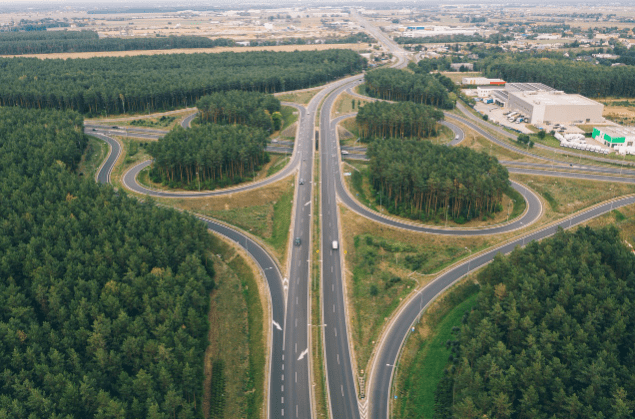
What between the motorway and the slip road looks like in real life?
This wording trips people up because you’re rarely looking at a neat “gap” between two roads. What you’re usually seeing is:
The edge of the main carriageway at the point the slip road splits off (or joins)
At an exit, the left side of the motorway begins to “open” into a diverge lane. The green studs highlight that edge so you can read the layout quickly in low light, spray, or glare.
The slip road boundary as you approach a merge
When joining, green studs can help you spot where the slip road runs alongside the motorway before the merge point.
Here’s what you can do next: when you notice green studs, start thinking “junction behaviour”, more mirror checks, steadier lane discipline, and earlier planning.
The full UK cat’s eyes colour guide
Below is the practical cheat sheet most drivers wish they’d had early on.
| Stud colour | Where you typically see it | What it means for you |
|---|---|---|
| White | Between lanes | Lane separation, stay centred in your lane |
| Red | Left edge of the carriageway | Don’t drift left; you’re at the outer edge |
| Amber | Right edge by the central reservation | Don’t drift right; you’re at the inner edge |
| Green | At slip roads and lay-bys | Expect vehicles leaving/joining; plan early |
| Green/yellow | Temporary lanes at roadworks | Follow the temporary layout, not the “usual” one |
Why green studs matter most at motorway junctions?
At speed, your biggest risk isn’t “not knowing the colour”, it’s leaving your decisions too late.
Exiting: Green studs help you avoid last-second swerves
If you’re not leaving, the green studs are a reminder to hold your lane and be alert for others braking early to make an exit.
Joining: Green studs help you anticipate fast-approaching traffic
When you’re on the slip road, you’re accelerating and scanning for a safe gap. The green studs help confirm you’re in the right place and approaching the merge zone.

Are slip road studs different from lane studs?
Yes, and this is where many people mix up answers.
| If you’re looking at | The cue you’re reading | Most likely stud colour |
|---|---|---|
| Between lanes on the motorway | Which lane am I in? | White |
| Outer edge of the motorway | Am I drifting off the running lanes? | Red |
| Central reservation edge | Am I too far right? | Amber |
| Motorway ↔ slip road boundary | Is this an exit/join area? | Green |
A simple memory trick you’ll actually remember
Think: Green = Go to a different road.
Not go faster, just this is where traffic goes somewhere else (exits and entries). That single idea prevents the classic green/amber mix-up.
10-second checklist for spotting exits and merges at night
- Look early for the green line as a junction cue
- Check mirrors sooner than you think you need to
- Keep your lane position steady, no late darts
- Expect speed differences: slower exiters, faster joiners
Edge cases people search for
Are the studs themselves coloured, or is the reflected light coloured?
What you perceive on the move is the reflected colour (what shines back at you), which is what matters for reading the road.
What about “blue” cat’s eyes?
You may hear people mention other colours in specific contexts, but for everyday UK motorway/single carriageway driving, the key set you should rely on is the standard scheme above, especially green for slip roads.
Online Discussions and Real-World Insights
Tips for remembering motorway studs?
byu/Jackhammerqwert inLearnerDriverUK
What’s happened to cats eyes on roads?
byu/fireproofpoo inAskUK
Final summary
To answer it cleanly: the reflective studs between a motorway and a slip road are green in the UK. Use that green line as your early-warning cue that vehicles may be joining or leaving, and give yourself extra planning time, especially in the dark or wet.
FAQ (People Also Ask)
What colour are the reflective studs between a motorway and a slip road?
They’re green in the UK. Green studs highlight the edge of the main carriageway at slip roads, helping you identify exits/entries, especially at night.
What do green cat’s eyes mean in the UK?
They indicate slip roads and lay-bys. In practical driving terms, they warn you to expect merging/diverging traffic and to plan earlier.
What do amber studs mean on motorways?
Amber studs mark the edge of the carriageway next to the central reservation, your “right-hand boundary” reference in low visibility.
What do red reflective studs mean?
Red studs mark the left edge of the carriageway, your “outer boundary” reference, so you don’t drift off the running lanes.
How can you tell you’re approaching a motorway exit at night?
You’ll usually notice a combination of cues: Green studs appearing at the edge, the road geometry opening into an exit lane, and drivers ahead positioning/adjusting speed earlier than usual.
Author expertise note
This guide is based on UK-standard road marking conventions used in theory test learning and real-world driving guidance, including the Highway Code’s reflective stud colour meanings, explained in a practical “what you do next” way for motorway conditions.